Museo Naval – The Santa María at the End of the Alameda
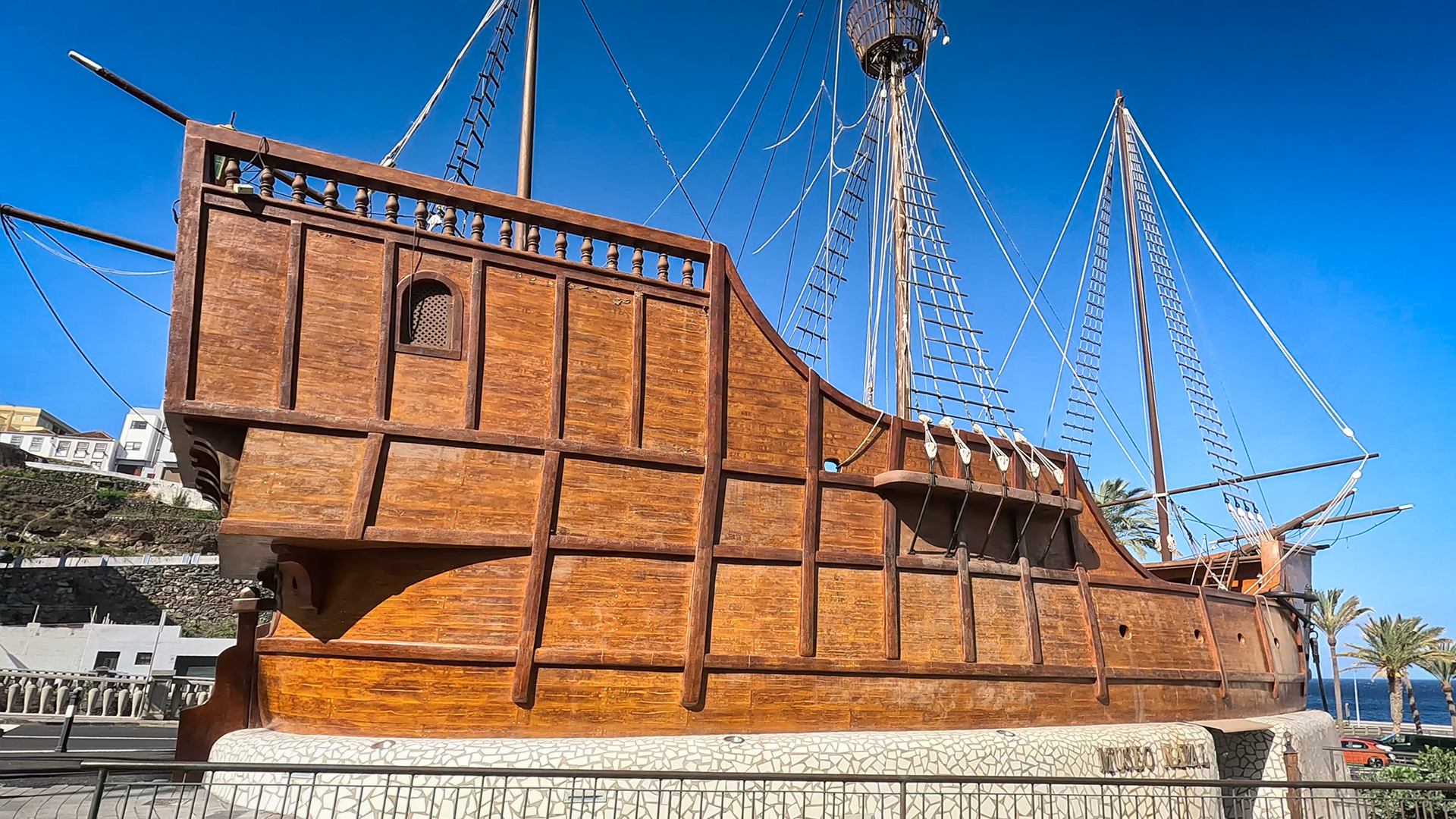
At the end of the Plaza Alameda, where the old town meets the harbour, a ship sits on dry land. It is a full-scale replica of the Santa María – Columbus’s flagship – and inside it is the Museo Naval of Santa Cruz de La Palma.
La Palma has no directly documented historical connection to Columbus – there is no confirmed stop here. But the ship serves as a starting point to tell a story that is very much La Palma’s own: the story of Atlantic trade, piracy and shipbuilding.
For visitors interested in culture and history, the naval museum is one of the most compelling attractions in Santa Cruz – and one that is often overlooked.
The Ship – the Barco de la Virgen
While it looks like a traditional vessel, this replica of the Santa María was constructed from reinforced concrete in 1971 for a maritime exhibition. It has stood at the foot of the Alameda ever since.
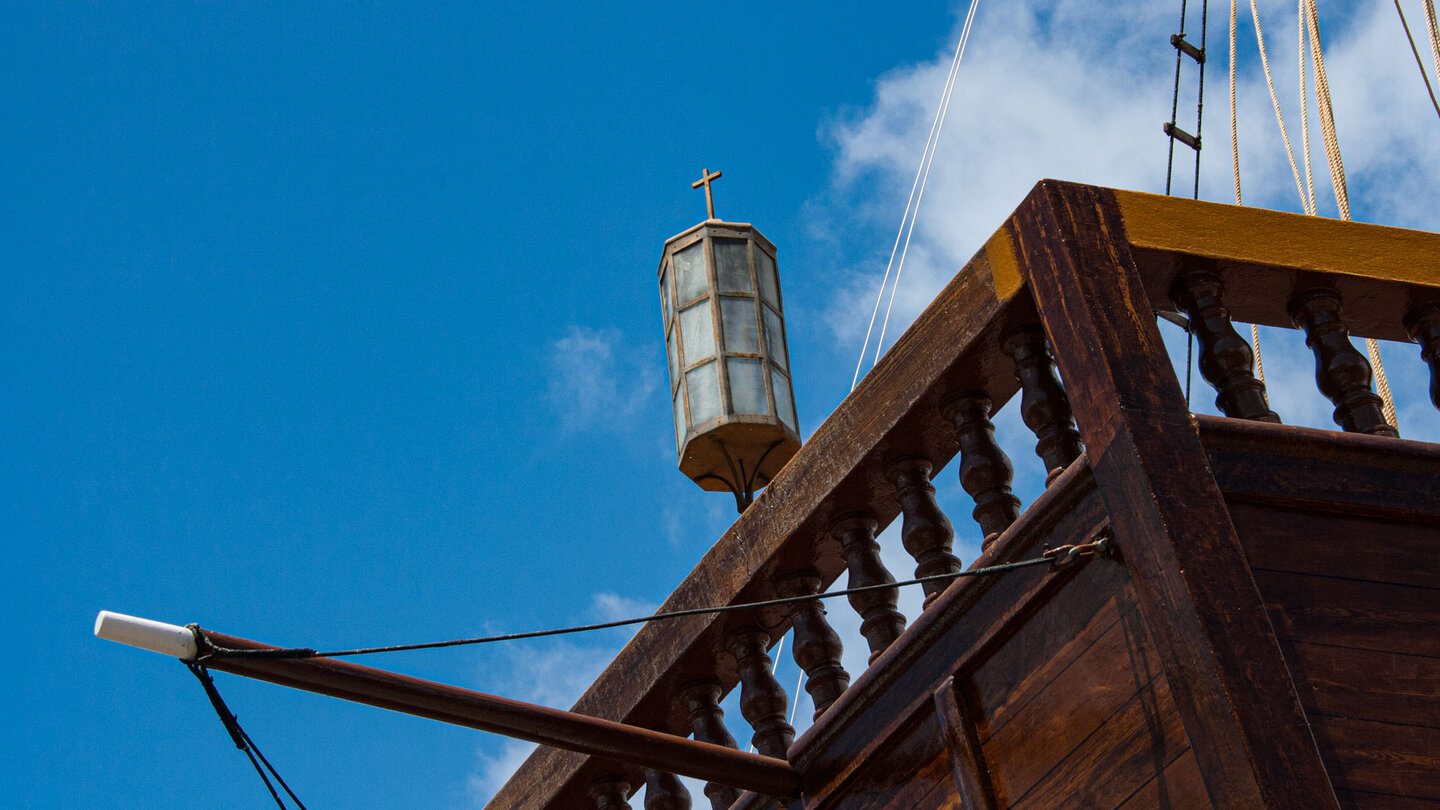
The upper deck is accessible and offers a fine view over the Plaza Alameda, the harbour front and the bay of Santa Cruz.
What the Museum Shows
The exhibition is divided into several sections. Navigation and cartography: historical charts and instruments showing how the Atlantic was navigated. Ship models: scale replicas of vessels from the Age of Discovery.
A dedicated chapter covers piracy: the attacks on Santa Cruz de La Palma – including a devastating 1553 raid led by the French privateer François Le Clerc (known as Pie de Palo or Pegleg).
La Palma as a Hub of Atlantic Trade
The museum also answers the question of why Santa Cruz de La Palma was so significant at all: as one of the most important ports in the Atlantic in the 16th century, the island was a mandatory stop on routes between Europe, Africa and the Americas.
Practical Tips for Your Museum Visit
Opening Hours & Entry
The naval museum is generally open Monday to Friday 10:00–18:00 and Saturday & Sunday 10:00–14:00. Admission approx. €4.50. Check current opening times on site as hours can change seasonally.
Combine with a Stroll Through the Old Town
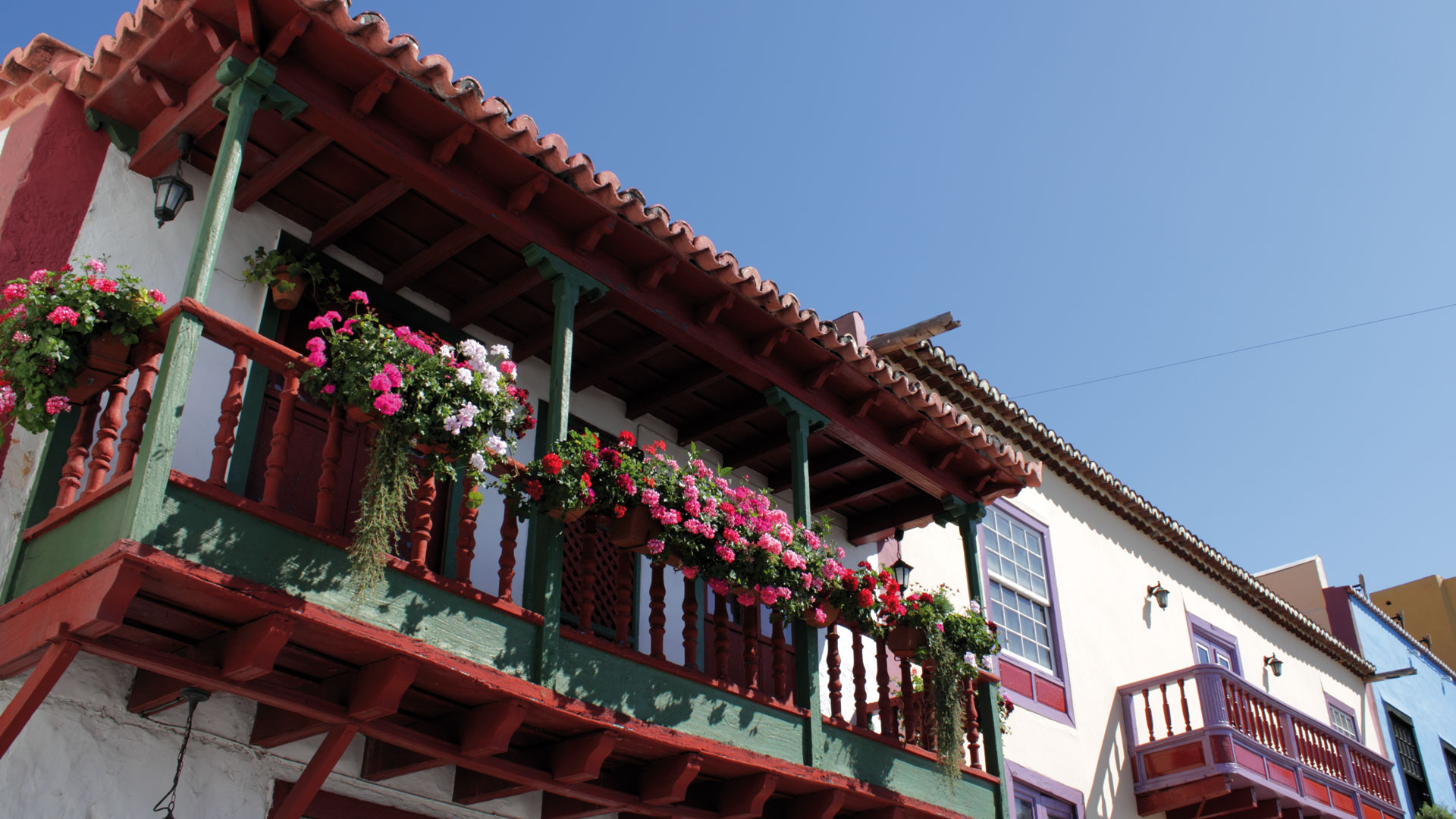
Right outside the museum, the shaded Plaza de la Alameda with its magnificent laurel trees invites you to linger. The historic seafront promenade with its carved wooden balconies is just a few steps away.
Accessibility
The museum is housed inside a historic ship replica. The various decks are connected by stairs – the museum is not wheelchair accessible.
| Museo Naval | Plaza Alameda, 38700 Santa Cruz de La Palma |
|---|---|
| Opening Hours | Mon–Fri 10:00–18:00, Sat & Sun 10:00–14:00 |
| Admission | Approx. €4.50 for adults; children under 12 often free |
| Parking | Harbour car park on Avenida Marítima (free, 10-minute walk) |
| Upper Deck | accessible, great view over the old town |
| Combination | Balcones Típicos & nearby fortresses (Castillo de Santa Catalina) |
Frequently Asked Questions (FAQ)
What does Columbus have to do with La Palma?
Is the museum suitable for children?
How much time should I plan for the visit?
Can I combine the museum visit with other sights?
Is the museum worth visiting even without a special interest in seafaring?
The Shipyards of Santa Cruz
The museum tells not only of seafaring but also of shipbuilding. In the 16th century Santa Cruz de La Palma had the most productive shipyards in the Canary Islands – vessels for the Atlantic trade were built here.
With the decline of Atlantic trade in the 17th century, the golden age of the shipyards also ended. What remains are the historic wooden balconies along the seafront, inspired by the ship designs of the era.
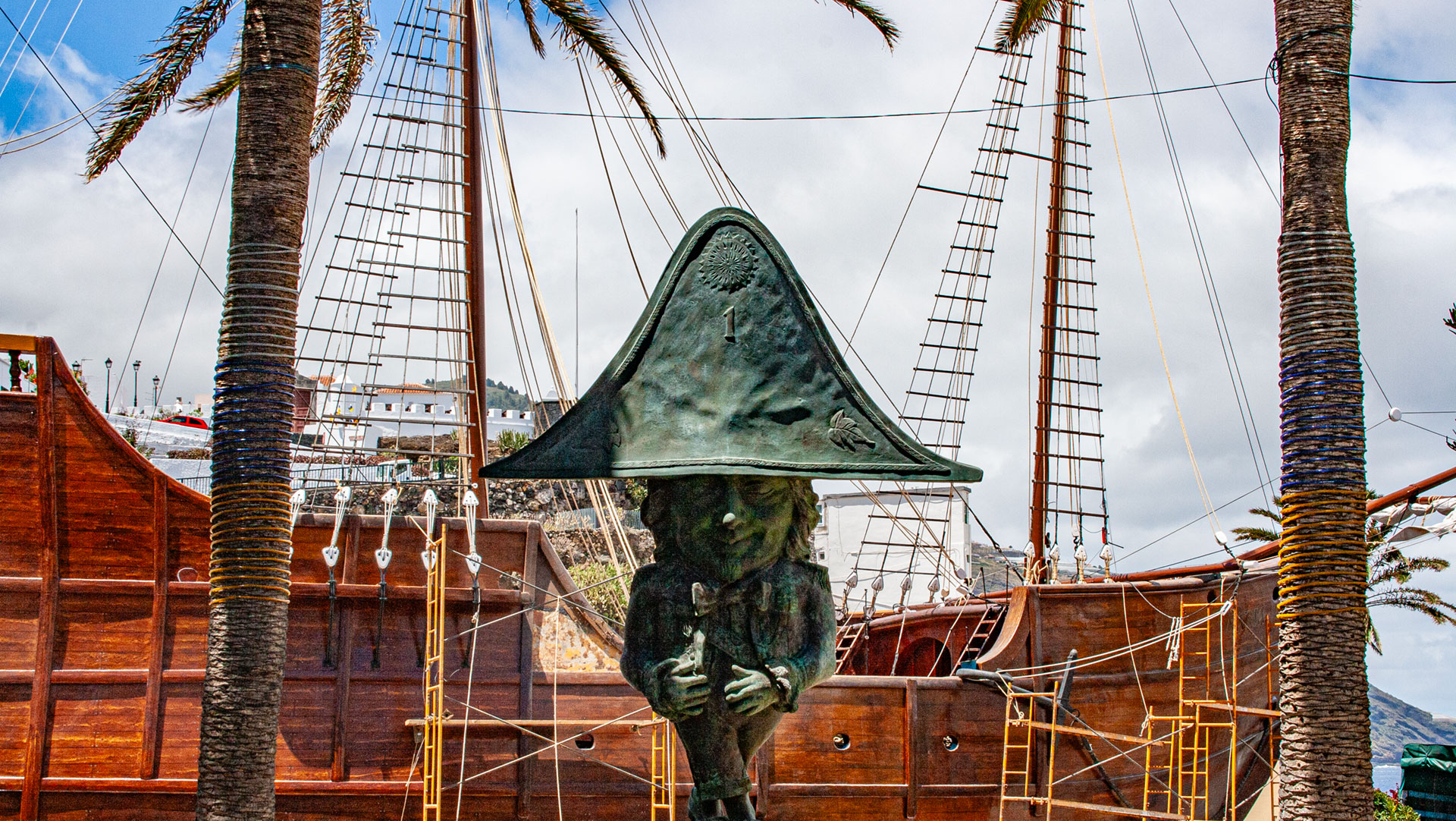
Bronze Statue of the Dwarf – Enano de Luis Morera
Right outside the naval museum stands a famous small bronze statue: the Enano (dwarf) sculpted by local artist Luis Morera. He is the mascot of the Bajada de la Virgen, La Palma’s most important festival.
This article is based on the on-site knowledge of the Gequo editorial team – publishers of the Reisezeit Hiking Guides and operators of Sunhikes.com. As of: May 2026