Whale Watching on La Palma – Home to a Third of All Cetacean Species
The waters around La Palma are among the most species-rich marine mammal habitats in the eastern Atlantic. Roughly a third of all known whale and dolphin species worldwide have already been recorded in Canarian waters – a richness that comes down to the combination of warm surface waters, deep underwater canyons close to shore, and a constant supply of food.
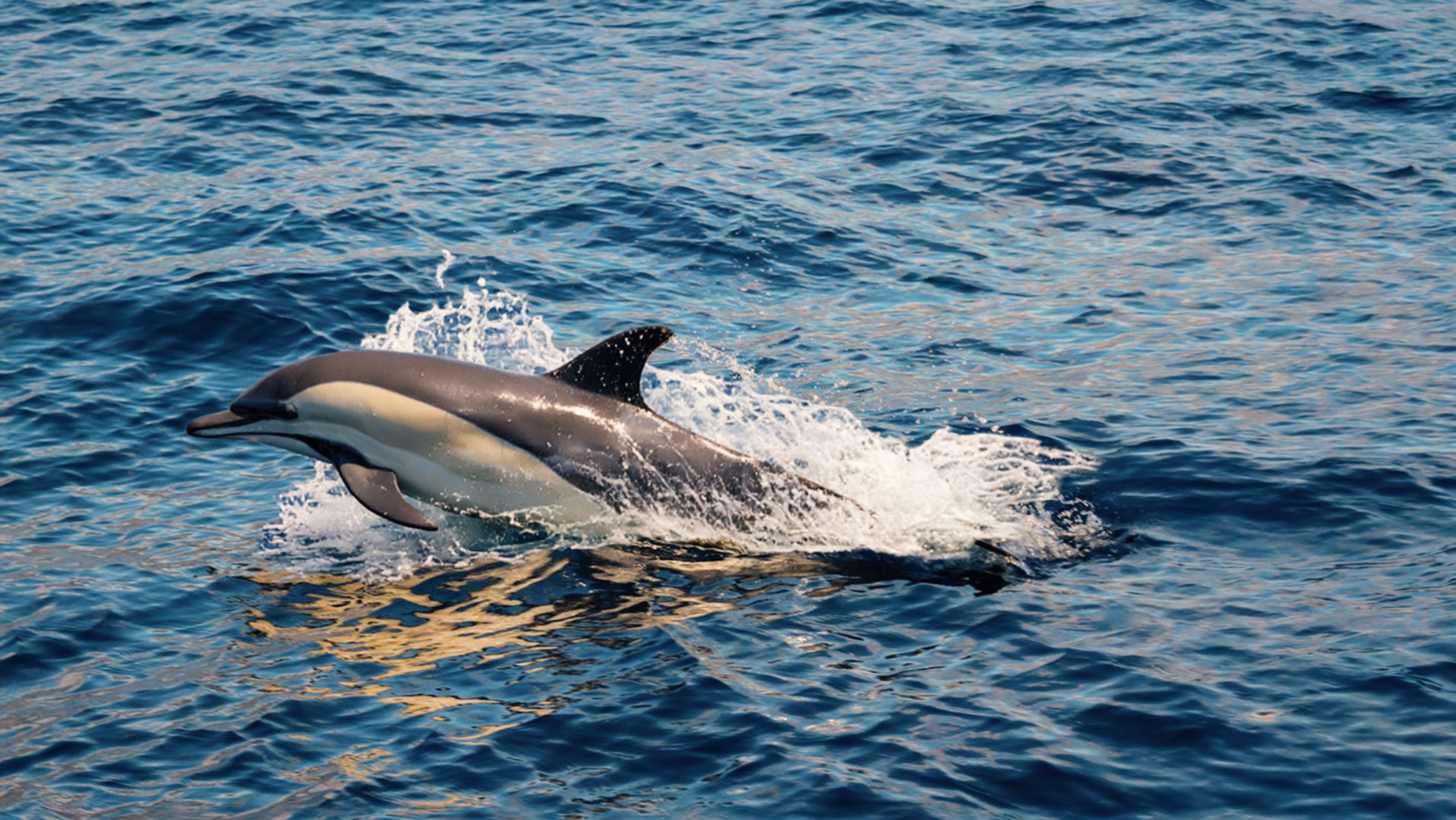
Common bottlenose dolphins (Tursiops truncatus) and short-finned pilot whales (Globicephala macrorhynchus) are present all year round. In spring and summer, migrating great whales join them: sperm whales, fin whales and sei whales pass through on their migration routes. If you’re lucky enough to visit in the right month, you might even see a blue whale – the largest animal that has ever lived on Earth.
Operators at Tazacorte Harbour
Almost all whale-watching tours depart from the sheltered harbour of Puerto de Tazacorte on the west coast. The location is ideal: a short crossing to the deep-water areas, stable conditions on the west coast, and the chance to take in both the steep coastline and the Cueva Bonita along the way.
| Provider / Boat | Duration · Price | Phone · WhatsApp / Highlights |
|---|---|---|
| Ocean Explorer – Inia (speedboat) | 2h · from €50 | +34 644 161 003 · 90% sighting rate · highly mobile |
| Ocean Explorer – Flipper (large boat) | 3h · from €58 | +34 644 161 003 · with marine biologist · Cueva Bonita & lava delta included |
| Fancy II (catamaran) | 2.5–3h · from €61 | +34 609 531 376 · underwater viewing window · tapas & cava included · stable |
| Bussard (wooden boat) | 4h · from €55 | +34 644 161 003 · max. 12 guests · very personal · meal & swim stop included |
| Nemo La Palma (small catamaran) | 2.5h · from €50 | +34 675 571 939 · max. 11 people · focus on coast & dolphins |
| Bluewater Adventure (private charter) | Individual | +49 172 4364424 · private charter · fishing trips · diving charter |
What You Can See
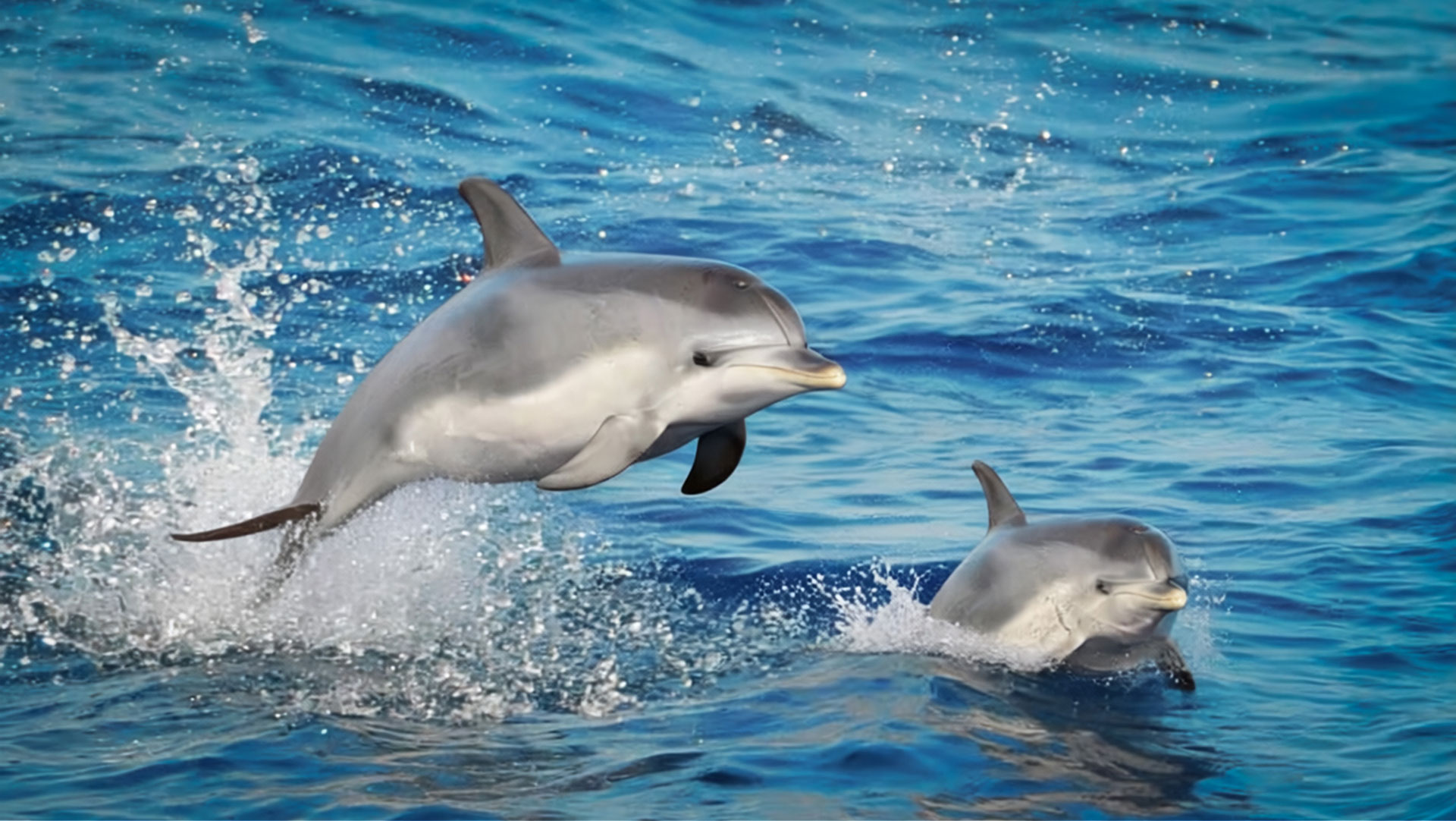
Dolphins are almost guaranteed: common bottlenose dolphins follow the boats, play in the bow wave and put on a show of leaps. Pilot whales – social, easy-going animals that live in family groups – often drift slowly at the surface and can be approached surprisingly closely. Sperm whales are rarer, but spectacular when they do appear: their distinctive blow, angled forward, is the unmistakable giveaway.
Many tours also take in the Cueva Bonita, the lava delta left by the Tajogaite eruption, and the hard-to-reach coves along the steep coastline. The trip out to sea doubles as a nature, geology and cultural experience all at once.
Best Time to Visit
Sightings happen all year round, but the best season for the larger whales is spring through summer (April to September). Pilot whales and common bottlenose dolphins are present year-round, making them the most reliable sighting. Morning tours (roughly 10am–1pm) often have calmer seas and therefore better visibility.
Tips Against Sea Sickness
If you’re prone to sea sickness: choose a larger, more stable boat (Fancy II or Flipper), sit in the middle of the boat, keep your eyes on the horizon, and skip a heavy breakfast before departure. Some pharmacies on La Palma sell seasickness remedies as tablets or patches – start taking them the day before your tour.
The Coastal Highlights: What the Boats Show
The coastline north of Tazacorte can’t be reached on foot and isn’t visible from the road – only from the water does it come into view. Three highlights feature on the itinerary of most tours:
| Cueva Bonita | A sea cave beneath the cliffs of Tijarafe. In the afternoon, sunlight breaks through the water’s surface and bathes the cave walls in shades of blue. Only reachable by boat. |
|---|---|
| Porís de Candelaria (Pirate Cove) | About 20 small stone houses beneath a massive rock overhang, some carved directly into the rock. Once said to be a haunt of pirates and smugglers, today it’s a weekend retreat for fishermen. |
| Lava Delta Tajogaite | New coastal land created when the 2021 eruption poured lava into the sea – a landscape that’s only existed for a few years. The Ocean Explorer Flipper sails right past it. |
| Playa de La Veta | A beach reachable only from the sea. A swim stop is included on some tours (Bussard). |
Which Boat for Whom?
Speedboats (like the Inia) have the highest sighting rate, since they can react quickly and move to where the animals are. If you’re sensitive to rough seas, go for the Fancy II or the Bussard – larger, more stable boats with less motion. The Bussard offers the most personal experience: just 12 guests, four hours, a meal on board, and a swim stop. The Nemo suits anyone who prefers a small group and isn’t chasing the big spectacle moments.
Tips for Your Boat Trip
Cueva Bonita: book for the afternoon – the light show only happens when the sun is low.
Sea sickness: choose Fancy II or Bussard, and take a seat in the middle of the boat.
Bussard and Nemo: often booked out days in advance – reserve early.
Clothing: always cooler at sea than on land – pack a light jacket.
Book early: on weekends and in high season, all the small boats fill up.
Sailing on La Palma
Tazacorte and Santa Cruz are the two starting points for sailing trips. Day trips and sunset cruises (around 3.5 hours) with swim stops in secluded coves are the most popular option. Many sailing trips combine whale watching too, since the trade winds and the marine wildlife converge in the same spot.
| Provider | Location | Phone · WhatsApp / Highlights |
|---|---|---|
| Ocean Explorer (sailing tours) | Tazacorte | +34 644 16 10 03 · eco-tours & marine biology |
| Fancy II (sailing) | Tazacorte | +34 609 53 13 76 · larger groups, underwater viewing |
| Samboat – Copernic catamaran | Santa Cruz | via web portal · charter for up to 12 people incl. diving equipment |
Island Hopping by Ferry: La Gomera and El Hierro
If you want to visit the other western islands from La Palma, take the ferry from Santa Cruz. Tenerife (Los Cristianos): around 2.5 to 3 hours, several times daily, with Fred Olsen or Naviera Armas. La Gomera: often a stop along the Tenerife ferry route, around 2 hours. El Hierro: no direct connection – you’ll need to change in Tenerife. A one-way ticket to Tenerife starts at around €50. Bringing a rental car: only permitted with local providers like Cicar, and only with advance notice – the international chains don’t allow it.
Conclusion: Boat Tours on La Palma
Tazacorte is the best harbour in the western Canaries for whale watching – a 90% sighting rate, plus the Cueva Bonita, the pirate cove and the lava delta all in a single day.
The Bussard for the most personal experience. The Inia for the highest sighting rate. The Fancy II for families and anyone who needs calmer seas.
Frequently Asked Questions (FAQ)
Are whale sightings guaranteed?
From what age can children join whale-watching tours?
Pilot Whales – The Social Giants
Short-finned pilot whales (Globicephala macrorhynchus) are the most characteristic marine mammal in Canarian waters. They live in tight-knit family groups of 10–30 animals. On whale-watching tours, you’ll often find them drifting calmly at the surface – less active than dolphins, but their sheer size (up to 6 metres and over 2 tonnes) and the closeness with which they lie together is impressive.
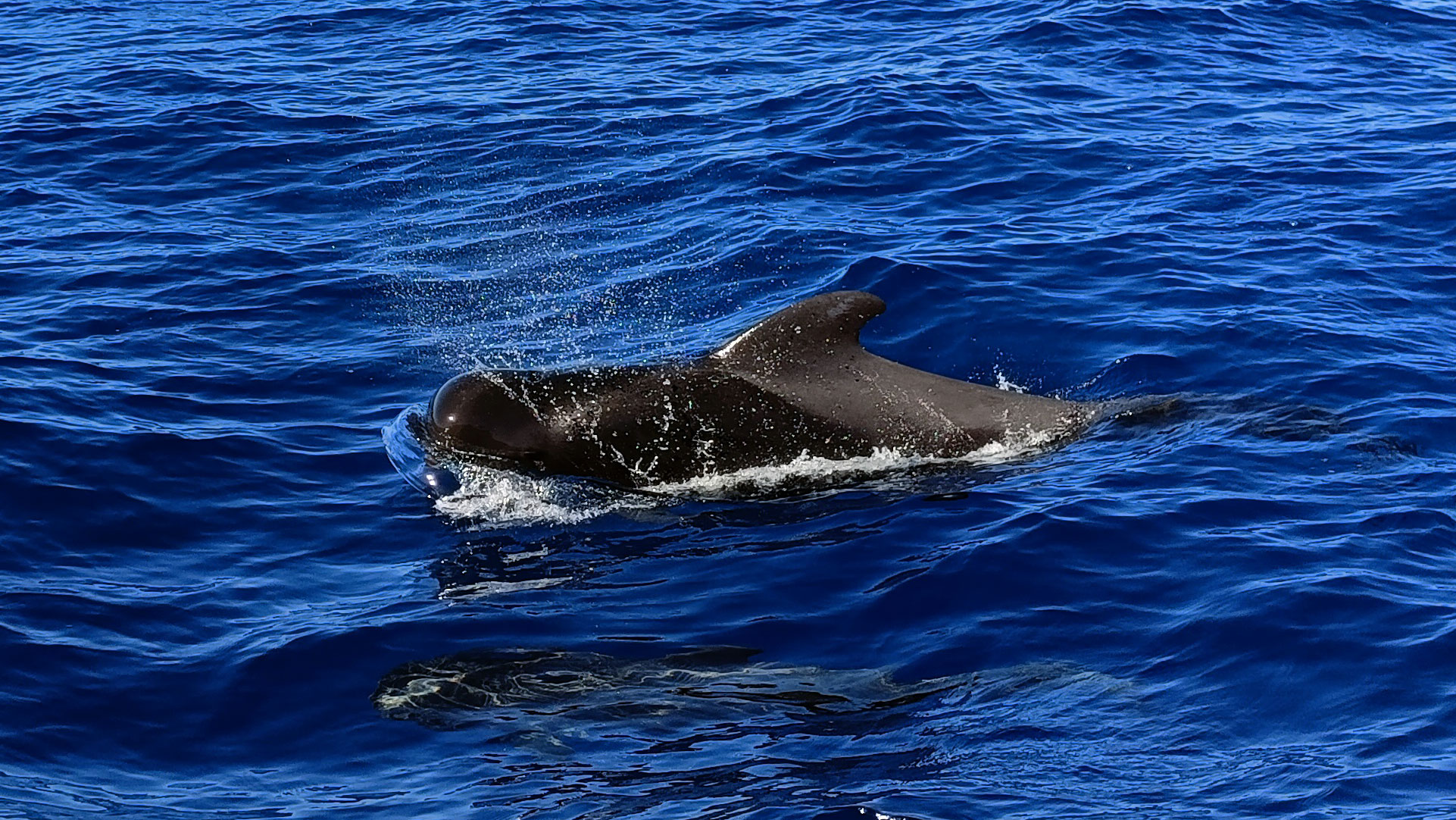
Pilot whales communicate through clicks and whistles that are audible underwater. Some boat operators carry underwater microphones on board – hearing the whales’ chatter directly while the animals swim just metres away is an experience no photo can capture.
This article is based on the on-the-ground knowledge of the Gequo editorial team – publishers of the Reisezeit hiking guides and operators of Sunhikes.com. Last updated: May 2026