Mojo Rojo – The Sauce That Holds Everything Together
There is no Canarian meal without mojo. That is not a culinary slogan — it is a fact woven through every restaurant, every guachinche, and every farmers’ market on La Palma. Mojo is the bridge that connects papas to the plate, cheese to bread, fish to the palate. And mojo rojo, made by hand in a mortar, is a different kind of sauce entirely.
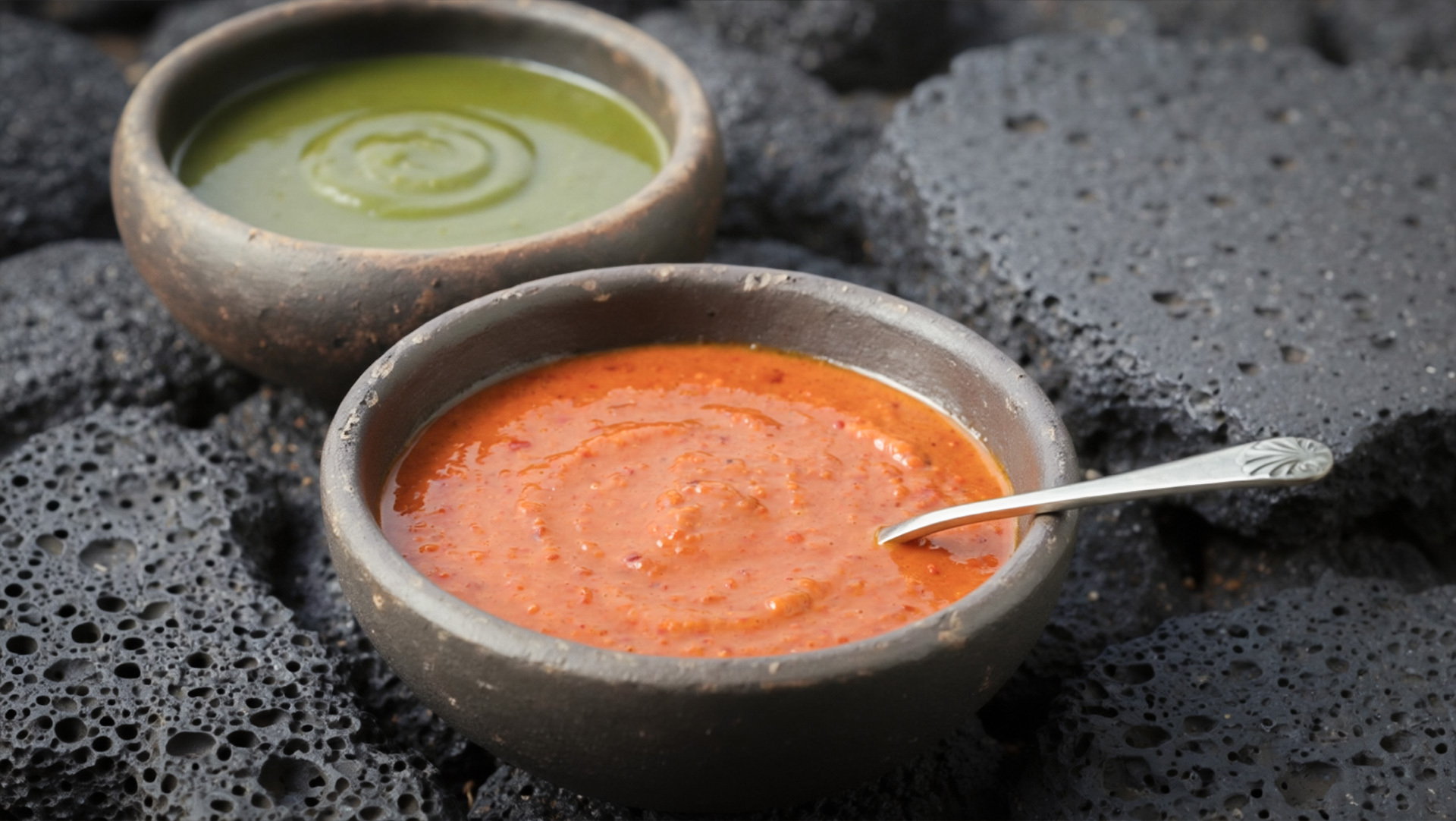
The secret is the mortar. Not the blender, not the food processor — the mortar. The pestle breaks down the ingredients differently from rotating blades — crushing rather than cutting, releasing oils and aromatics that a blender simply cannot. The result has texture, body, and a depth of aroma you will not find in any store-bought version. Once you’ve made your own mojo by hand, you’ll only reach for a store-bought jar when there’s no other option.
The Original Recipe: Mortar Method
Ingredients for approx. 200 ml Mojo Rojo
- 4–6 dried red peppers (ideally Pimienta Palmera from La Palma, or ñora as an alternative) — soak 30 minutes in warm water
- 4–5 garlic cloves
- 1 tsp cumin (whole, then ground)
- 1 tsp smoked paprika (pimentón ahumado)
- 3 tbsp red wine vinegar
- 8 tbsp good olive oil
- 1 tsp coarse sea salt
- Optional: 1 small dried chili for extra heat
Method – Step by Step
- Squeeze out the soaked peppers, remove seeds, scrape out the flesh.
- In the mortar: pound the garlic with the salt into a paste — the salt acts as an abrasive and breaks down the cells faster.
- Add the pepper flesh and continue pounding.
- Work in the ground cumin and paprika.
- Add the vinegar and stir through.
- Incorporate the olive oil in a thin stream while stirring constantly — like emulsifying a mayonnaise.
- Taste and adjust consistency with oil.
Mojo Verde – Fresh and Green
Same base (garlic, oil, vinegar, salt, cumin), different main ingredient: 1 bunch fresh cilantro or 1 bunch parsley, 1 green pepper, 1 green chili (optional). Blend or pound in a mortar into a smooth, aromatic green paste. The colour oxidizes quickly — always make mojo verde fresh and serve immediately. It will darken overnight but keeps most of its flavour.
Mojo verde comes in two classic variations. Mojo de cilantro is made with generous fresh cilantro and pairs perfectly with fish and cheese. The milder mojo de perejil is based on parsley and is often served with meat. Both use the same base of garlic, olive oil, vinegar, cumin, and salt.
Storage and Souvenirs
Homemade mojo rojo keeps in the refrigerator for 1–2 weeks and only gets better as the flavours meld. Store-bought jars from La Palma travel well in checked luggage (containers over 100 ml aren’t allowed in carry-on). For recreating it at home, bring back dried Pimienta Palmera peppers from La Palma — they are the one ingredient that cannot be substituted.
Frequently Asked Questions (FAQ)
What is Pimienta Palmera?
What are ñora peppers?
How spicy is mojo rojo?
What does mojo rojo pair well with?
Can mojo rojo be frozen?
Why does homemade mojo often taste better?
Which olive oil is best for mojo?
How long should mojo rest before serving?
This article is based on the on-the-ground knowledge of the Gequo editorial team – publishers of the Reisezeit hiking guides and operators of Sunhikes.com. Last updated: May 2026