
La Palma Road Trip – 7 Days Around the Whole Island
Seven days on La Palma is the right amount. Enough to understand the island without falling into repetition, enough to slow down and stop when something catches your eye, and enough to cover the full range of what La Palma offers – from the caldera to the lava field, from laurel forest to saltpans. A hire car is essential for the full experience.
This itinerary is designed for travellers with a hire car who want to stay active and discover La Palma beyond the beach resorts. A flexible approach pays off: if a place captures you, allow more time.
Day 1 – Arrival and First Impressions: Santa Cruz and the East Coast
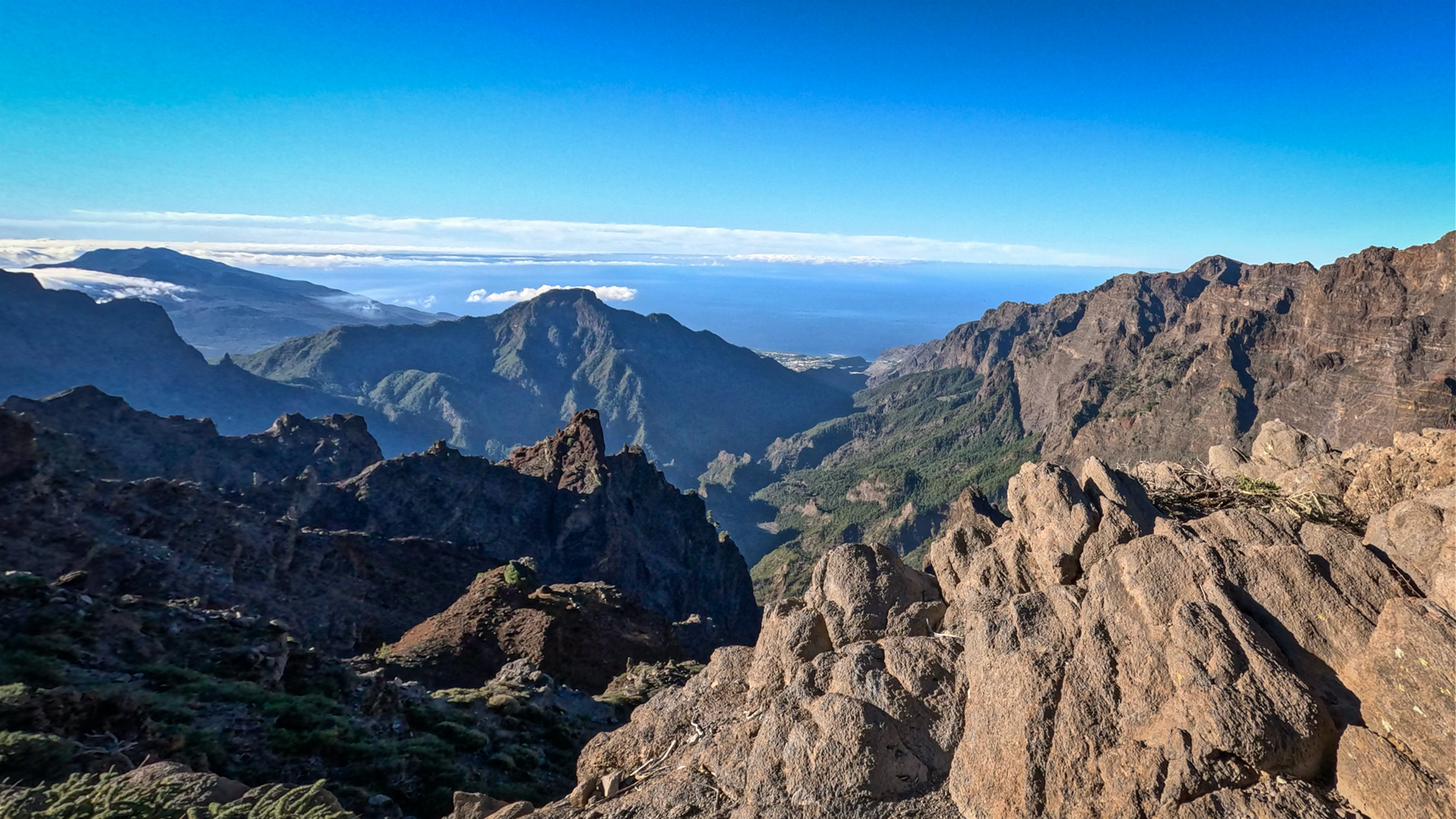
Arrive, collect your car, and settle into your accommodation. Walk the Calle Real and the old town of Santa Cruz in the late afternoon. The harbour, the balconies, and the Plaza de España set the architectural tone for the island. Dinner in Santa Cruz; sleep on the east coast.
A walk along the Avenida Marítima with its famous wooden balconies, a visit to the Plaza de España with the Renaissance town hall, and a stroll through the narrow lanes already give a good first impression of the island. In the evening, dinner at one of the tapas bars or fish restaurants in the old town rounds off the day perfectly.
Day 2 – Caldera de Taburiente: National Park from Above
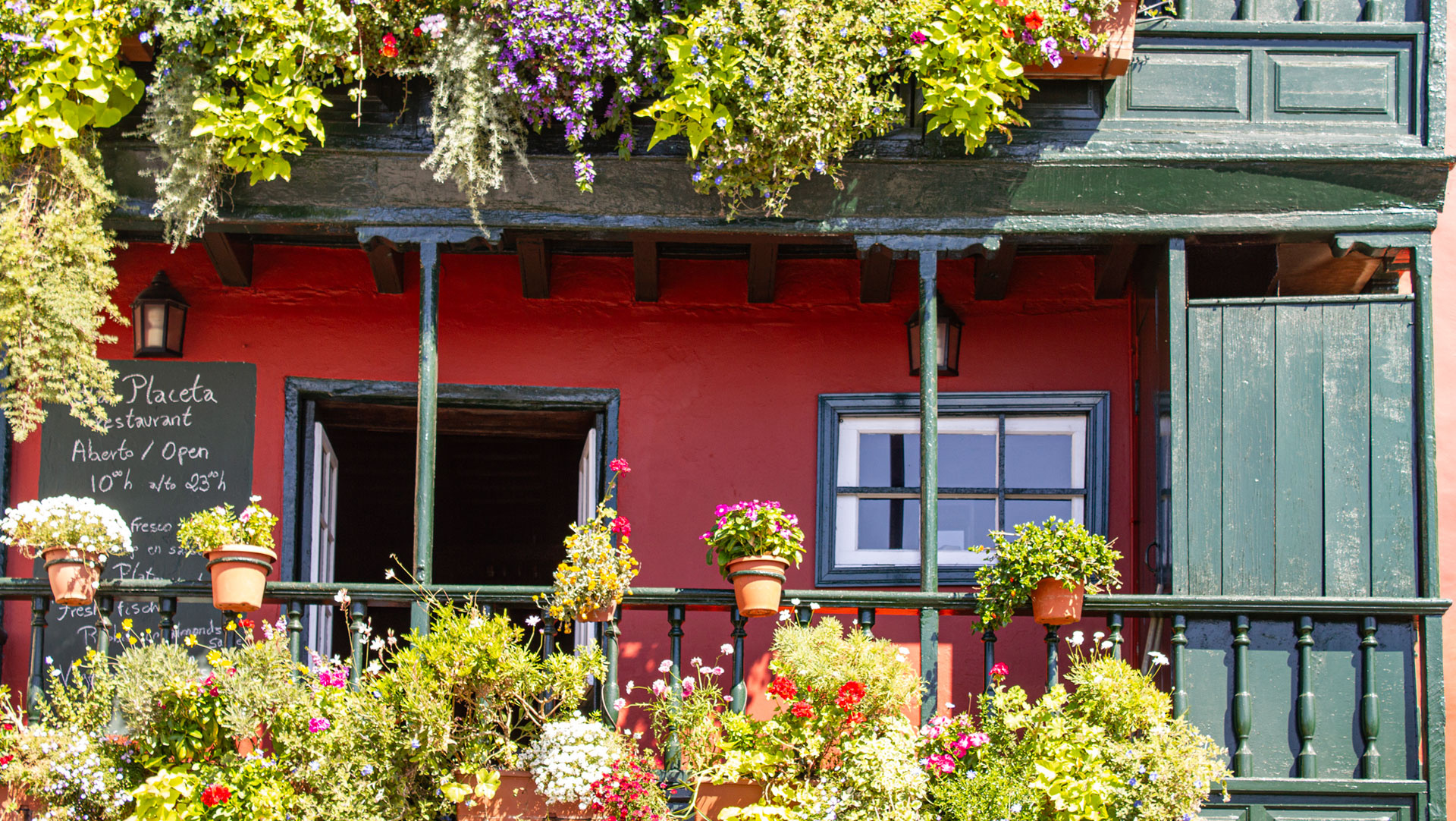
The second day is devoted to La Palma’s centrepiece. Early in the morning, drive up to La Cumbrecita (1,833 m). (Book parking in advance at reservasparquesnacionales.es.) Short, excellently maintained trails lead from La Cumbrecita to the viewpoints Mirador de los Roques and Mirador Lomo de las Chozas. Even this circular walk alone conveys the sheer scale of the Caldera de Taburiente and ranks among the finest natural experiences on the island.
In the afternoon, the modern National Park visitor centre in El Paso is well worth a visit. A relaxed stroll through Los Llanos de Aridane follows. Around the Plaza de España, cafés and restaurants invite a break and offer a pleasant contrast to the morning’s immersion in nature.
Note:
The full Caldera hike from Los Brecitos is not suited to this day. The complete route to the Barranco de las Angustias takes a full day and should be planned as a separate excursion.
Day 3 – Roque de los Muchachos: Above the Clouds
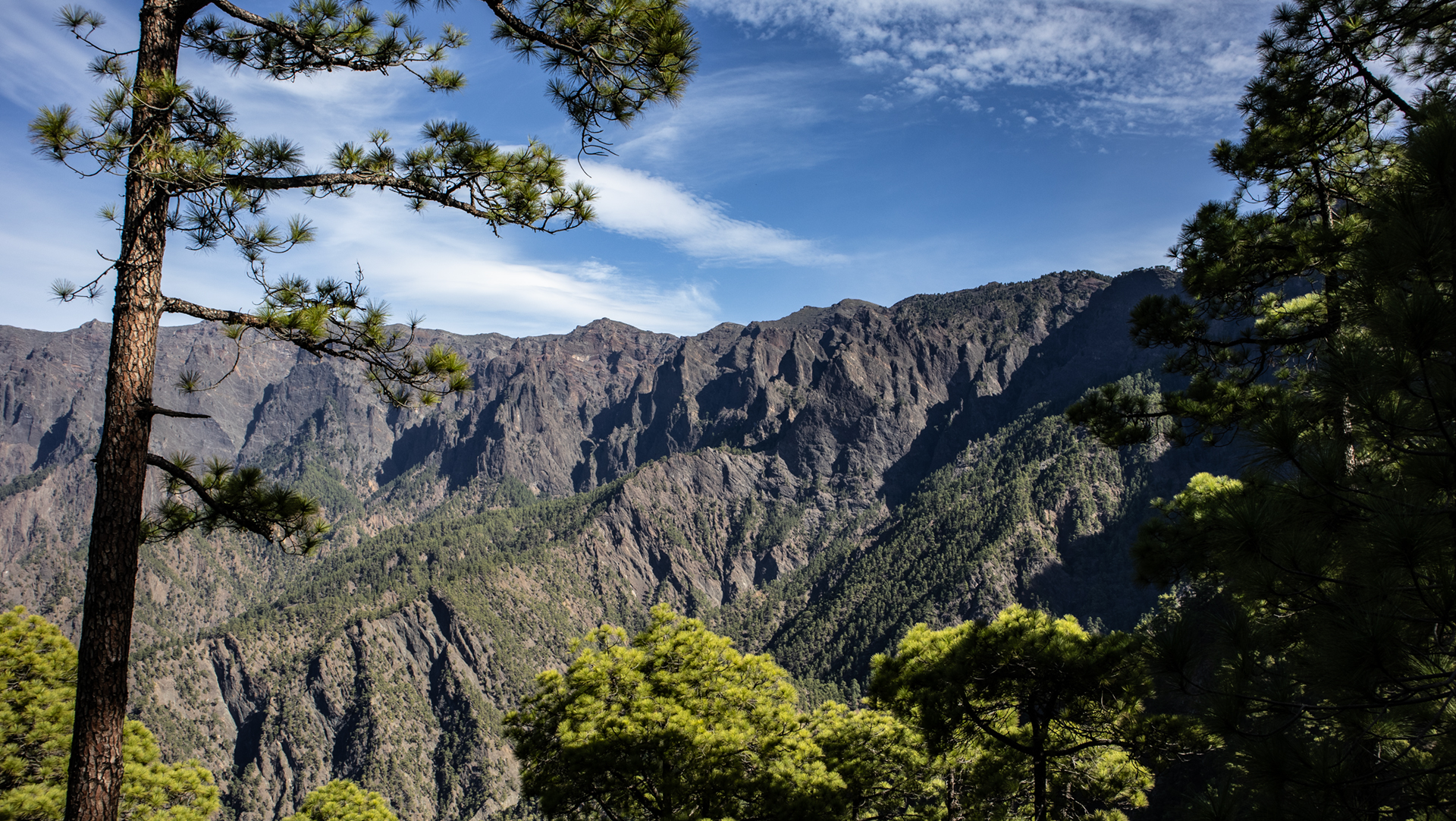
Today the route leads to the highest point on the island. The spectacular mountain road LP-4 climbs to Roque de los Muchachos (2,426 m). The drive itself is already an experience: over roughly 20 kilometres, the road rises from sea level up into the clouds. At the summit, an overwhelming panorama awaits – on clear days the views extend to Tenerife, La Gomera, and even Gran Canaria.
The return journey passes through Garafía and the wild north-west coast. Small villages such as Santo Domingo de Garafía or El Tablado invite a brief detour. The descent back towards Los Llanos passes the Mirador del Time, one of the most dramatic viewpoints on the island, overlooking the entire Aridane valley.
Tip:
Visitors planning a night visit to Roque de los Muchachos should be aware that the summit road is closed after dark to protect the observatory from light pollution. For astrophotography, there are many freely accessible viewpoints at mid-altitude that make excellent alternatives.
Day 4 – Tajogaite and West Coast Boat Trip
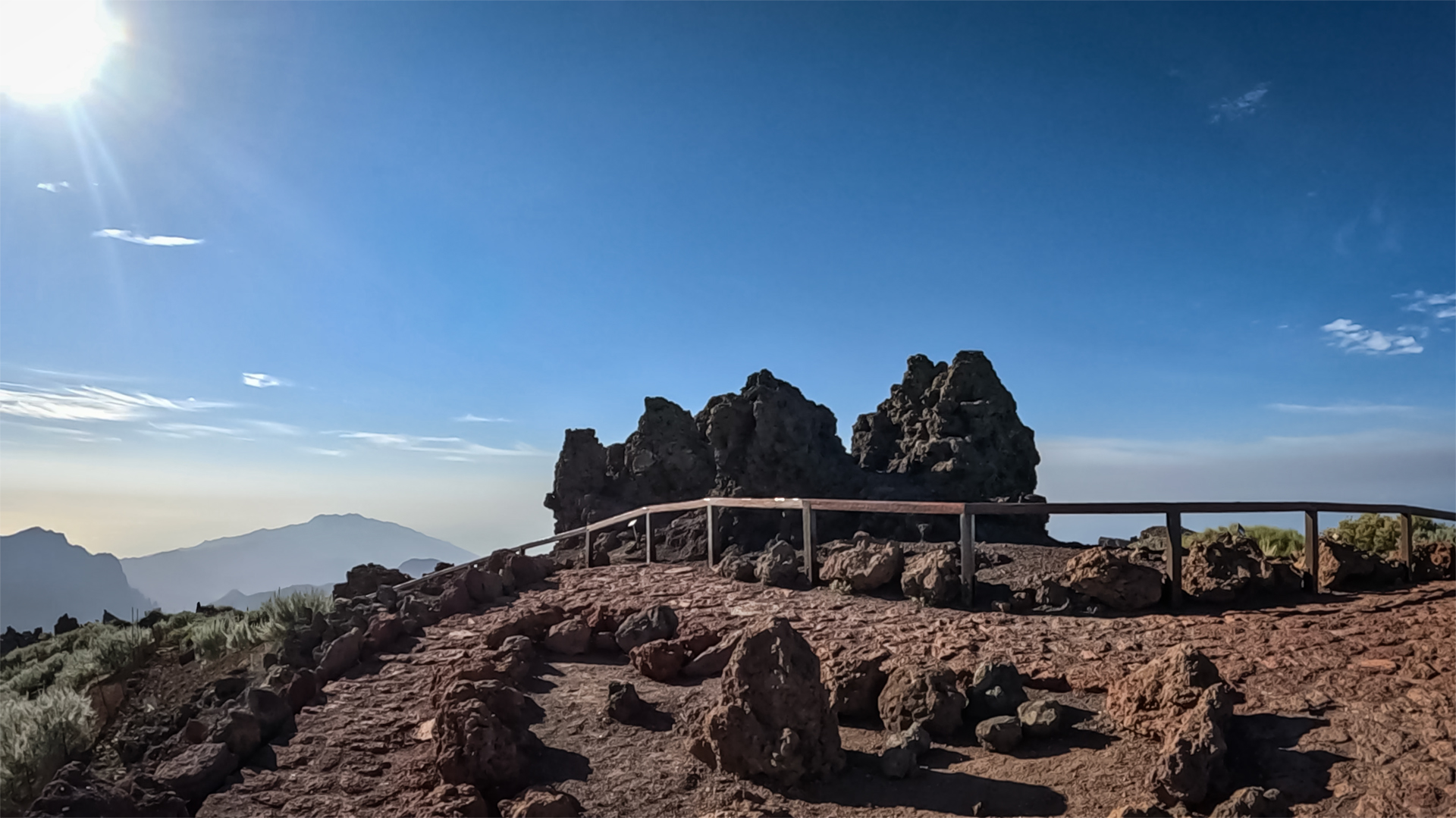
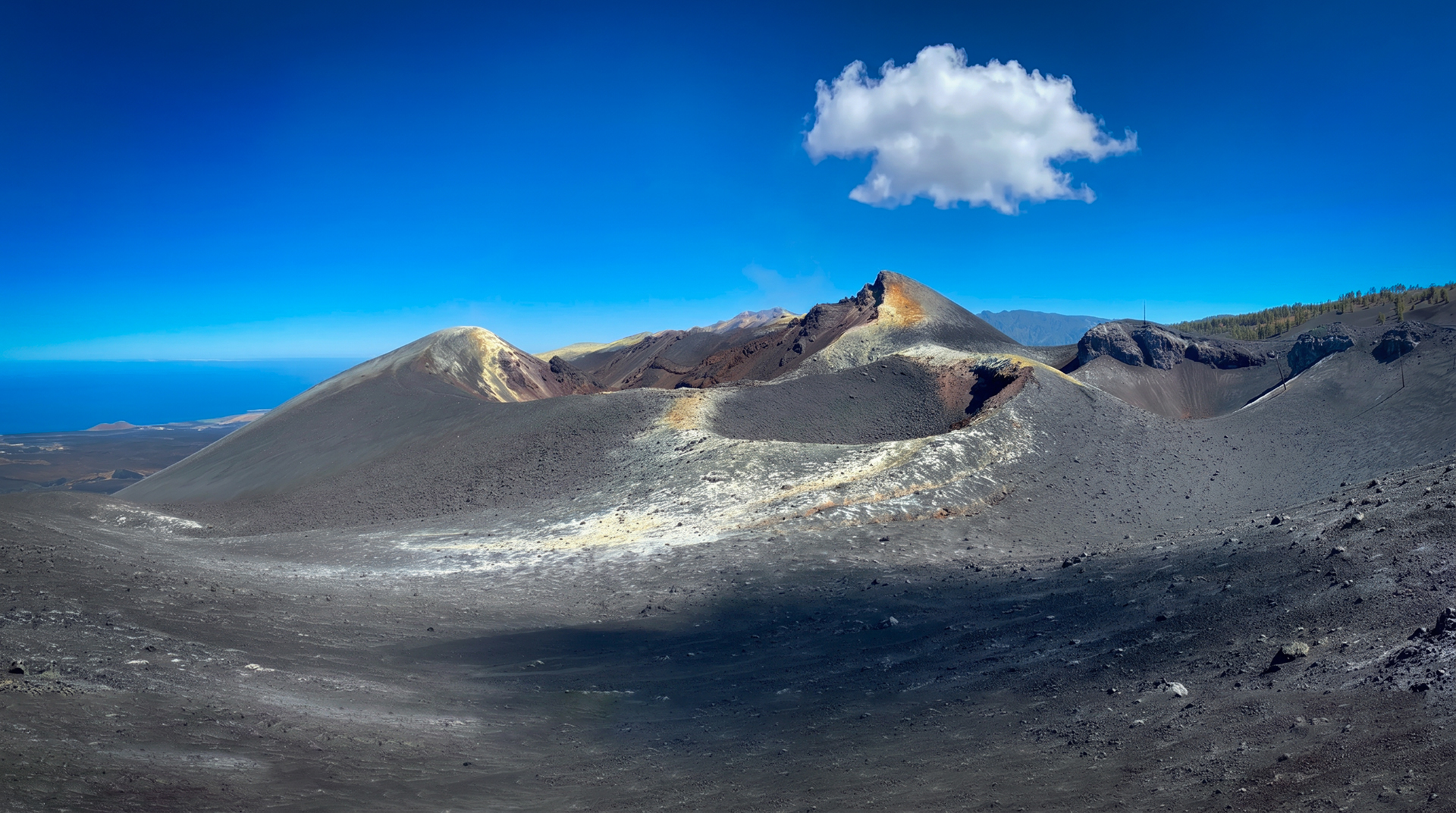
The morning is devoted entirely to Spain’s youngest volcano. From the Mirador de Las Hoyas or the viewpoint above Tacande, the full extent of the Tajogaite lava field – formed in the 2021 eruption – becomes visible. Marked paths lead across the solidified flows and give a vivid sense of the geological forces that reshaped this part of the island.
The afternoon brings one of the most memorable experiences of the trip: a boat trip from Puerto de Tazacorte. From the sea, La Palma reveals itself from a completely different angle. The cliffs rise up to 600 metres, and on the northern route the Cueva Bonita sea cave can be explored by small inflatable boat. Whale and dolphin sightings are common on the southern route.
The evening is best spent relaxing along the seafront promenade of Puerto de Tazacorte.
Day 5 – Fuencaliente: Volcanoes, Saltpans and Wine
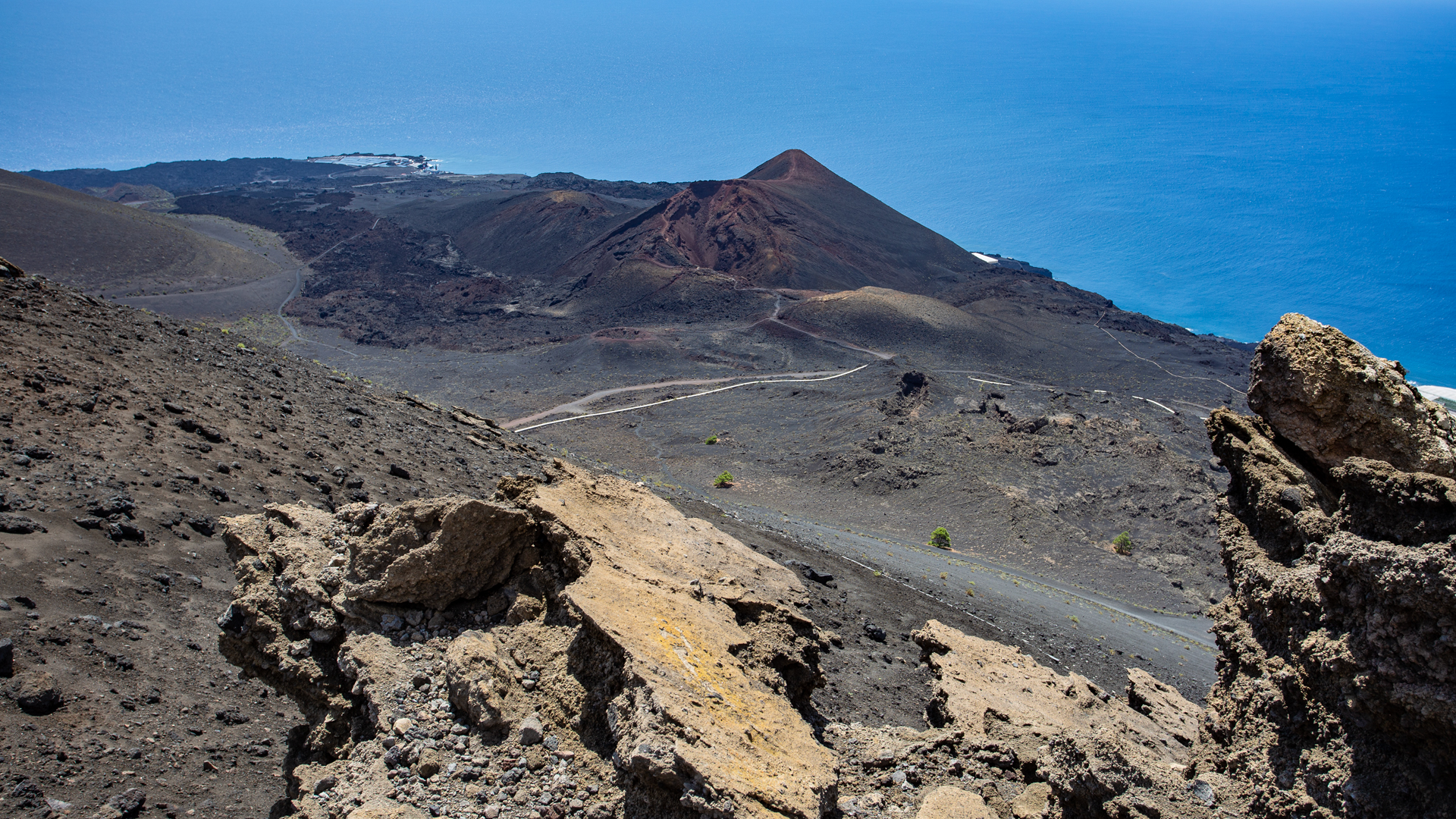
Today the route heads south. The first stop is the Volcán San Antonio visitor centre, whose crater rim offers a direct view down into the cone and across the lava landscape to the sea. A marked path then leads to Volcán Teneguía – the most recently active volcano on La Palma, which last erupted in 1971.
Afterwards, the Salinas de Fuencaliente saltpans are worth a visit – they are still in active use today, and hand-harvested Sal de Teneguía can be bought directly on site. A wine tasting at one of the Fuencaliente bodegas rounds off the day: this is the southernmost wine-growing region in Spain, and the volcanic soil gives the wines a distinctive mineral character. Return via the east coast.
Day 6 – The Green Northeast: Laurel Forest, Local Rum and Natural Pools
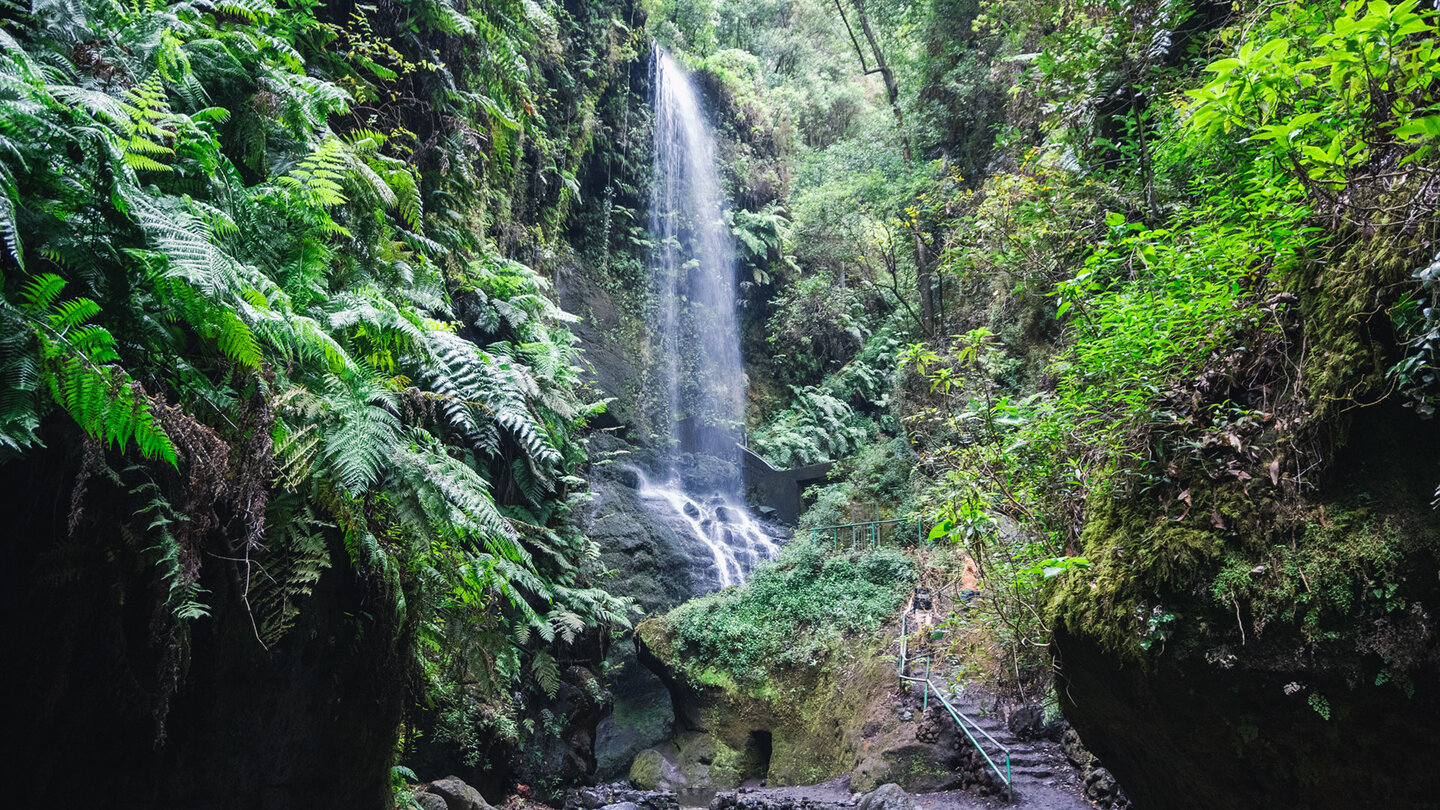
After the volcanic landscapes of the south, today reveals an entirely different side of the island. The destination is the humid north-east: Los Tilos, with its ancient laurel forest – one of the best-preserved Macaronesian laurisilva forests on the Canary Islands. The Marcos y Cordero canal route leads through several tunnels cut directly into the rock, a unique trail that requires a head torch.
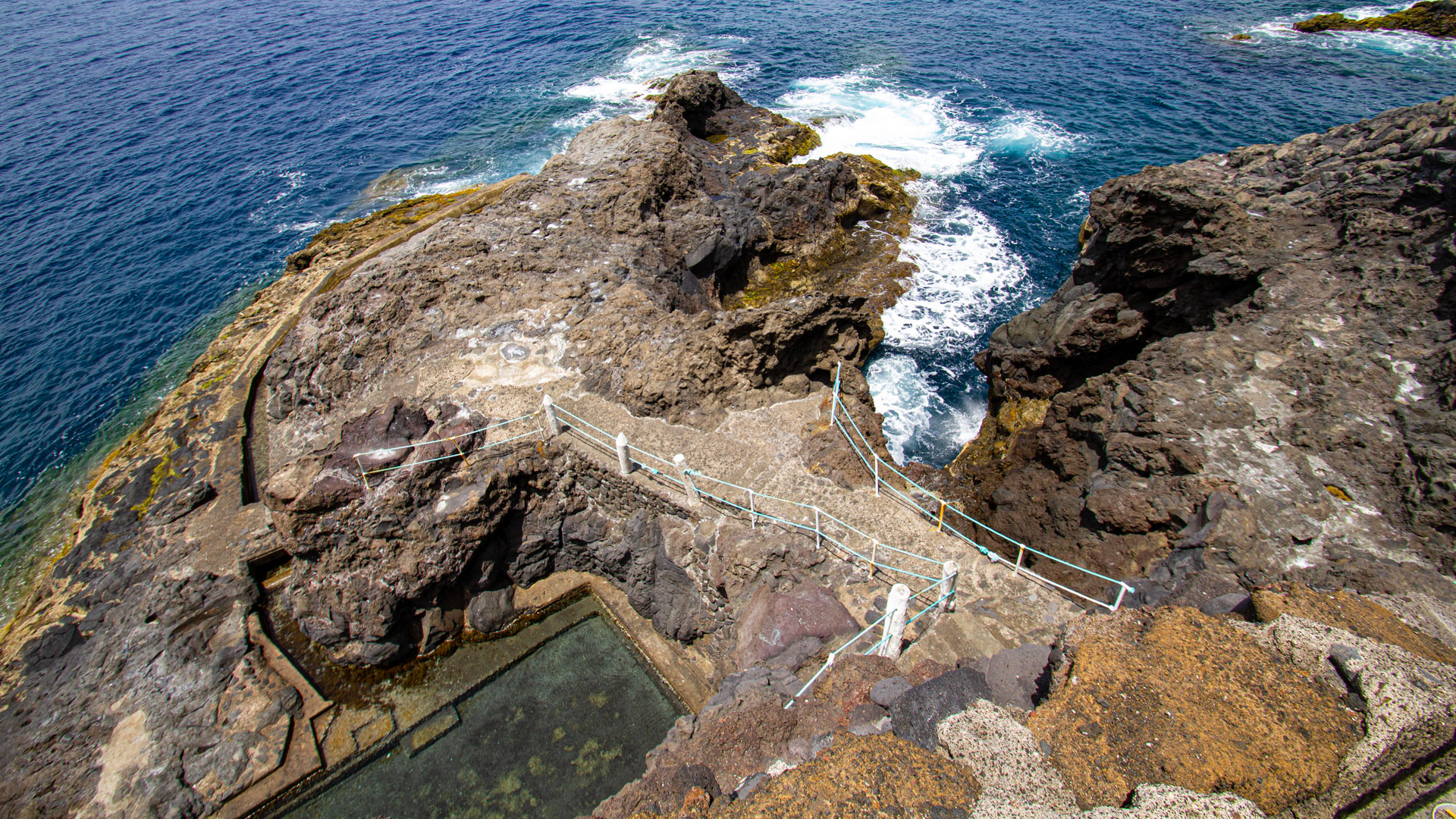
In the afternoon, the Ron Aldea rum distillery in Puerto Espíndola is well worth a visit. After a tour and tasting, continue north to the natural seawater pools at La Fajana or Barlovento for a swim. The return route south offers a final look at the wild north coast before heading back to Los Llanos.
Day 7 – Puntagorda, Mirador del Time and Departure
On the final day, the departure time determines how much of the island can still be explored. Those with an afternoon or evening flight can combine a visit to the Puntagorda farmers’ market – almond products, local cheese, Vino de Tea, honey – with a morning walk in the north-west.
The return journey is worth pausing at the Mirador del Time. From here, the view extends across the entire Aridane valley, the west coast, and on clear days all the way to Tenerife. Lunch in Tazacorte or El Paso before heading to the airport in Santa Cruz de La Palma.
Those with a very early return flight should consider spending the last night in Santa Cruz de La Palma or Los Cancajos – both are just a few minutes from the airport.
Accommodation Recommendations for the Road Trip
For a seven-day road trip, there is no need to change accommodation every other day. Two bases are entirely sufficient and make for a far more relaxed holiday.
| Trip section | Recommended base | Why? |
|---|---|---|
| Days 1–3 | Santa Cruz de La Palma or Los Cancajos | Ideal for the arrival, east coast, Caldera, and Roque de los Muchachos. |
| Days 4–7 | Los Llanos de Aridane, El Paso, or Tazacorte | Perfect base for Tajogaite, the west coast, boat trip, Fuencaliente, and the north-west. |
Practical Notes
A hire car is virtually indispensable for this road trip and should be booked as early as possible. The most convenient option is to collect it directly at the airport.
Access to La Cumbrecita requires a free parking reservation at reservasparquesnacionales.es. During holidays and public holidays, the available time slots are often fully booked several weeks in advance.
Those wishing to visit the observatory at Roque de los Muchachos should book guided tours in good time through the Instituto de Astrofísica de Canarias. Note also that the summit road is closed at night to protect the observatory.
The popular boat trips from Puerto de Tazacorte are also often fully booked in high season. A reservation one or two days in advance is therefore advisable.
For hikes at altitude, a light jacket is essential even in summer. Between the coast and Roque de los Muchachos, the temperature difference is often more than 15 degrees.
Accommodation for the Road Trip
La Palma is ideal for holiday homes and fincas. Unlike the larger Canary Islands, there are no sprawling hotel complexes here – instead, individual properties with plenty of peace and, frequently, breathtaking sea views.
For a road trip, accommodation on the western side of the island is recommended. From Los Llanos de Aridane, El Paso, or Tazacorte, the Caldera de Taburiente, Tajogaite, the west coast, and the south are all within easy reach. The north-west and Roque de los Muchachos are also easily accessible from here.
Those who prefer to stay by the sea will find numerous holiday apartments in Tazacorte and Puerto Naos. For nature lovers, the fincas around El Paso and Los Llanos offer an ideal base.
Clariso.eu offers a wide selection of vetted holiday homes and fincas in the most beautiful regions of the island – from peaceful rural retreats to properties with a pool and sea view.
Planning at a Glance
| Highlight | Day | Planning tip |
|---|---|---|
| Santa Cruz de La Palma | Day 1 | Perfect for the arrival day – everything is within easy walking distance. |
| Caldera de Taburiente (La Cumbrecita) | Day 2 | Book parking in advance. |
| Roque de los Muchachos | Day 3 | Visit in the morning – visibility is usually best then. |
| Tajogaite | Day 4 | Combine with the Tajuya viewpoint or Mirador de Las Hoyas. |
| Boat trip from Tazacorte | Day 4 | Book early; Cueva Bonita and Porís de Candelaria are usually included. |
| Fuencaliente | Day 5 | San Antonio, saltpans, and lighthouses can easily be combined in one day. |
| Cubo de la Galga & Los Tilos | Day 6 | Ideal for a varied nature day in the north-east. |
| Puntagorda & Mirador del Time | Day 7 | Perfect final stop before heading back to the airport. |
Frequently Asked Questions (FAQ)
Is one week enough to get to know La Palma?
Should I change accommodation during the road trip?
Do I need a hire car for this road trip?
When is the best time of year for this road trip?
Can I do the road trip from a single base?
Is a boat trip worth it even without interest in whales?
This article is based on the on-the-ground knowledge of the Gequo editorial team – publishers of the Reisezeit hiking guides and operators of Sunhikes.com. Last updated: May 2026