Diving on La Palma – A Volcanic World Beneath the Waves
Everything La Palma offers above the water – volcanic shapes, lava formations, dramatic cliffs – it offers below the surface too. Dive here and you’re diving through a volcanic underwater world: lava tubes, basalt arches, vertical walls dropping away to a thousand metres – and, since 2021, fresh newly formed lava reefs from the Tajogaite eruption, currently being colonised by marine life.
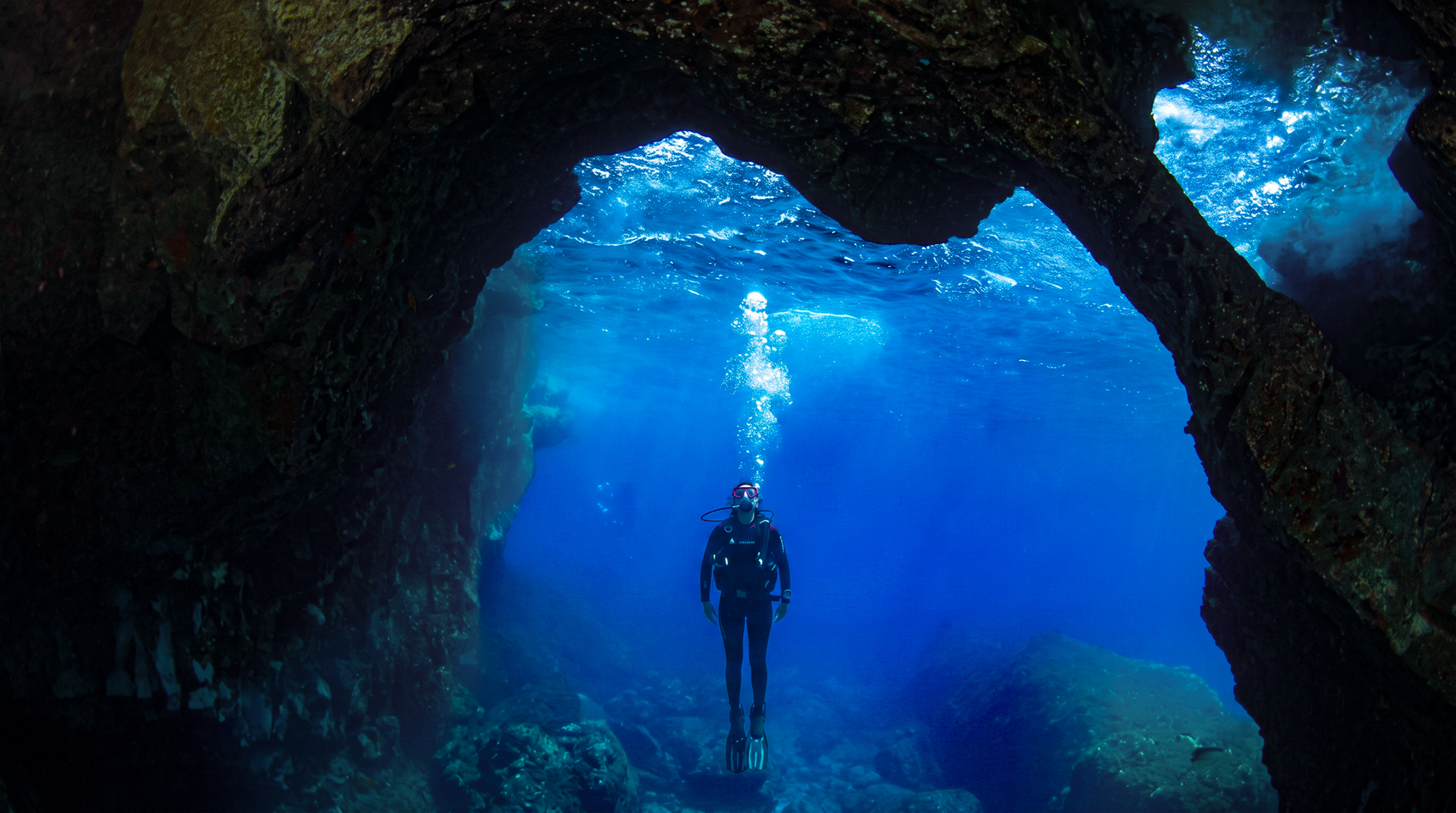
Visibility is exceptional: 30–40 metres is standard, with up to 50 metres possible under optimal conditions. Water temperatures stay between 18 and 24°C year-round – cooler in winter, pleasantly warm in summer. Suitable for beginners and experienced divers alike, though the most spectacular sites are best left to the more advanced.
The Best Dive Sites
Las Cruces / Malpique – The 40 Crosses
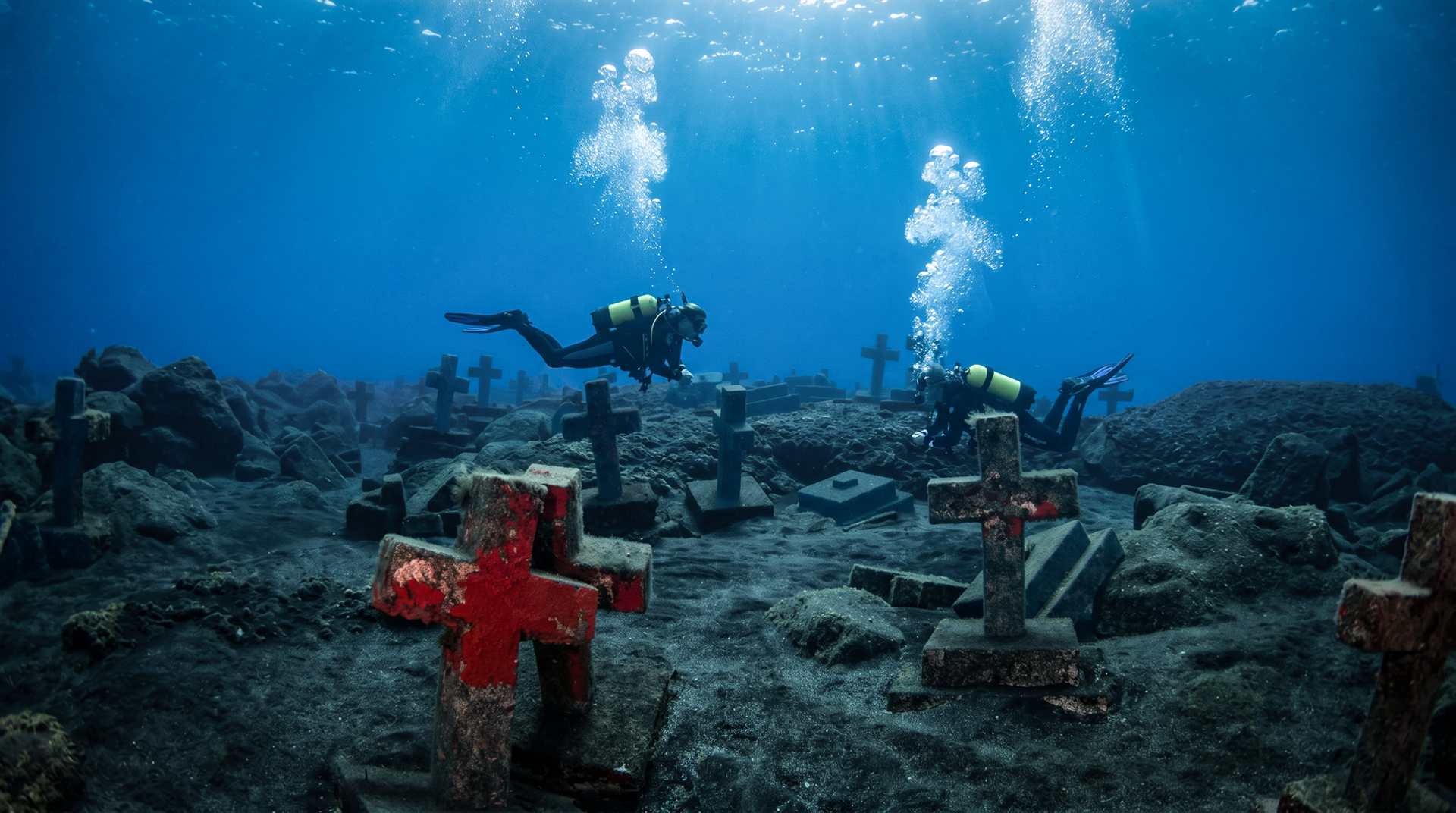
La Palma’s best-known dive site lies off the southern tip near Fuencaliente. At a depth of around 20 metres, 40 stone crosses stand on the seabed – an underwater memorial to Jesuit missionaries killed by pirates on the open sea in the 16th century. Their remains were buried here and the crosses set in place. This dive combines history and nature in a way that’s rarely found elsewhere.
La Bombilla – Lava Tubes and Arches
La Bombilla, on the west coast, offers a labyrinth of solidified lava tubes and massive basalt arches. One of the island’s most impressive sites for experienced divers – depths of around 15–25 metres, good visibility, and a rich variety of marine life.
Puerto de Naos – Night Diving
Puerto de Naos on the west coast is known for night dives – your best chance of spotting rays (stingrays, butterfly rays) and angel sharks hiding in the sand. Angel sharks are nocturnal and rarely seen during the day.
Los Cancajos – Ideal for Beginners
Los Cancajos in the east of La Palma offers sheltered bays with calm water – ideal for first dives, taster courses and check dives. Several dive centres are located right on the beach.
The Tajogaite Lava Delta
Since the 2021 eruption, new underwater structures have appeared off the west coast: the solidified lava delta that the Tajogaite pushed into the sea is now forming the island’s newest reefs. Colonisation by marine life has already begun – corals, fish and invertebrates are starting to populate the fresh lava formations. Some dive centres offer dedicated tours to these brand-new reefs.
All Dive Centres with Contacts (2026)
| Provider / Location | Phone · WhatsApp | Highlights |
|---|---|---|
| Dive-Community La Palma (formerly La Palma Diving Centre) · Los Cancajos and Puerto Naos | +34 922 18 13 93 · +34 626 44 46 22 | German-speaking, right on the beach, PADI/SSI courses |
| Casa de Buceo · Los Llanos (west coast) | +34 681 05 98 01 · +34 681 05 98 01 | Personalised attention, small groups |
| Duikcentrum La Palma · Los Cancajos | +34 922 43 33 21 · +34 628 35 15 67 | Family-friendly, focus on safety & ecology |
Snorkeling on La Palma
If you’d rather not dive, or you’re a beginner: Los Cancajos and the Charco Azul in San Andrés are the best spots for snorkelling. The clarity of La Palma’s water makes snorkelling a real experience in itself – fish, sea urchins, starfish and the volcanic underwater terrain are impressive even without a tank.
Important Notes
Surface interval and elevation rules: after a dive, avoid any ascent above 300–500 metres for at least 24 hours – this means avoiding drives to Roque de los Muchachos or La Cumbrecita on the same day. The Tajogaite lava field has some areas with possible residual gas activity – dive centres are aware of the current conditions. Snorkelling safety note: exercise extreme caution when snorkeling in the open Atlantic because of currents. Sheltered spots such as Los Cancajos or the bathing lagoon at La Fajana are the safest places to do it.
Top Dive Sites
| Las Cruces / Malpique (Fuencaliente) | 40 stone crosses on the seabed – a historic memorial to the Martyrs of Tazacorte (Fuencaliente coast, 1570). Unique in the Atlantic. |
|---|---|
| La Bombilla | Labyrinth of lava tubes and archways on the west coast. Technically demanding, visually spectacular. |
| Puerto Naos | Night dives: rays and angel sharks are especially active at night. |
| Los Cancajos | Protected east coast bays – ideal for beginners, check dives, and snorkelling. |
| Cueva Bonita | Accessible by boat only. Spectacular light display inside the sea cave in the afternoon. |
Frequently Asked Questions (FAQ)
What sets diving on La Palma apart from other Canary Islands?
What are the 40 Crosses of Malpique?
Black corals – the icon of La Palma’s underwater world
The most iconic creature in La Palma’s underwater world isn’t a fish but a coral: the black coral (Antipathes wollastoni). It grows only in deeper, nutrient-rich waters, forming bushes on La Palma’s vertical walls that resemble dark branches. Some specimens are decades old. At the west coast dive sites – especially Las Cruces and La Bombilla – they can be found in striking density.
Alongside the black coral, La Palma’s underwater caves are also home to tube anemones, sea anemones and various brightly coloured sponge species. Cleaner shrimp, ghost crabs and the occasional moray eel hide in the cavities of the lava tubes. For a volcanic island of this size, the biodiversity is exceptional.
This article is based on the on-the-ground knowledge of the Gequo editorial team – publishers of the Reisezeit hiking guides and operators of Sunhikes.com. Last updated: May 2026