Sal de Teneguía – The Atlantic in Small White Flakes
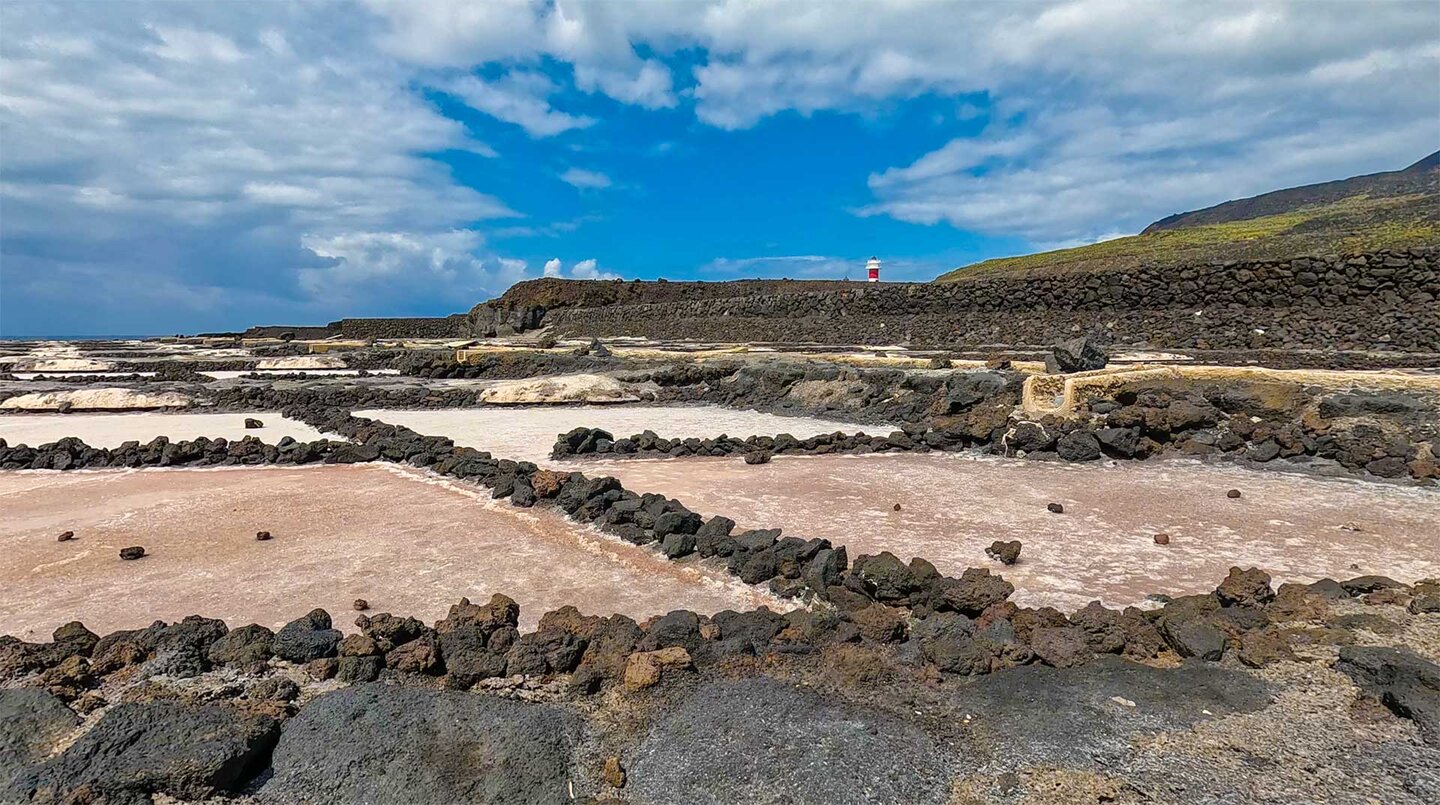
At the southernmost tip of La Palma lies a stretch of flat white basins: the Salinas de Fuencaliente. The seawater the Atlantic drives in each day evaporates here in the sun. What remains are crystals. And to taste these crystals with a small spoon is to taste the ocean itself — not the salt shaker, but the sea itself.
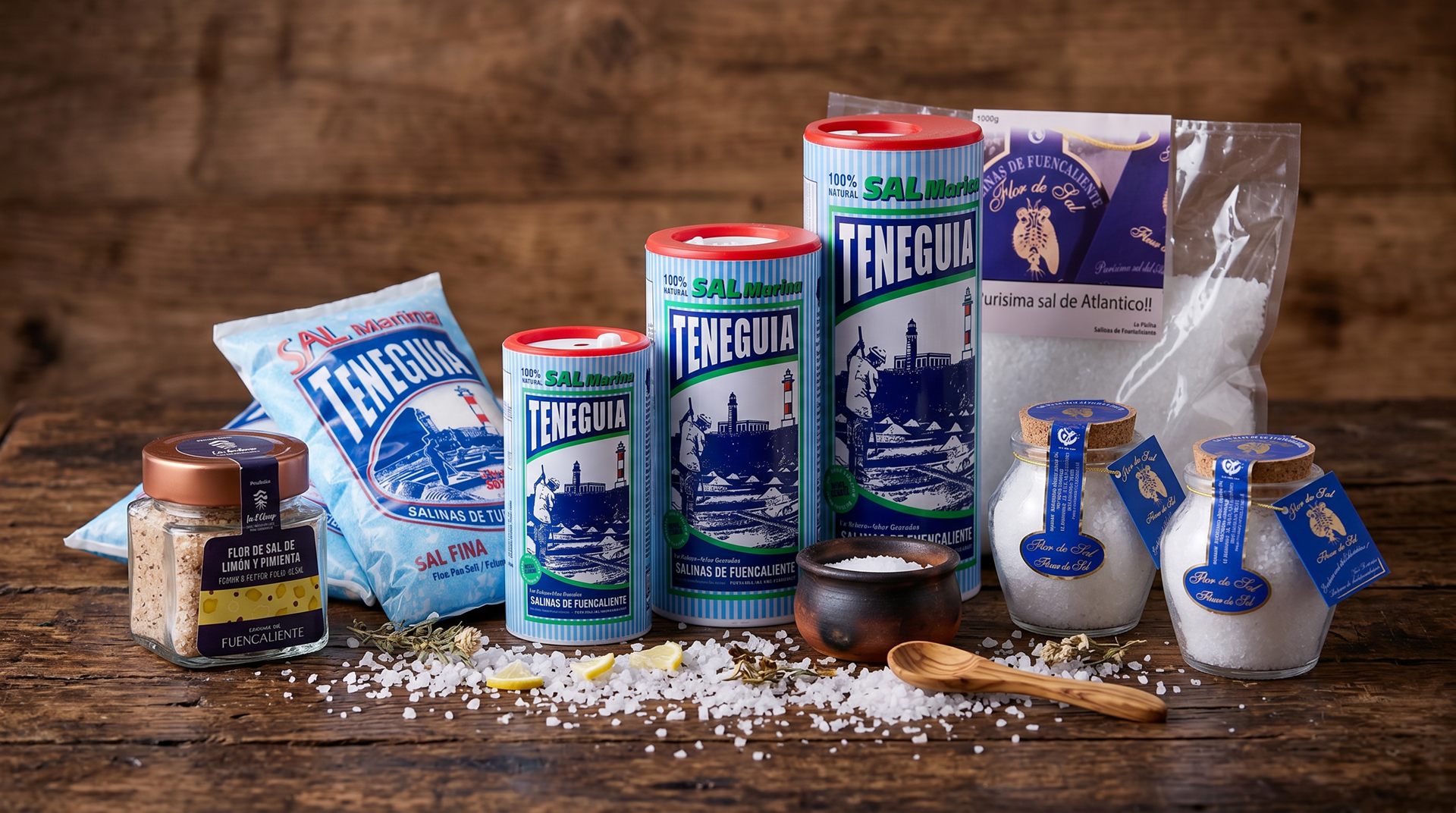
Sal de Teneguía is hand-harvested fleur de sel from the Atlantic. No heat treatment, no anti-caking agents, no industrial processing. The topmost layer of salt crystals — the lightest and finest, formed by surface tension — is drawn off by hand with small rakes, dried and filled into packaging. This is the most exclusive sea salt La Palma produces, and it finds its way into restaurant kitchens from Madrid to Milan.
Why Fuencaliente?
The southern tip of La Palma offers ideal conditions for salt production: plenty of sunshine, little rainfall, steady trade winds and flat lava platforms right by the sea. This allows seawater to evaporate particularly efficiently — a prerequisite for high-quality sea salt.
What Makes This Salt Special
Natural sea salt contains small amounts of minerals such as magnesium, calcium and potassium alongside sodium chloride. Its natural iodine content is low, however, and doesn’t match that of iodized table salt. The real appeal of Flor de Sal lies in its delicate crystal structure and mild flavour. On the tongue the crystals dissolve instantly — a saltiness that flares and then spreads, rather than sitting heavy and flat on the palate. That is the difference.
How to Use Sal de Teneguía
Finishing salt — not cooking salt. Sal de Teneguía goes on the finished dish, not into the cooking water. Sprinkle it over a freshly seared chuletón just before serving. Add it to fresh bread with good olive oil. Use it on queso asado as a final flourish. Add it to caramel desserts: the salt-caramel combination works far better with real sea salt flakes than with iodized table salt.
Visiting the Saltworks
The Salinas de Fuencaliente are located right by the Faro de Fuencaliente (lighthouse) at the island’s southern tip. A visit is especially rewarding in spring and summer, when the basins are active and shimmer pink from salt-loving microalgae. The colour comes mainly from microalgae such as Dunaliella salina and other salt-tolerant microorganisms.
At the on-site salt shop (Tienda de la Sal) you’ll find not only Flor de Sal but also spiced salts, gift sets and other products from the saltworks. The small sales stand is open daily (hours vary). Alongside Sal de Teneguía there is sometimes also Sal Negro (with activated charcoal) as a modern variation.
Right next to the saltworks is the award-winning restaurant Jardín de la Sal. Its modern architecture, views across the salt basins to the Atlantic, and cuisine based on fresh fish and regional produce make it one of the most beautiful restaurants on La Palma.
Frequently Asked Questions (FAQ)
What is the difference between Flor de Sal and regular sea salt?
Can you visit the Salinas de Fuencaliente?
Why are the salt basins sometimes pink?
When is the best time to visit the saltworks?
Can I take Sal de Teneguía home on a plane?
What is Flor de Sal used for?
This article is based on the on-the-ground knowledge of the Gequo editorial team – publishers of the Reisezeit hiking guides and operators of Sunhikes.com. Last updated: May 2026