Hike Roque de los Muchachos to Roque Palmero
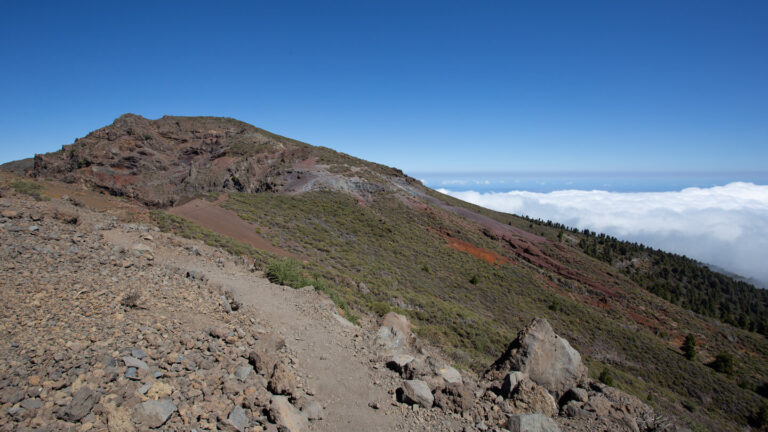
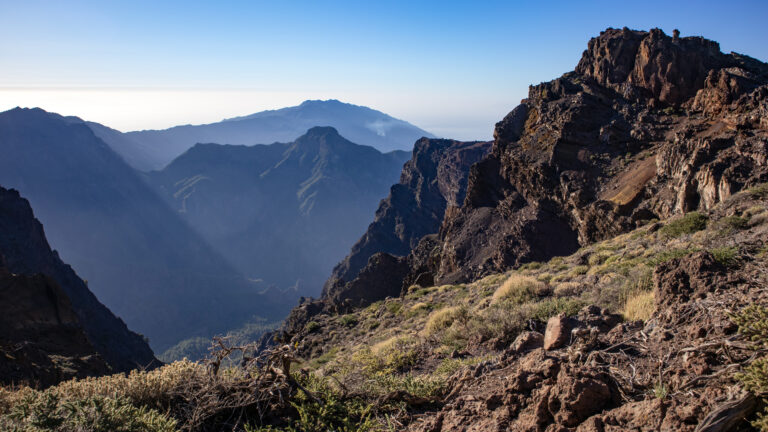
The hike from the Roque de los Muchachos (2,426 m) to the Roque Palmero (2,310 m) leads through the mountain landscape of the national park with spectacular caldera views: 6.4 km, 274 m, moderate, 2:30–3:00 hours. The colourful mountain slopes in red, orange and brown tones are another highlight in this majestic high mountain landscape.
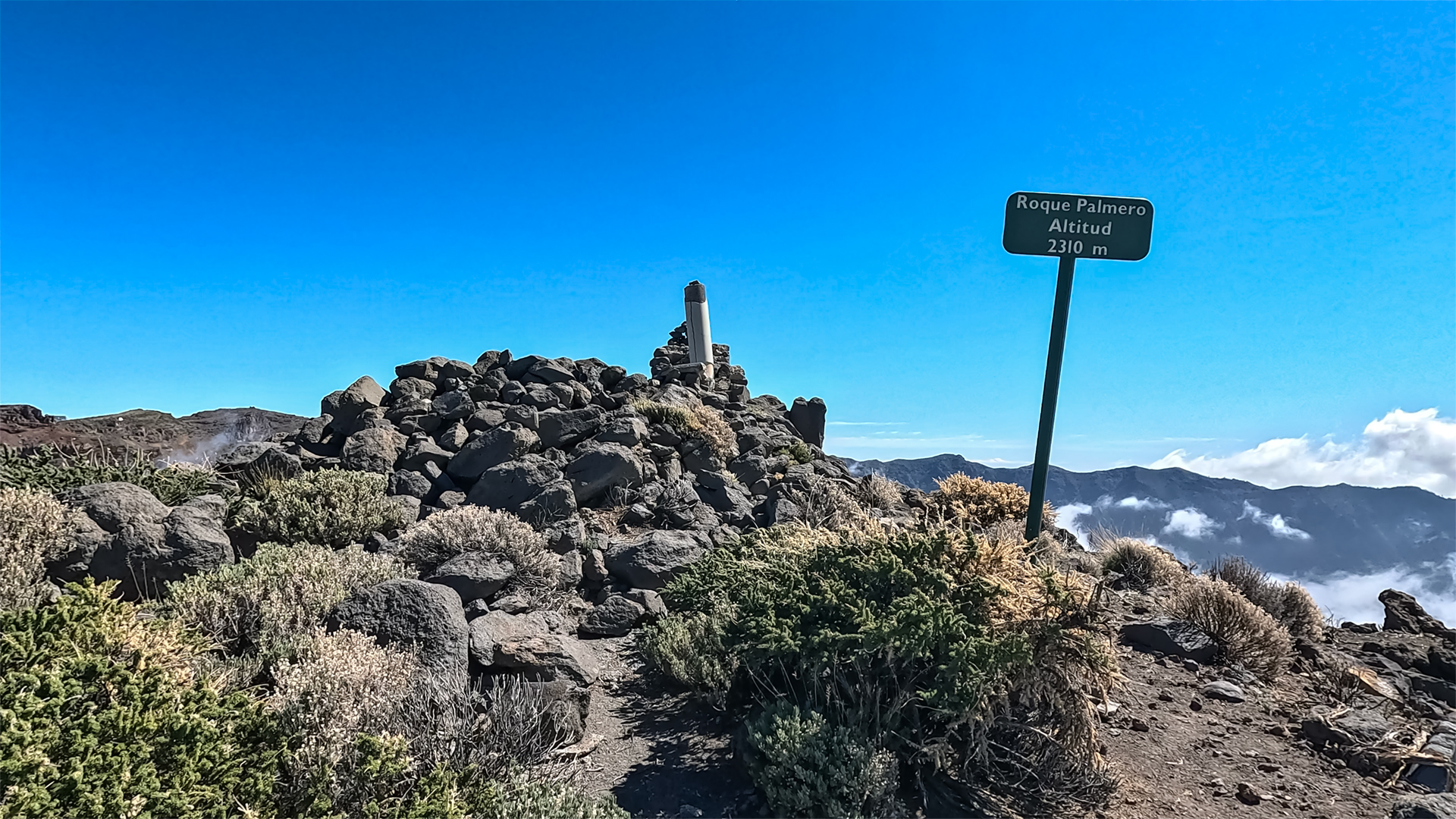
The Roque Palmero is the second highest peak on La Palma and part of the northern caldera ridge ring. The route leads from the well-known summit car park northwards on the ridge path — in the quieter, less visited direction, away from the observatories.
Route facts at a glance
| Route type | Return |
|---|---|
| Distance | 6.4 km |
| Elevation | 274 m ascent / 274 m descent |
| Highest point | Roque de los Muchachos: 2,426 m |
| Second Peak | Roque Palmero: 2,310 m |
| Duration | 2:30–3:00 hours |
| Difficulty | moderate (high mountains, a good head for heights required, sure-footed) |
| Starting point | Roque de los Muchachos car park, LP-4/LP-403 |
| Protected Area | Caldera de Taburiente National Park (since 1954) |
| Equipment | Water, wind protection, alpine footwear, sun protection |
The route in detail
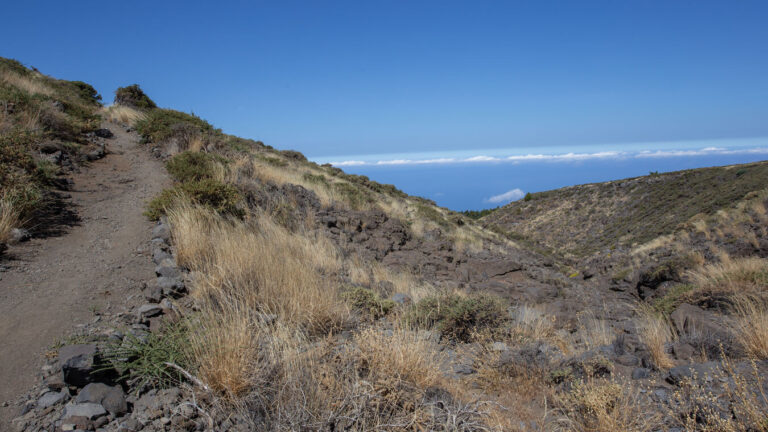
From the car park at the Roque de los Muchachos north on the crest path. The path leads away from the observatory zone into the quieter northern flank of the ridge ring. The mountain slopes glow in various shades of red — oxidation of the iron-containing basalt, which forms particularly extensive areas here. Passing fenced areas with young plants of rare endemic species. Finally: Roque Palmero (2,310 m) — second highest peak of La Palma, quieter than the main summit, with views over the northern edge of the Caldera.
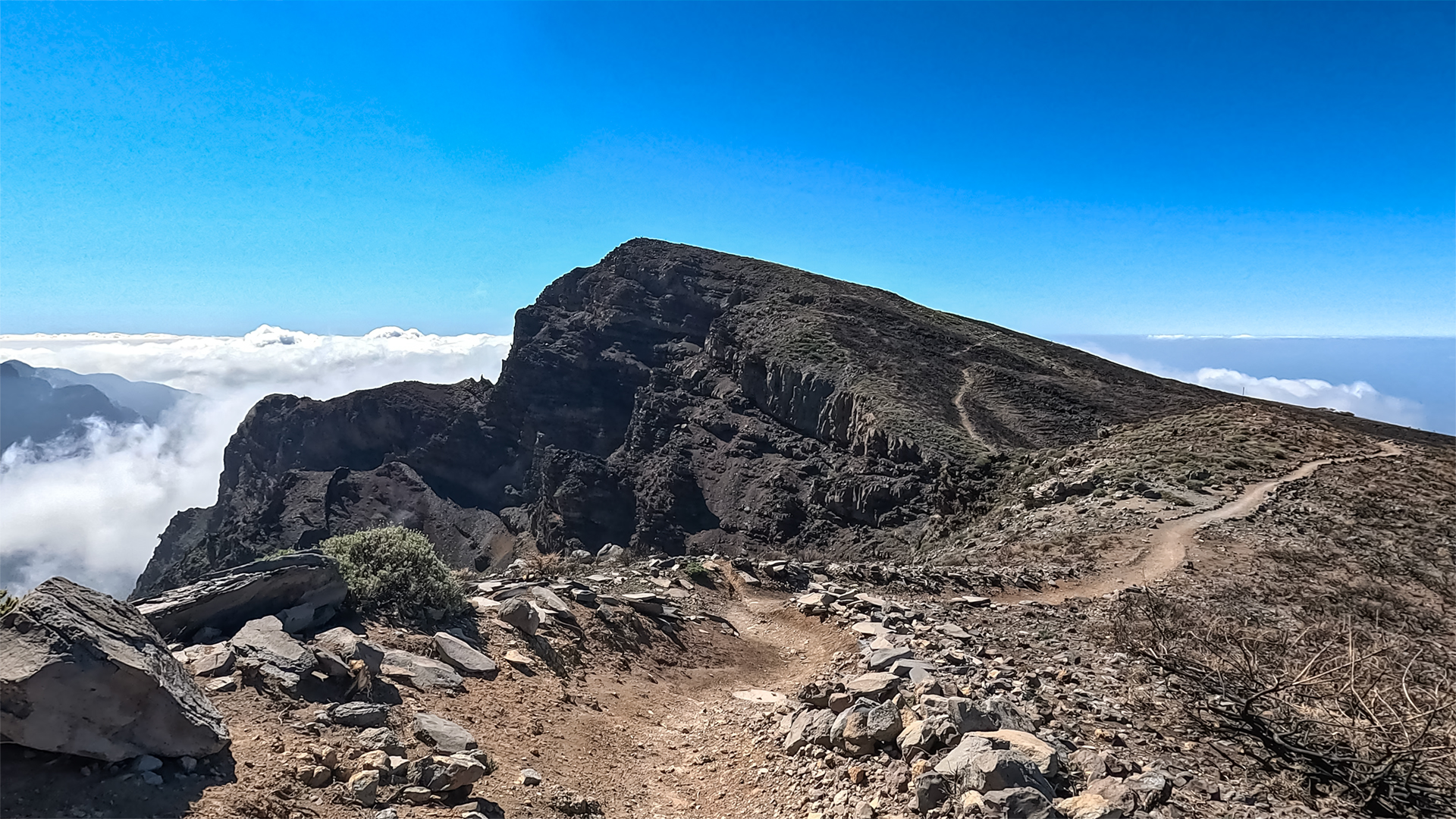
Roque Palmero: the quiet neighbouring summit
Those who know the Roque de los Muchachos know it as a lively vantage point with tourist buses and observatory visitors. The Roque Palmero, only 6 km away on the same ridge ring, is its quiet neighbour: no parking space directly below, no observatory, no bus group. Anyone standing here is almost always alone — with 2,310 m of altitude and the same caldera backdrop.
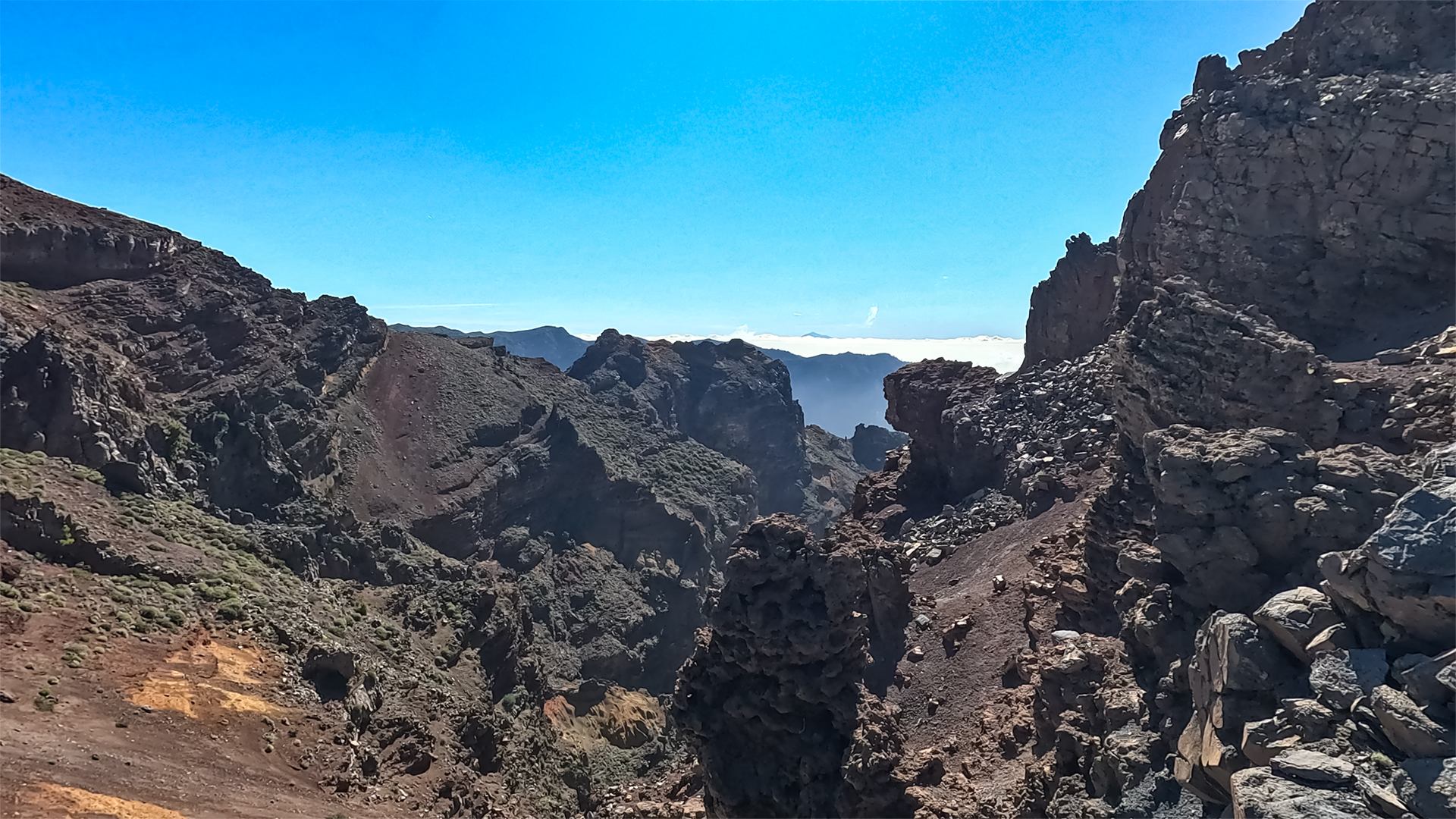
The coloured mountain slopes between the two peaks are one of the most impressive geological images of La Palma: red, orange and brown tones resulting from the oxidation and mineral enrichment of various basalt layers. From a distance, these colours look like an abstract painting — and from up close, like a teaching piece on volcanology.
The Roque observatory zone
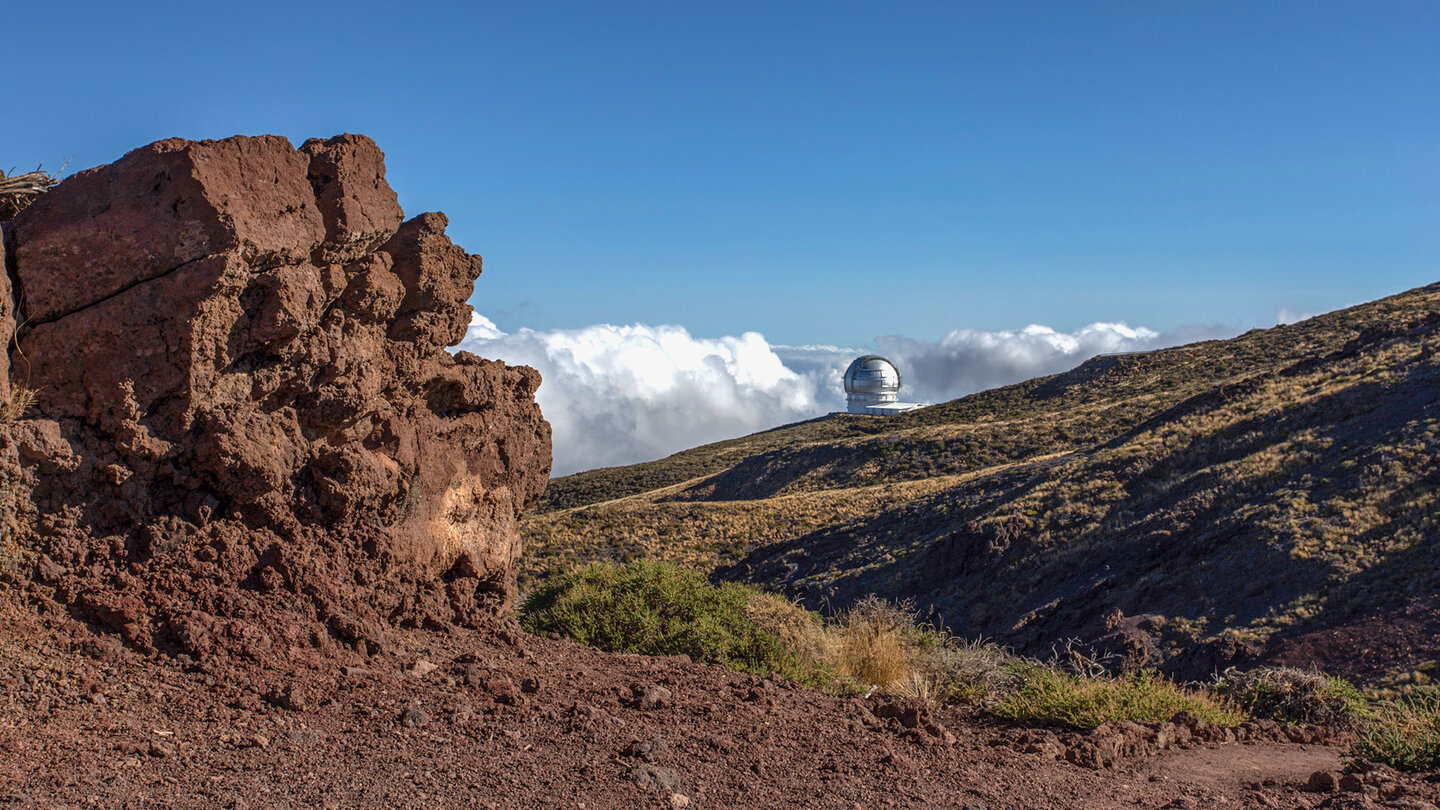
The Astrophysical Observatory ORM at the Roque de los Muchachos houses some of the most important telescopes in the world: William Herschel Telescope (the largest optical telescope of the ORM), Isaac Newton Telescope, Jacobus Kapteyn Telescope, and the Magic Telescope system for gamma-ray research. La Palma has been an official Starlight reserve since 2002 — a seal of quality for particularly dark night skies. The way to Roque Palmero leads out of the observatory zone — into the undisturbed nature of the national park.
Best travel time
| Season | Character | Please note |
|---|---|---|
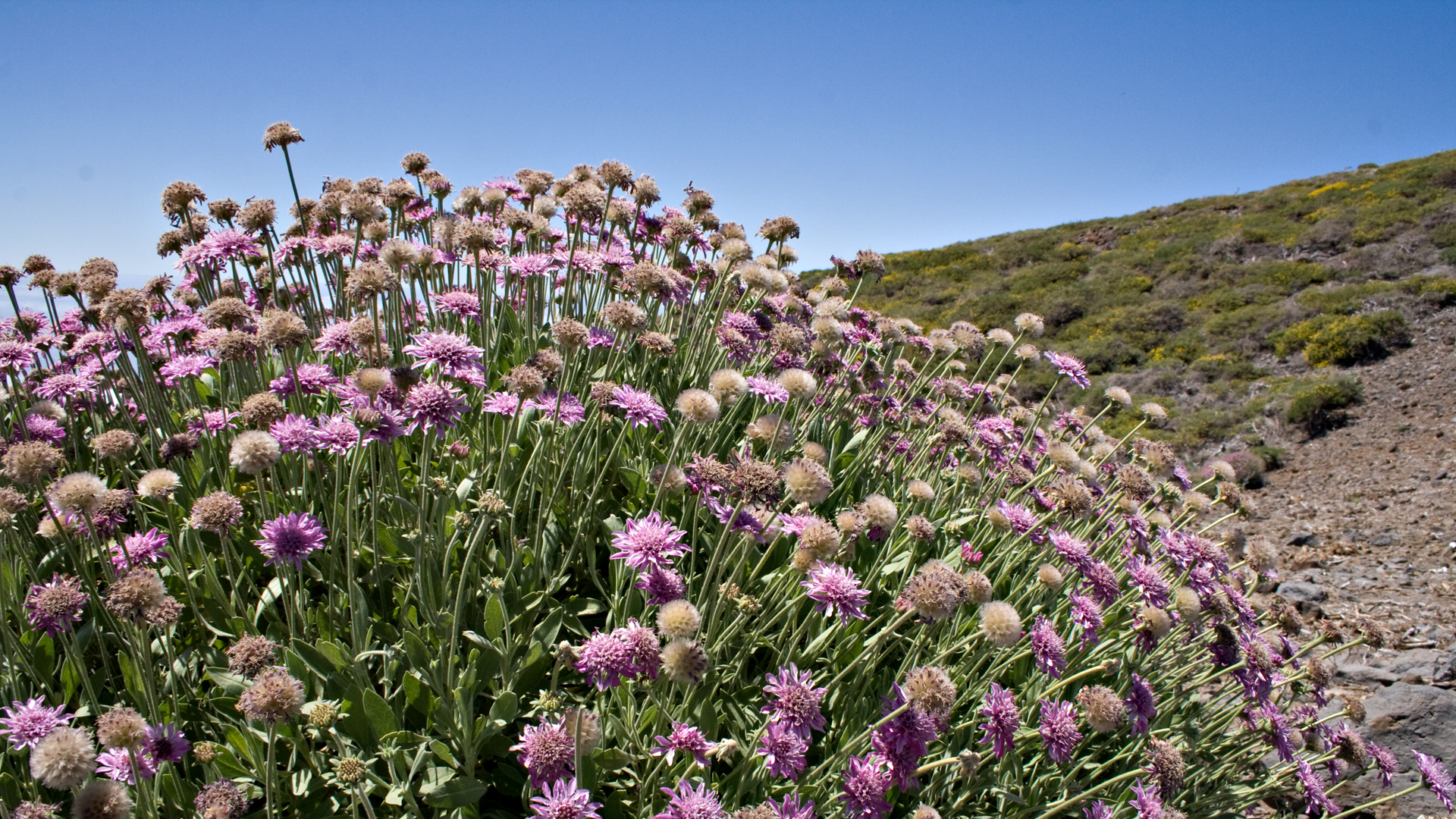
| April–June | Tajinaste blooms; colourful landscape intense | Best time |
| Summer | Clear; intense sun at 2,300 m | Sun protection mandatory |
| Autumn | Best distance view of all neighbouring islands | Most popular season |
| Winter | Frost possible | Only in good conditions |
Combinable tours
| Tour | Data | Character |
|---|---|---|
| Espigón del Roque Short Tour | 1.2 km, easy | South of the car park |
| Pico de la Cruz → Roque → Espigón | 10.1 km, moderate | Southern Ridge Route |
| GR-131 Stage 2: Roque → El Pilar | 26.1 km, difficult | Full-day comb route to the south |
GPS track and 3D route planner
To the route page on Sunhikes: Roque de los Muchachos – Roque Palmero
3D route planner from Sunhikes
The northern caldera ridge ring
The Roque Palmero is located on the northernmost section of the Caldera ridge ring — in the direction in which the Caldera de Taburiente still has its full ring shape before the Barranco de las Angustias in the south breaks through the ring. On the way to the Roque Palmero, the ridge ring is seen as a complete geometry: an almost closed circle of rocky peaks that surrounds the caldera like a wall.
The Roque Palmero is barely listed on most hiking maps and in most guidebooks. This is its advantage: Those who know it and go have the northern caldera edge almost to themselves. The way there is on the same ridge that the GR-131 uses — but in the rarer, more northerly direction. Footfall: very low. Especially during the week.
Reintroduction of endemic species
The fenced plots along the ridge path on the summit zone are part of a reintroduction programme for endangered endemics of La Palma’s high mountain zone. Especially the Tajinaste (Echium wildpretii) and several species of broom (Chamaecytisus proliferus) are bred here under controlled conditions until they are independent and then released into the open high mountain vegetation. The Observatorio del Roque de los Muchachos and the National Park are jointly funding this programme. It is part of the Starlight Reserve management: dark sky + intact nature = complete reserve.
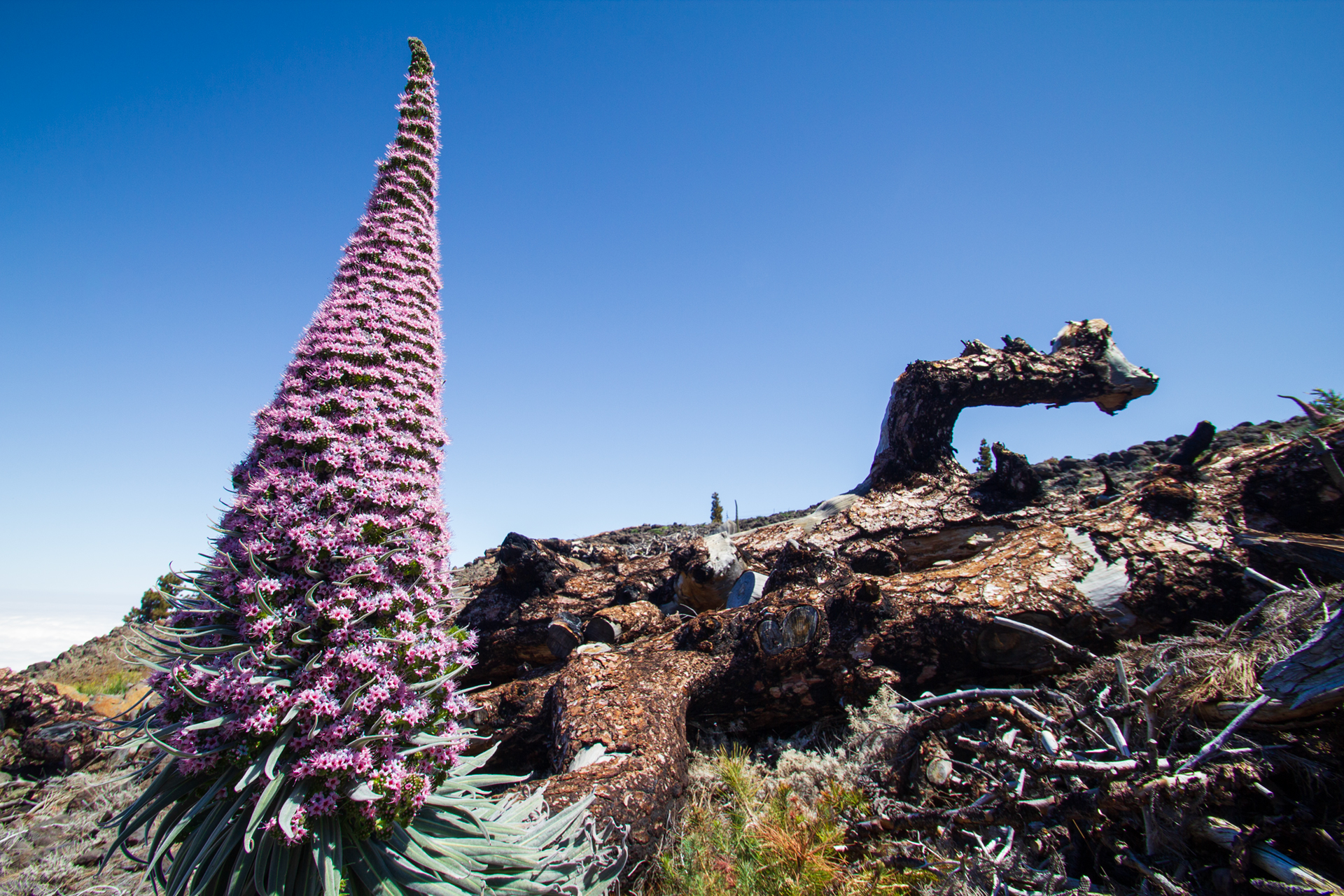
The Roque Palmero is one of the peaks of the Canary Islands, which are hardly mentioned in travel guides and are therefore worthwhile. 2,310 m high, the same panorama as the Roque de los Muchachos, but in silence. If you stand on the top of the Roque Palmero and look at the caldera, you have the same picture as at the main summit — but with the Roque de los Muchachos in the distance, instead of the other way around. That’s the perspective postcards don’t show.
If you combine the Roque-Palmero tour with an overnight stay at the Roque de los Muchachos (bivouac for the experienced, not in the national park, outside the closed zones), you will have the best light for the coloured mountain slopes in the morning: the reddish-brown tones of the iron-rich basalt shine most intensely in the early morning light — these are the photos that hikers take home from this route.
The ridge path north of the Roque: little known, very quiet
The crest path north of the Roque de los Muchachos — between the main summit and the Roque Palmero — is the least visited section of the GR-131. Most hikers go south (towards El Pilar, Cumbre Vieja) or follow the PR-LP-6 +7 from the LP-4. North to the Roque Palmero: hardly a sign, hardly any other hikers, but the same spectacular mountains.
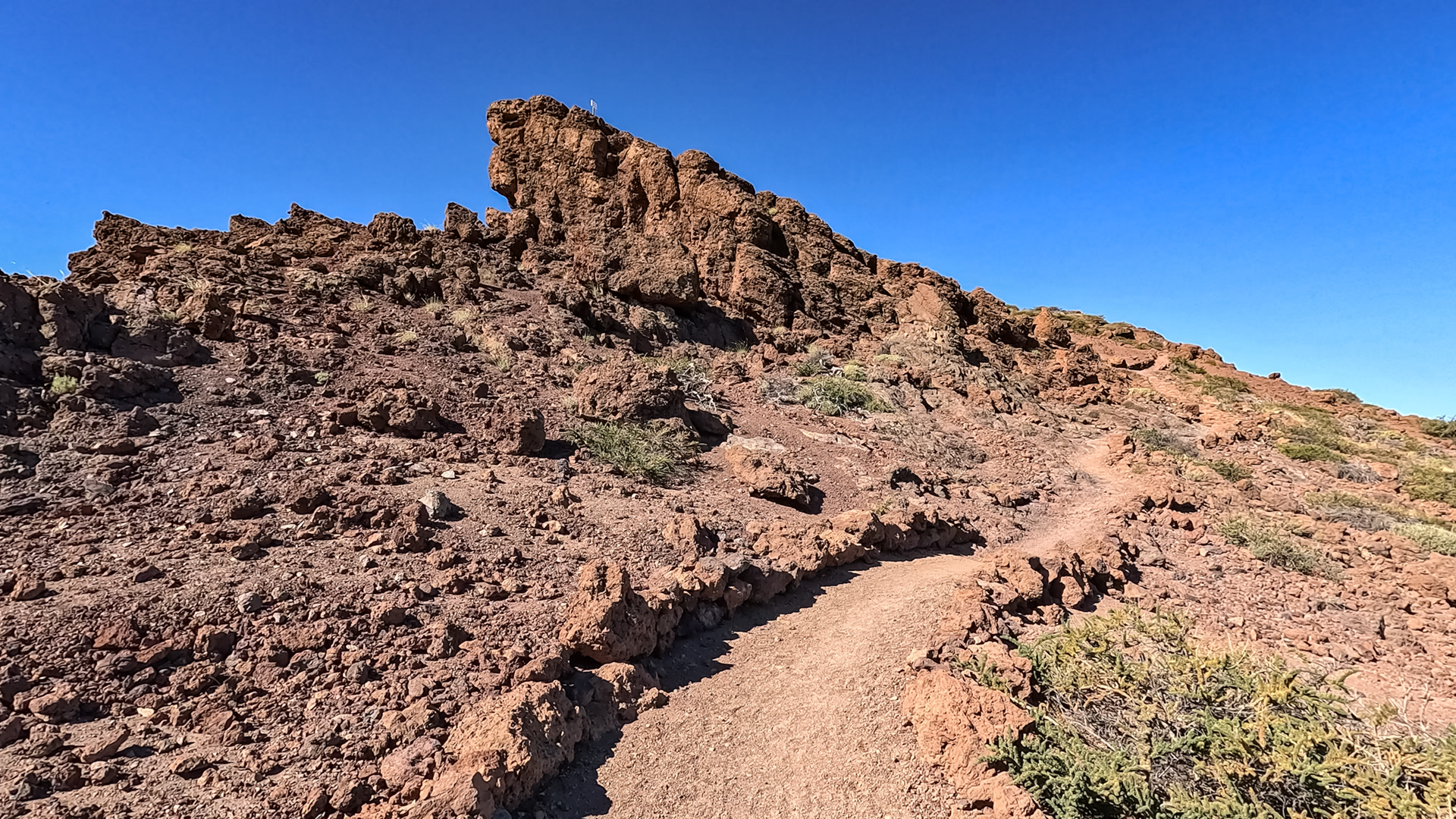
The Roque Palmero is also a checkpoint for national park monitoring: wildlife cameras and vegetation observation stations have been installed here to document the development of high mountain fauna. Canary ravens (Corvus corax canariensis) are common on the crest path — noisy, intelligent birds that sometimes accompany hikers hoping for food scraps. Again, do not feed wild animals.
La Palma as a starry sky reserve
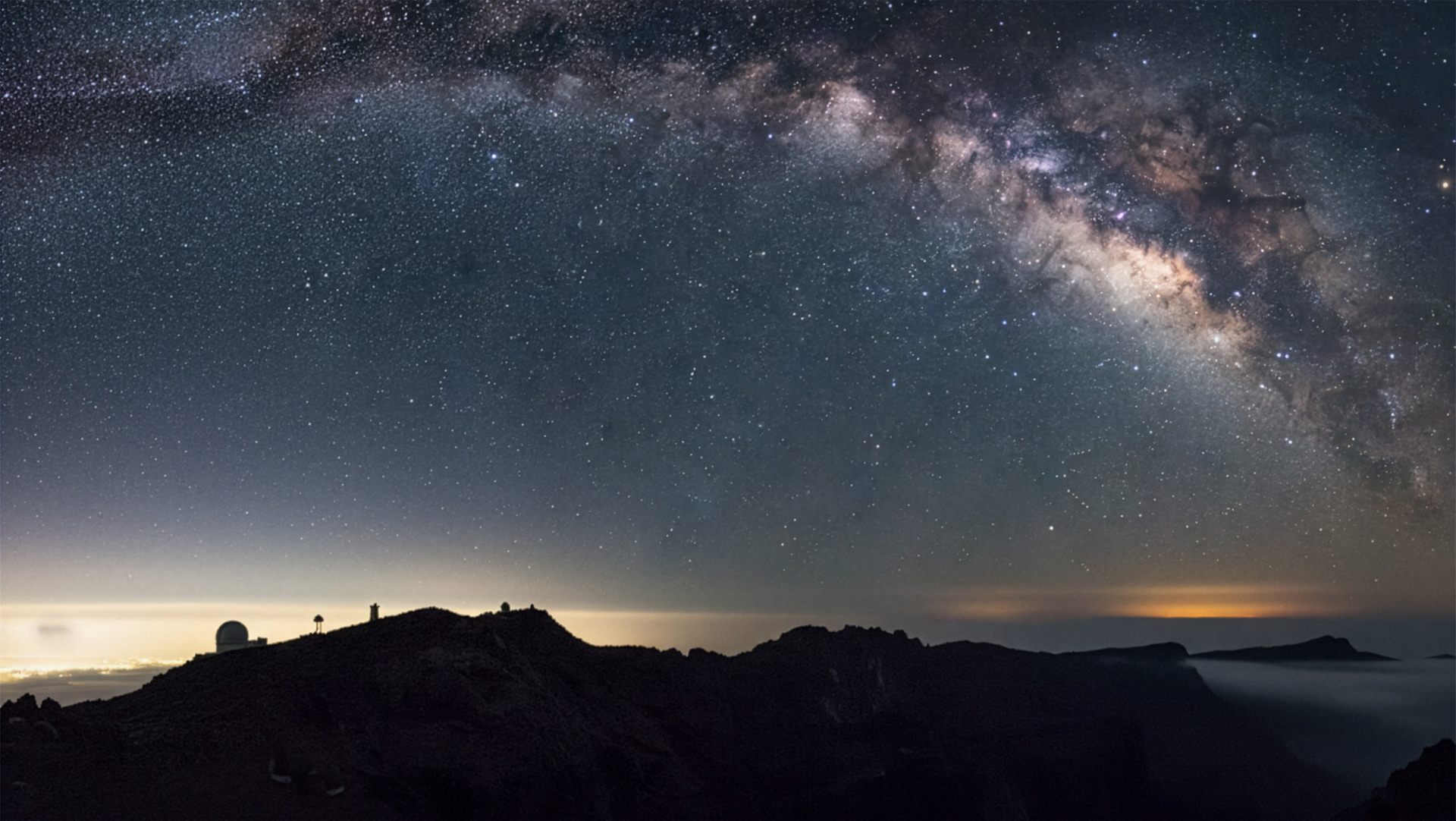
The Roque Palmero is located in the core area of the La Palma Starlight Reserve — a UNESCO award for particularly dark night skies and excellent observation conditions. At night, when the LP-4 is without car lights, you can see from the ridge area a starry sky that no longer exists in Central Europe: Milky Way as a wide, luminous band, Andromeda galaxy visible to the naked eye, planets as bright spots. Anyone planning to spend the night in the high mountains of La Palma (bivouac for the experienced, outside the national park boundaries) experiences this in full.
The connection between starry skies and hiking on the crest path to the Roque Palmero has something special: you walk on the highest back of the island during the day and know that the same landscape lies under one of the clearest starry skies in Europe at night. This makes La Palma one of the few islands that are both a hiking paradise and an astronomy hotspot.
Sunset from Roque Palmero
The Roque Palmero offers one of the loneliest sunsets on La Palma: 2,307 m altitude, hardly any other visitors, unobstructed views to the west over the sea to the neighboring islands. La Gomera and Tenerife shine in the evening sky as the sun sets behind the Atlantic Ocean. If you plan the hike to Roque Palmero for the late afternoon (arrival about 1 hour before sunset), you will experience a moment that is difficult to describe.
Logistics for the evening visit: At 2,300 m, it quickly gets cold after sunset — wind protection is mandatory. The return hike to the Roque car park (approx. 30–40 minutes) is not advisable without a headlamp when darkness sets in. Either leave early enough to be back in the bright, or take a headlamp with you. The trail is clearly visible, but in absolute darkness it is also risky on familiar terrain.
This article is based on the on-the-ground knowledge of the Gequo editorial team – publishers of the Reisezeit hiking guides and operators of Sunhikes.com. Last updated: May 2026