Getting Around La Palma by Bus – The TILP Guagua Guide
La Palma’s bus network is called TILP – Transportes Insular La Palma. The buses are affectionately known by locals as Guaguas, and for an island of this size the network is surprisingly well developed. Whether you haven’t hired a car or simply want to leave the car for a day, the Guaguas can take you far.
The Main Routes
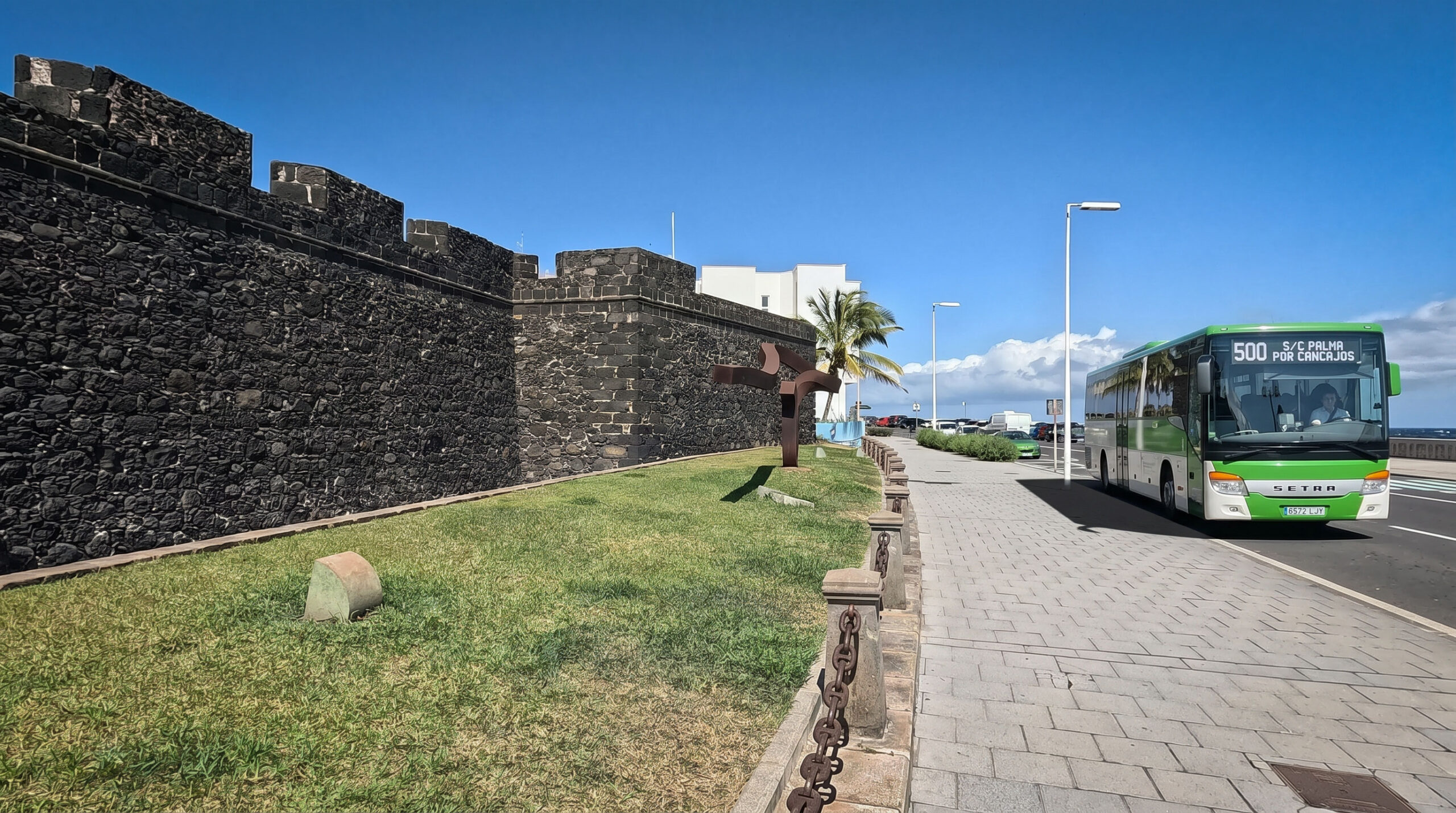
| Line 500 | Airport – Los Cancajos – Santa Cruz; every 30 min; approx. €1.50 |
|---|---|
| Line 300 | Santa Cruz – El Paso – Los Llanos de Aridane; express through the tunnel; every 30–60 min |
| Line 200/201 | Santa Cruz – Fuencaliente – Los Llanos; the southern route along the volcanoes |
| Line 100 | Santa Cruz – Barlovento; the northeast route via San Andrés y Sauces |
| Other Lines | Regional connections to all municipalities; timetable at tilp.es |
Prices and Payment 2026
Buses on La Palma are cheap. A single fare typically costs between €1.50 and €2.60 depending on the route. You pay the driver directly in cash when you board. It’s best to have the right change ready, as drivers can’t always change large notes.
Tip for Frequent Travellers:
The rechargeable Tarjeta Monedero is available at the bus station in Santa Cruz. It makes paying easier as you don’t need cash for every journey. For visitors who only use the bus occasionally, paying in cash is perfectly fine.
| Single fare | €1.50 – €2.60 (depending on route) |
| Payment | Cash to the driver (exact change appreciated!) |
| Discount option | Tarjeta Monedero (rechargeable smart card) |
| Main bus station | Santa Cruz de La Palma |
| Timetable | tilp.es (PDF download recommended) |
Tip for Hikers
The TILP network is ideal for many point-to-point hikes.
- Take Line 300 to El Paso or Los Llanos and then hike down to the west coast.
- Line 100 goes to San Andrés y Sauces – ideal for walks around Los Tilos.
- For Los Brecitos, the Roque de los Muchachos or other remote starting points, there are no regular bus connections. A taxi or 4×4 transfer is the best option.
Important:
Sunday and public holiday timetables often differ greatly from weekday schedules. Always check your connection in advance.
Hiking Connections: What the Bus Makes Possible
Some of La Palma’s finest walks combine perfectly with the bus. Line 300 stops at several points along the mountain road, from which you can descend into the Caldera or down to the west coast. The northeast route, Line 100, takes hikers close to Los Tilos and Puntallana.
For the big descents from Roque de los Muchachos or Pico de la Cruz to the coast, taxi services take hikers up to the starting point. That’s the best combination: bus or taxi up, walk back down, bus home.
Night Buses and Limitations
During the day the network is well developed. After around 8pm, however, many lines run much less frequently or not at all. For evening meals out or spontaneous outings, a hire car or taxi is often the more flexible option.
Sundays and Public Holidays: Reduced Service
On Sundays and public holidays the TILP network runs on a reduced schedule. Many lines have far fewer departures, some don’t run at all. Anyone whose day depends on the bus should always check the current timetable at tilp.es – Sunday timetables often differ significantly from weekdays. A hire car is more reliable for public holiday outings.
Combining Bus and Hiking: Practical Examples
Many of La Palma’s finest walks combine beautifully with public transport.
Line 300 connects Santa Cruz with El Paso and Los Llanos and is ideal for walks in the national park or on the west side. Line 100 takes you northeast to San Andrés y Sauces and is the perfect starting point for trips into the laurel forest of Los Tilos.
For routes such as Los Brecitos, Roque de los Muchachos or longer summit walks, the best approach is a bus or taxi to the starting point and then walking back down to the valley.
Timetables & Digital Planning
The current timetable is available at tilp.es. There is also an official TILP app, though many visitors find the PDF timetable on the website clearer and more reliable.
Our tip: download the current timetable as a PDF to your phone before your walk. Mobile signal is not reliable everywhere in the mountains.
Conclusion
The TILP bus network connects almost all major settlements on the island and is excellent for day trips.
For hiking, bus and taxi can often be combined to great effect.
Pay cash directly to the driver – having small change ready makes boarding easier.
Download the current timetable as a PDF before your trip so you can plan even without mobile signal.
Frequently Asked Questions
Can You Get By on La Palma Without a Hire Car?
How Do You Pay for the Bus on La Palma?
Which Bus Goes from the Airport to Santa Cruz?
Can I Pay by Card or Apple Pay on La Palma Buses?
Is the Bus Worth It for Hiking on La Palma?
This article is based on the on-the-ground knowledge of the Gequo editorial team – publishers of the Reisezeit hiking guides and operators of Sunhikes.com. Last updated: May 2026