Los Brecitos: Hike to the Cascada de la Fondada and Hoyo Verde
The hike from the Los Brecitos hiking trail to the Cascada de la Fondada and the springs of Hoyo Verde is the most impressive and demanding detour in the Caldera de Taburiente National Park: approx. 3 km extra (easy), 713 m ascent, difficult, 1:30 – 2:30 h (in addition to the basic hike). Sunhikes expressly recommends this detour only for hikers who are in good shape and who start the tour early.
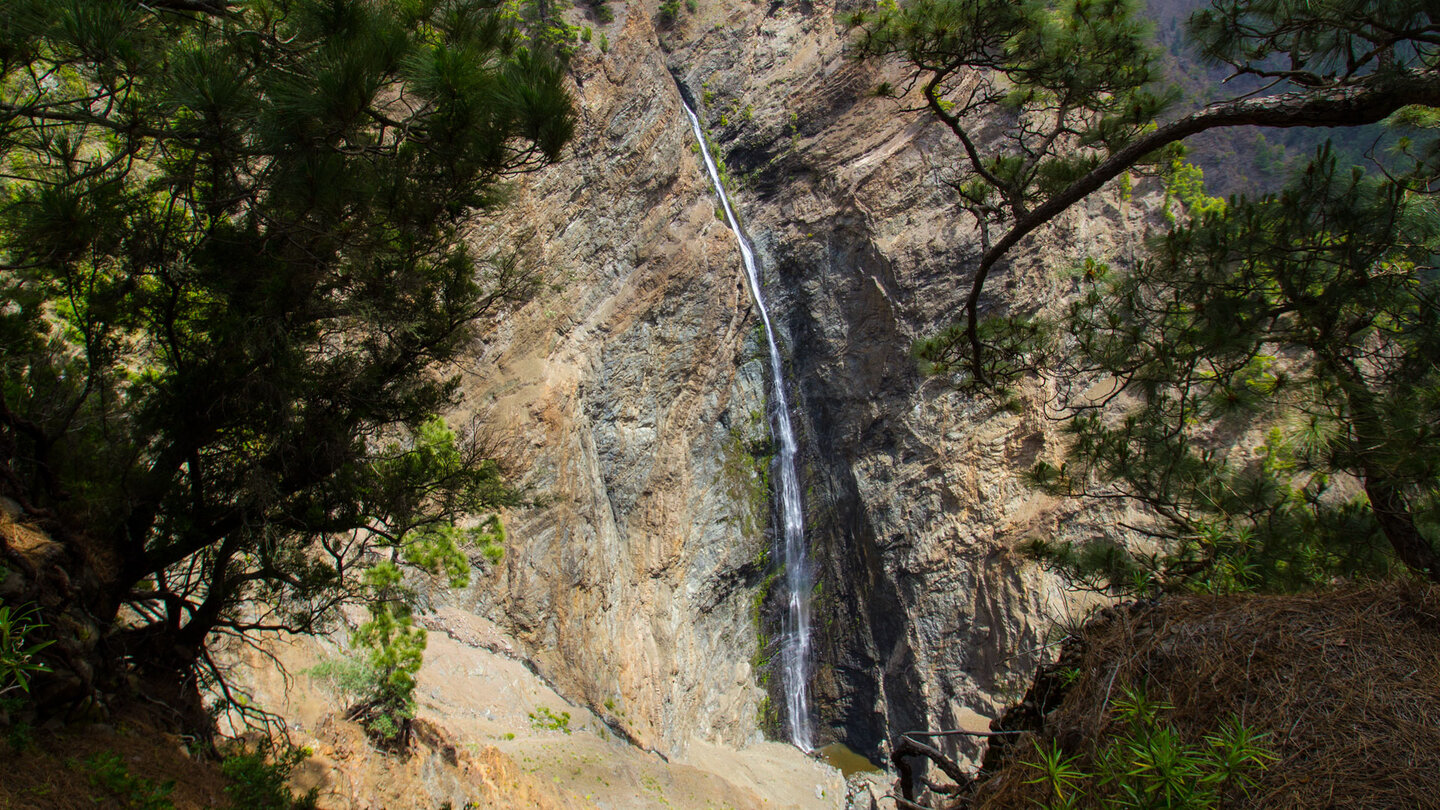
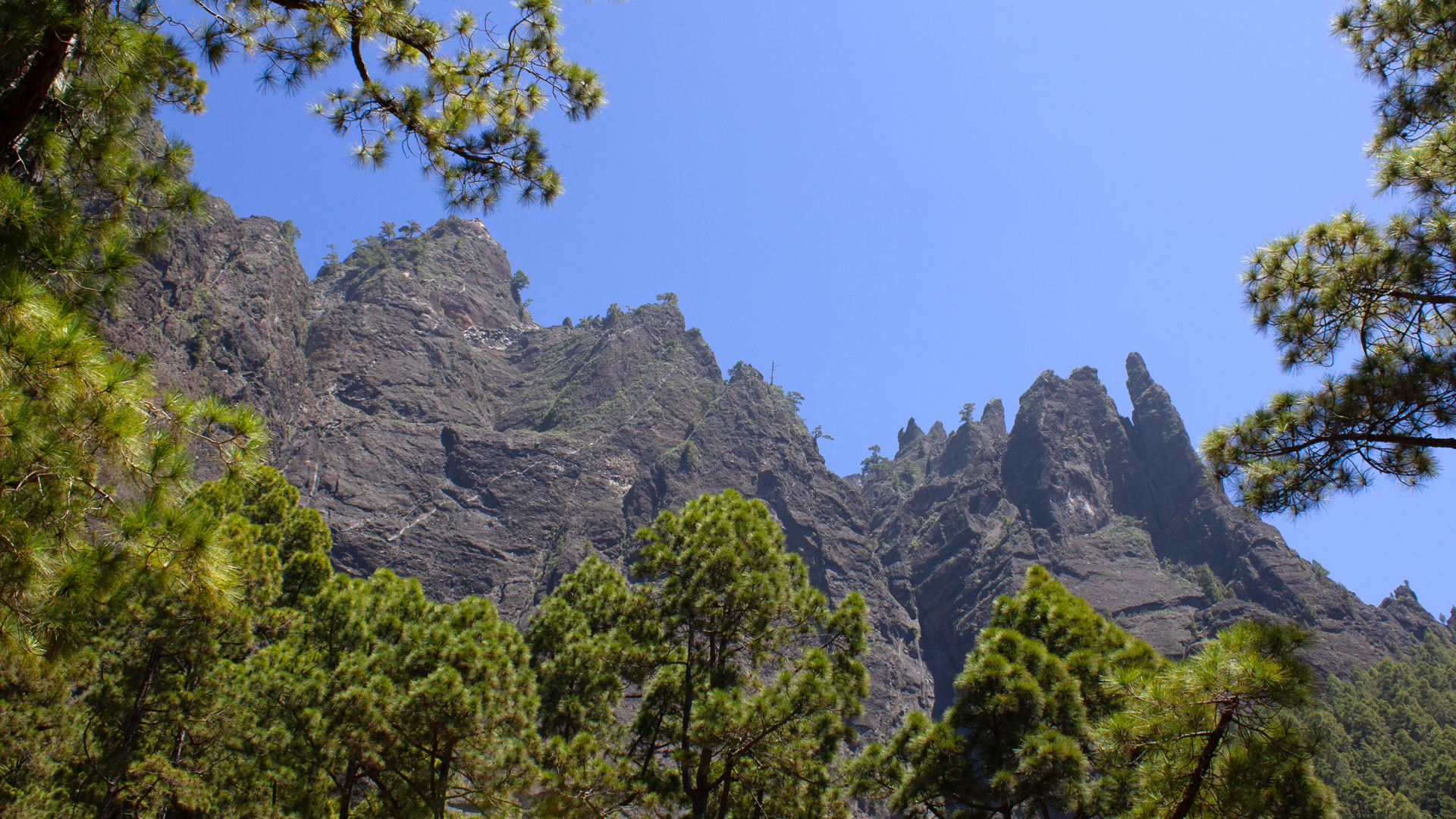
The Cascada de la Fondada falls vertically about 100 m down a rock face of the caldera – rainbows are created in the backlight of the morning hours. The Hoyo Verde above is a deep, steep gorge with a spring pool at the entrance where you can refresh yourself. Both destinations are exposed on the edge of the caldera – with breathtaking views of the Playa de Taburiente.
This article describes the detour from Playa de Taburiente (crossroads). If you travel directly from Los Brecitos, add the descent to the playa (5.2 km, approx. 1:30 h).
Route facts at a glance
| Route Type | One-way from Playa de Taburiente / detour on the main Los Brecitos tour |
|---|---|
| Distance | approx. 3 km one-way extra (from junction just before Playa) |
| Elevation | 713 m ascent / 23 m descent |
| Highest Point | approx. 1,440 m (Mirador Hoyo Verde) |
| Duration | 1:30–2:30 h (detour only) |
| Difficulty | difficult (exposed, secured sections, good fitness required) |
| Starting Point | Junction on PR-LP 13, just before Playa de Taburiente |
| Trail Marking | PR-LP 13 (yellow-white) |
| Protected Area | Caldera de Taburiente National Park (since 1954) |
| Equipment | Water, food, sturdy footwear, windproof jacket — permit required for overnight stays |
The route in detail
Crossroads to Mirador Cascada de la Fondada
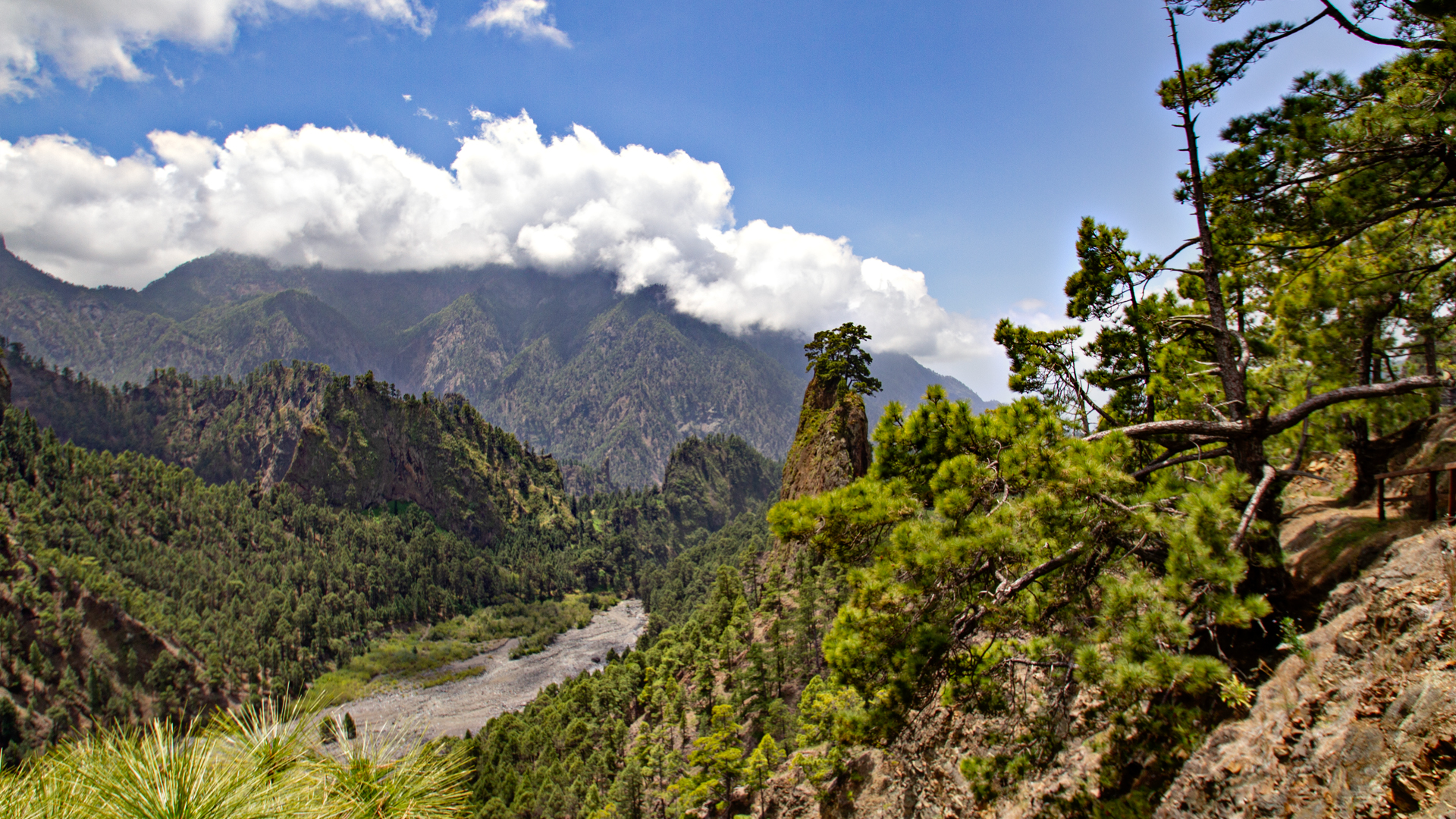
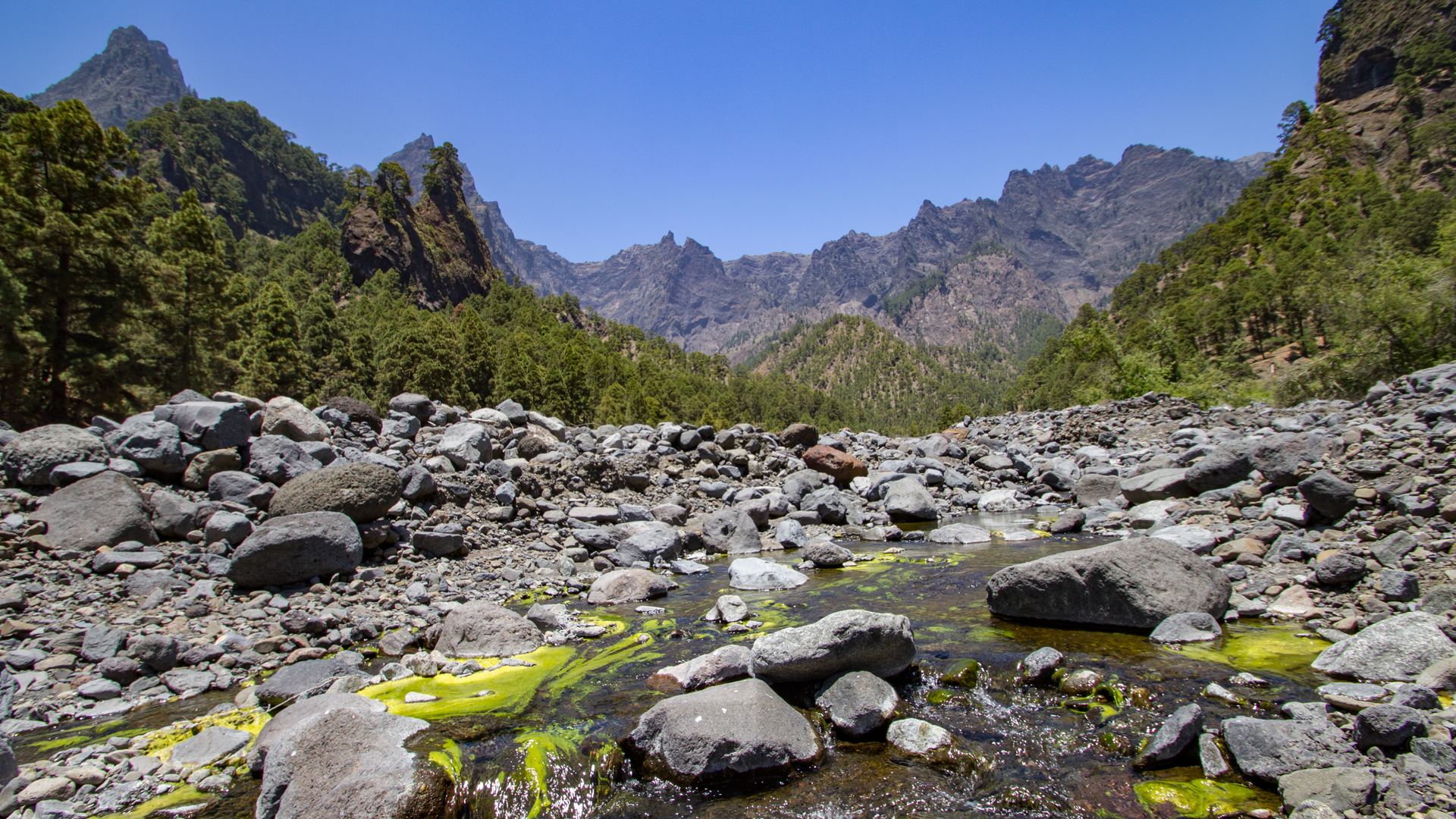
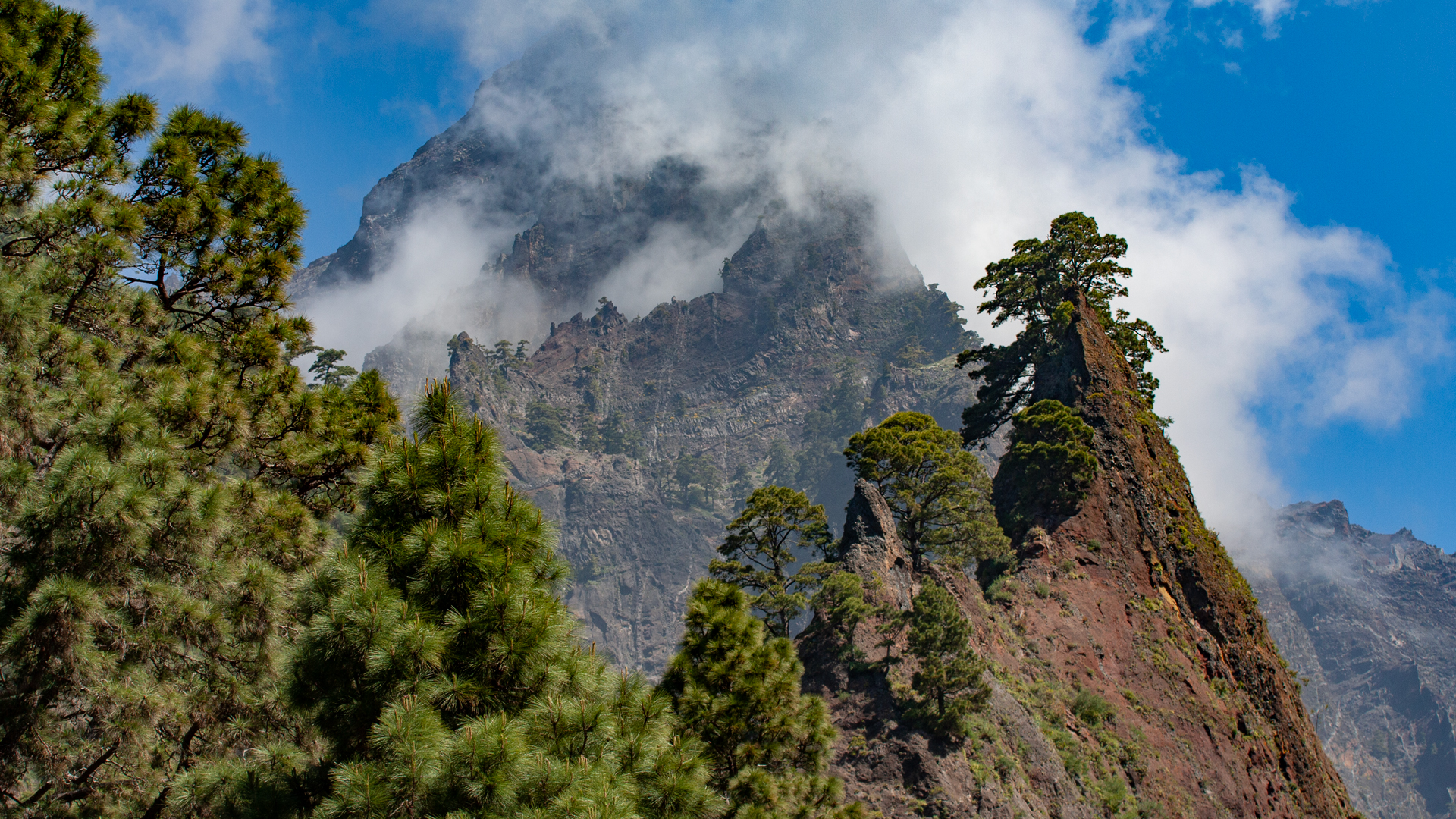
Shortly before Playa de Taburiente the path splits: on the right the PR-LP 13 leads over the Rio Taburiente to the campsite. The steep climb to the Cascada de la Fondada begins on the left. The path splits shortly afterwards – follow the sign for Hoyo Verde. Then a short but very steep climb upwards in tight curves. The trail runs along a slope at the foot of the striking Roque Huso — a rocky cone with two pine trees at the summit. Spectacular views of the surrounding mountain ranges.
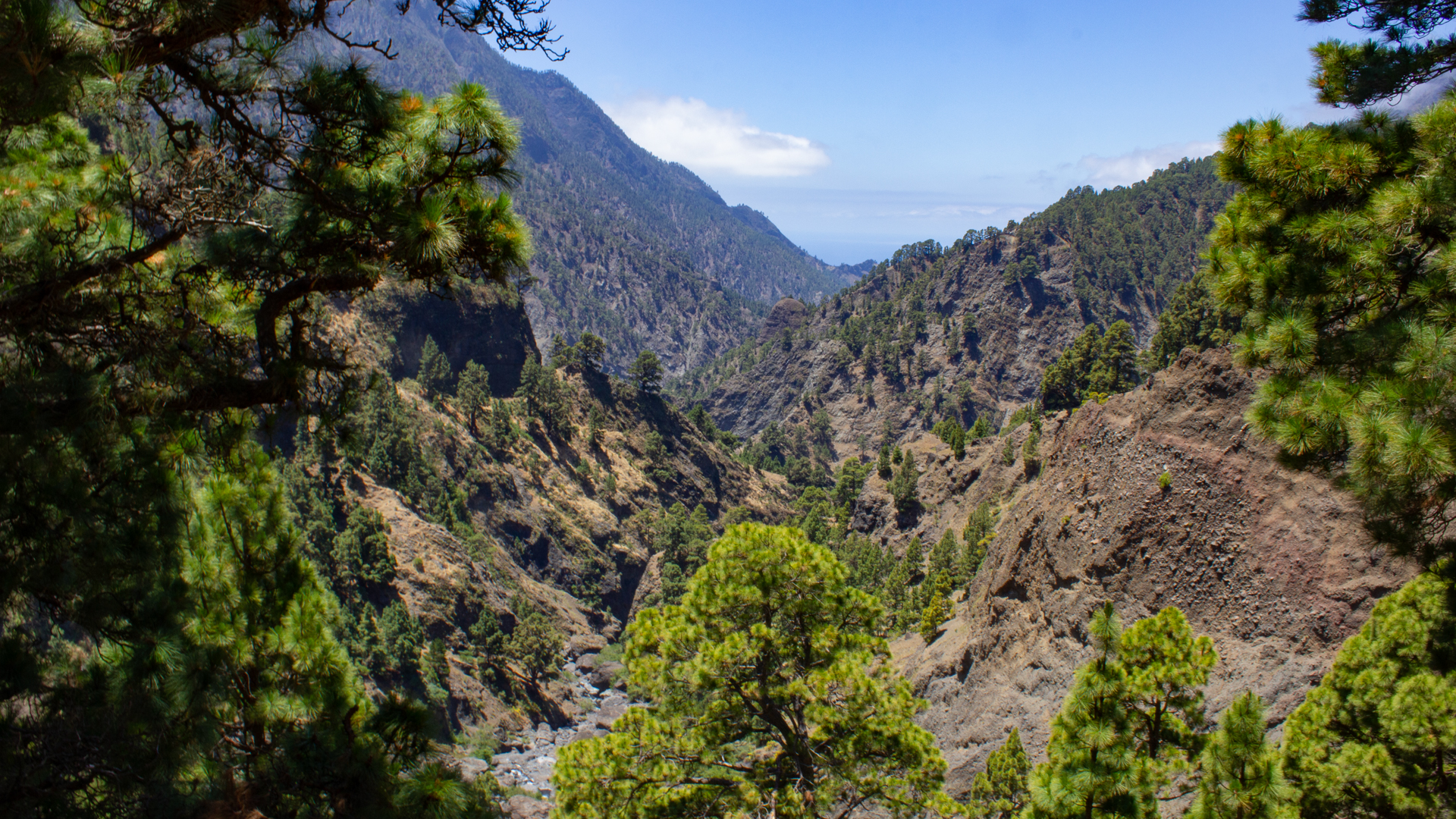
Secured in places with railings and chains: exposed ridge with deep views of Playa de Taburiente. Past the Roque de la Viña, along a dry stream bed. Then right to Mirador de Cascada de la Fondada. Directly opposite: the narrow waterfall Cascada de la Fondada, vertically about 100 m down a rock face. In the morning hours: rainbows in the spray.
Climb to Mirador Hoyo Verde
From the Cascada viewpoint, continue up the steep path through pine forest. Steps carved into the rock. Above Siete Fuentes (several springs exiting directly on the path) the path leaves the forest. Exposed, very close to the steep walls. Then uphill to Mirador Hoyo Verde – a viewpoint on an edge in front of the deep Barranco de Hoyo Verde gorge, which stretches up to the Roque de los Muchachos.
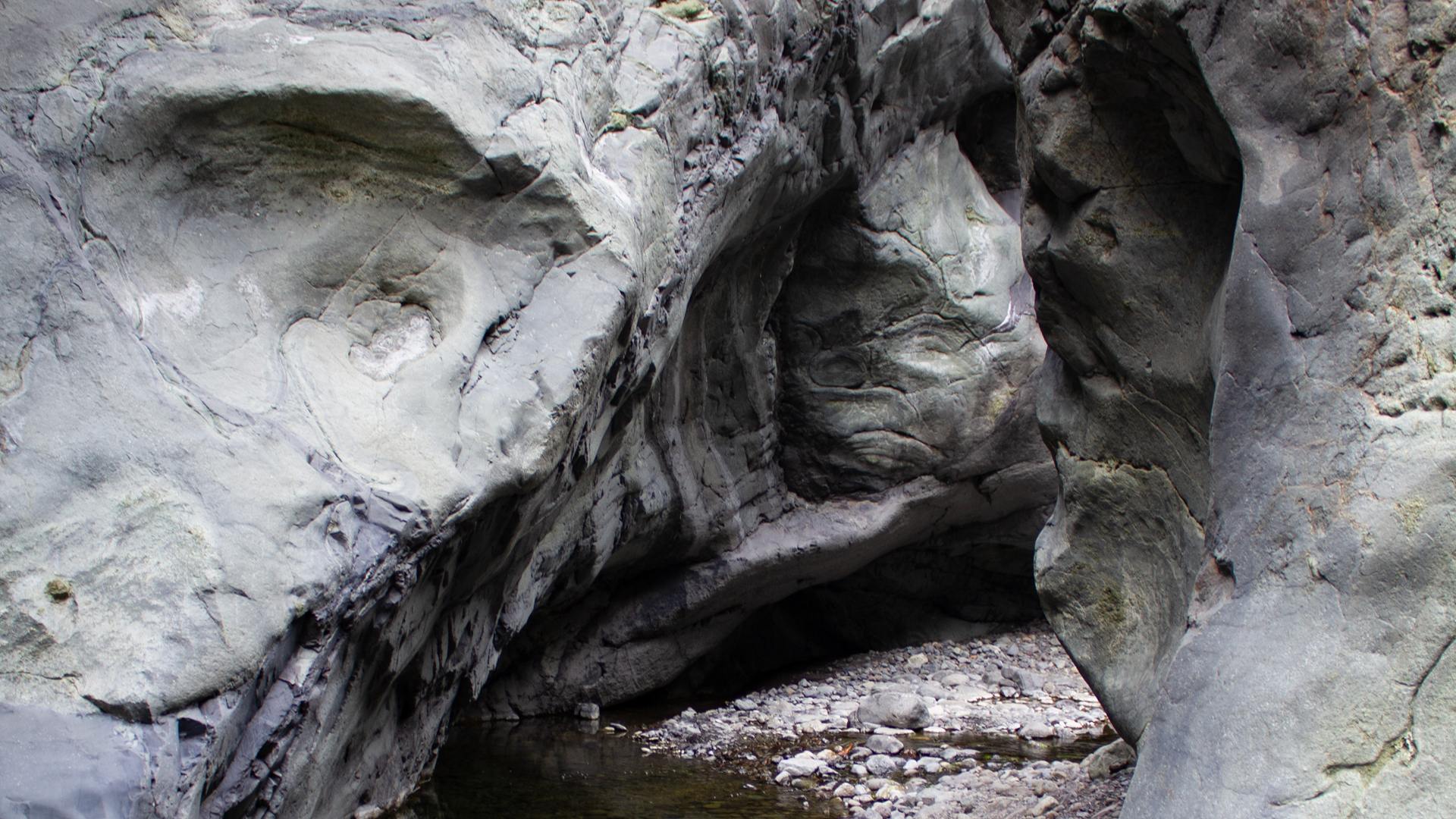
At the entrance to the gorge: a pool of water. Here you can refresh yourself. The water comes directly from the rock – cold, clear, from the high mountains. The view from here: the Barranco de Hoyo Verde gorge with several cascades between vertical rock walls, up to the invisible Roque de los Muchachos. This is the interior of the Caldera at its wildest.
The Cascada de la Fondada: 100 meters in free fall
The Cascada de la Fondada is the most spectacular waterfall inside the Caldera de Taburiente National Park. Its name — la fondada (English: the deep one) — refers to a historical settlement or founding site in the caldera. The waterfall plunges vertically from a caldera ridge rock – not a cascade waterfall, but a single, long free fall of approx. 100 m.
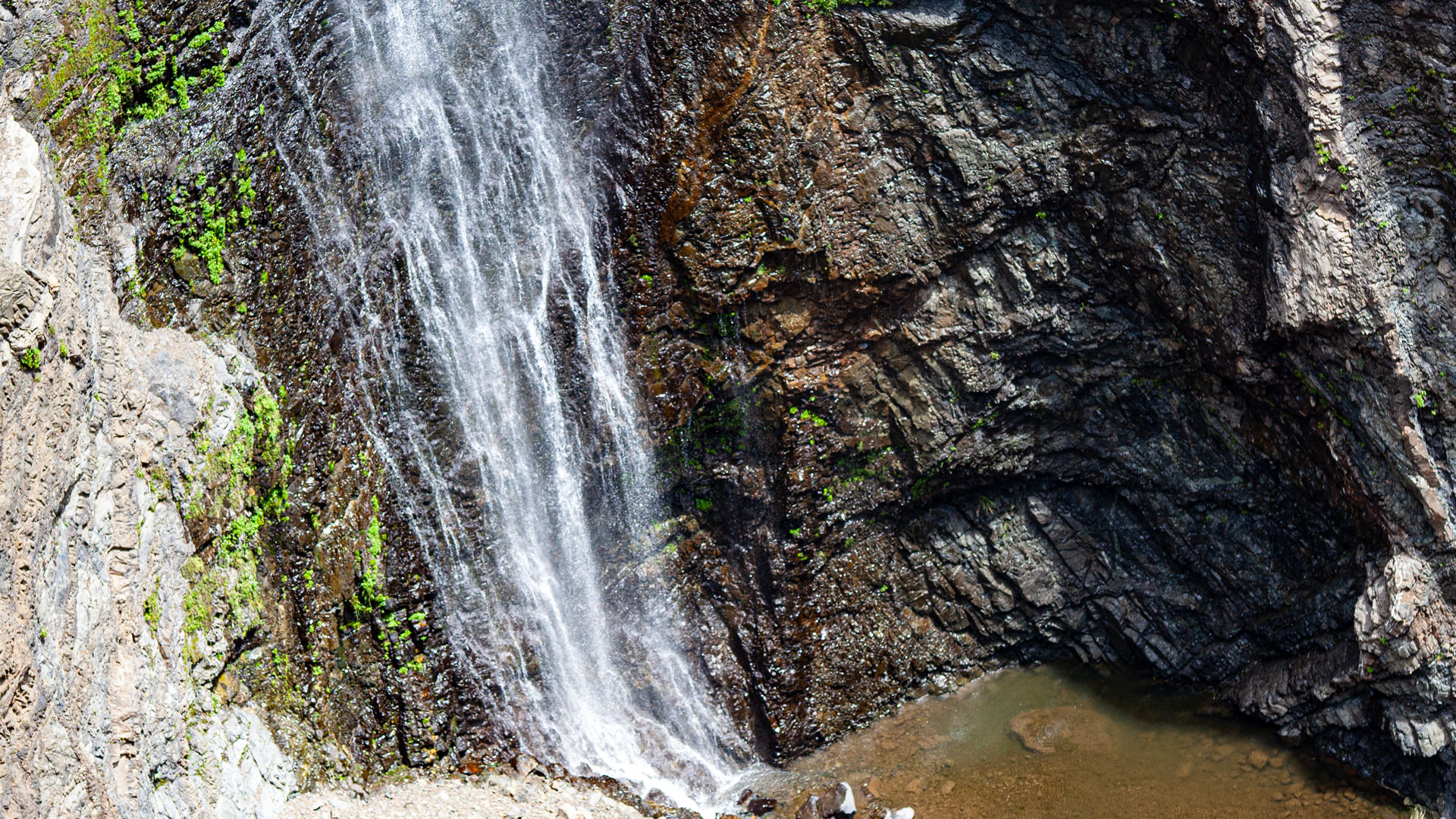
The rainbows that form in the mist of the Fondada in the morning hours are one of the most famous photo opportunities in the national park. For the ideal rainbow: Arrive at the Mirador between 9:00 and 10:00 a.m., when the sun is still low and the light shines through the mist. The rainbow disappears as the sun rises higher.
Combined tour: Los Brecitos – Cascada – Hoyo Verde – Barranco de las Angustias
If you combine the complete Caldera hike with the Cascada detour, you have one of the most demanding full-day tours in La Palma: Los Brecitos (1,080 m) → Playa de Taburiente → Cascada de la Fondada (633 m high) → Hoyo Verde → campsite → El Reventón → Dos Aguas → Barranco de las Angustias (end point). Total distance: approx. 19 km, total elevation gain: over 2,000 m, duration: 8–10 hours. Sunhikes recommends: only if you start early, are in good physical condition and have good weather conditions.
Best time to visit
| Season | Character | Note |
|---|---|---|
| Spring (March-May) | Waterfall in full force; Rainbows possible | Best time for Cascada |
| Summer (June-Aug) | Waterfall weaker; hot on the move | Early start mandatory |
| Autumn (Sept–Nov) | Good light; Cascada stronger again | Most popular season |
| Winter (Dec–Feb) | Danger of flooding in the Barranco! | Weather check mandatory; National park closes |
Accommodation: El Paso — Clariso
Near National Park in El Paso. Holiday homes on clariso.eu — Holiday homes El Paso.
GPS track and 3D route planner
GPS track for the crossroads just before the playa and the exposed section at Roque de la Viña. With the free 3D route planner, the detour can be integrated into the Caldera full circuit – directly in the browser, without an app.
To the route page on Sunhikes: Playa de Taburiente → Cascada de la Fondada & Hoyo Verde
3D route planner from Sunhikes – customize and combine routes
Practical Tips
Emergency services: 112. Only for hikers in good physical condition. Early start for optimal rainbow light at the Cascada (9:00 a.m. – 10:00 a.m.). Secured sections require sure-footedness. If it rains: the national park closes immediately – weather report obligatory.
Note: National Park
Caldera de Taburiente National Park (since 1954). Road restrictions, garbage collection, fire ban.
Frequently asked questions
When do the rainbows appear at the Cascada de la Fondada?
Do I need a permit for this detour?
Siete Fuentes: seven springs on the steep slope
Siete Fuentes – seven springs – is a group of springs directly on the hiking trail on the climb to Hoyo Verde. Here the groundwater of the caldera ridge comes out of the rock – in seven different places, in varying strengths, depending on the season and rainfall. In the spring after a rainy winter season, all seven springs are active; in the dry summer only the most constant. The water is cold and clean — one of the few reliable natural drinking water sources inside the national park.
The name Siete Fuentes is one of the poetic points on the way to the Cascada de la Fondada. Anyone who arrives at this point on the exposed, steep climb has completed about two thirds of the detour and can refresh themselves. The springs can be identified by crevices in the rocks, not by marked signs.
Roque Huso: the rock cone with the two pines
The Roque Huso is a striking rocky cone in the Caldera de Taburiente National Park, with two pine trees at the summit — an image that appears in many caldera photos without you knowing what you are looking at. On the climb to Cascada de la Fondada, you walk past the foot of Roque Huso and see the two pine trees directly from below: a perspective that makes clear the height of the rock (approx. 1,500 m) relative to the surrounding terrain.
The pool at the entrance to the Hoyo Verde Gorge is one of the few places in the Caldera de Taburiente National Park where you can refresh yourself in the flowing water. The water comes directly from the rock, is cold (around 12-14°C even in summer) and clear. Anyone who has completed the climb to the Cascada and on to Hoyo Verde sits at the spring basin and enjoys the cold after a strenuous tour – a moment that will be remembered. Some hikers describe this moment at Hoyo Verde as the most emotional of the entire Caldera tour.
A note about photography: The Cascada de la Fondada is best photographed standing at the Mirador with the sun coming from behind. This is the case in the morning between 9 and 10 a.m. When the sun is higher, the rainbow effect is gone and the waterfall appears flatter. For the best photography: start early and be at the Mirador before 10 a.m.
This article is based on the on-the-ground knowledge of the Gequo editorial team – publishers of the Reisezeit hiking guides and operators of Sunhikes.com. Last updated: May 2026