Flora of La Palma: Why the Island Really Is Green
La Palma isn’t called La Isla Verde—the Green Island—by coincidence. No other place in the Canary Islands archipelago has such a diverse plant world in such a small area. The island owes this botanical uniqueness to its exceptional combination of extreme steepness, a humid trade wind climate in the east, and a dry sunny coast in the west. Within just a few kilometres, habitats arise that on the mainland are often thousands of kilometres apart.
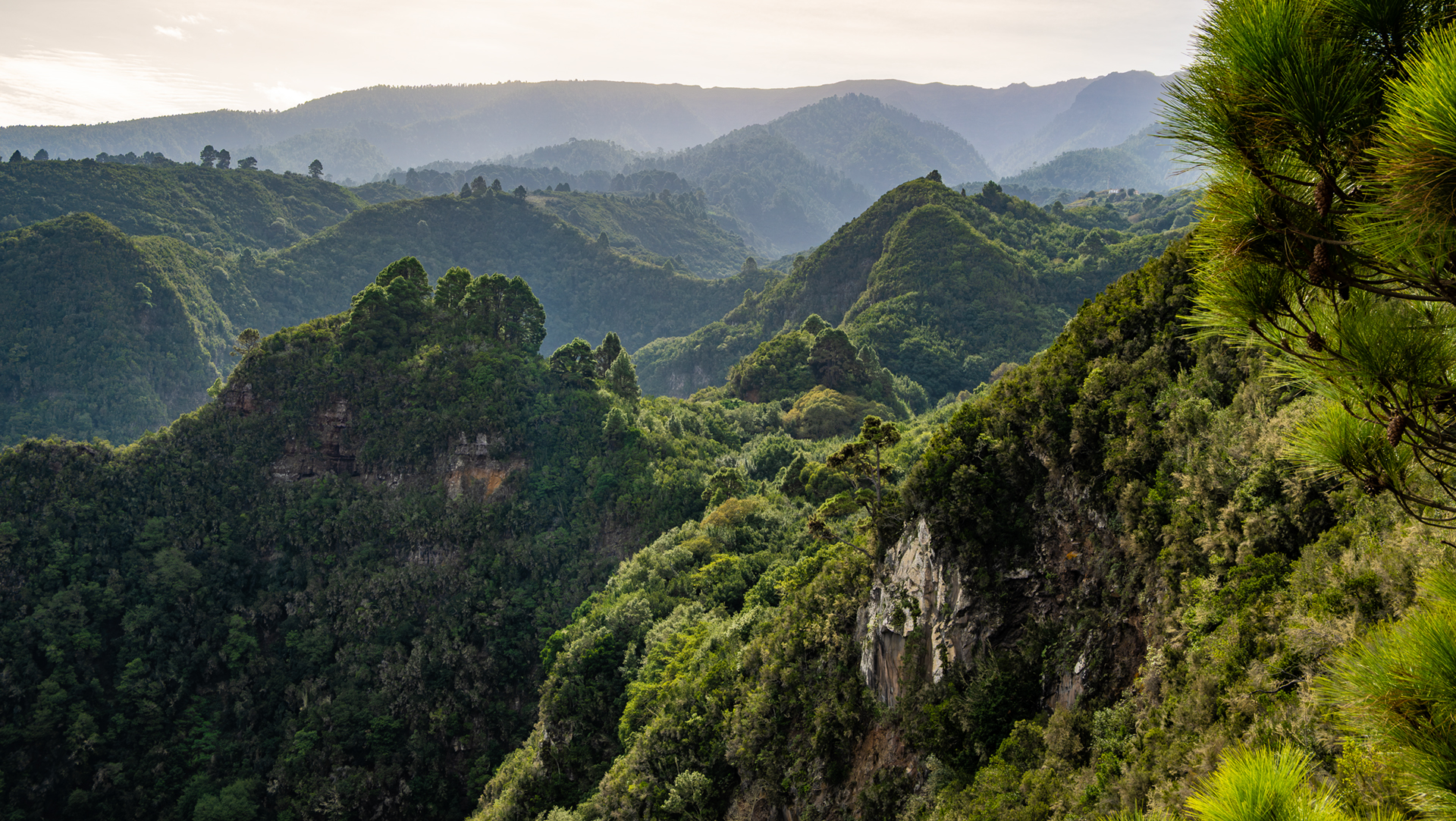
From the dry coastal zone through ancient laurel forests to the bare summit landscapes of the Roque de los Muchachos, La Palma displays an extraordinary diversity of plant worlds.
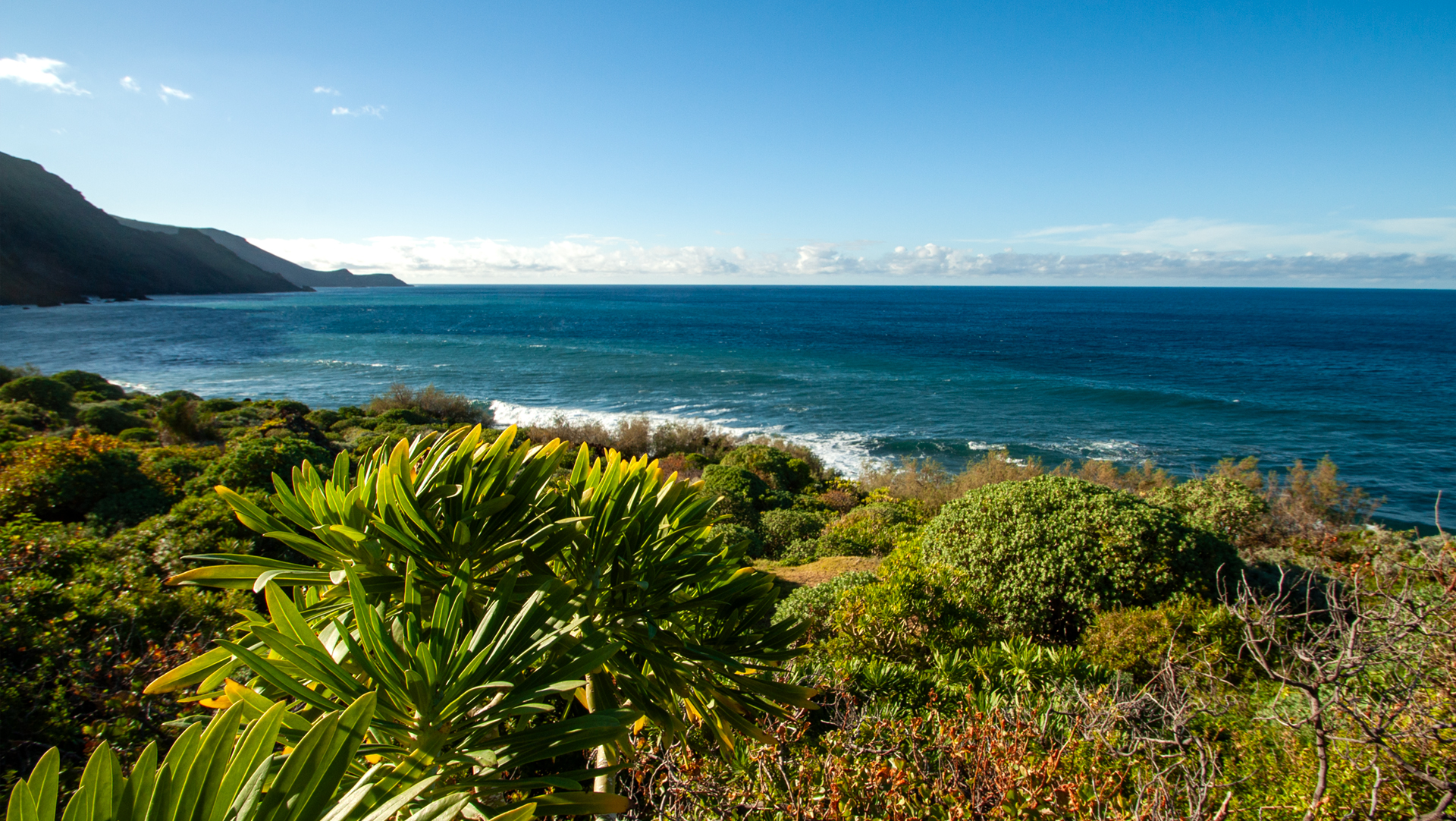
Coastal Zone: Spurge and Succulents
Along the coast, especially on the dry western side, drought-adapted plants dominate: spurge species (euphorbias), tabaibas, and the characteristic candelabra spurge (Euphorbia canariensis). Among these resilient plants grow Canarian date palms (Phoenix canariensis) and occasional dragon trees. In this zone, you will also find the island’s large banana plantations and avocado gardens. The vegetation may look sparse at first glance but is perfectly adapted to long dry periods and intense sunlight.
Laurel Forest: Relic of the Tertiary
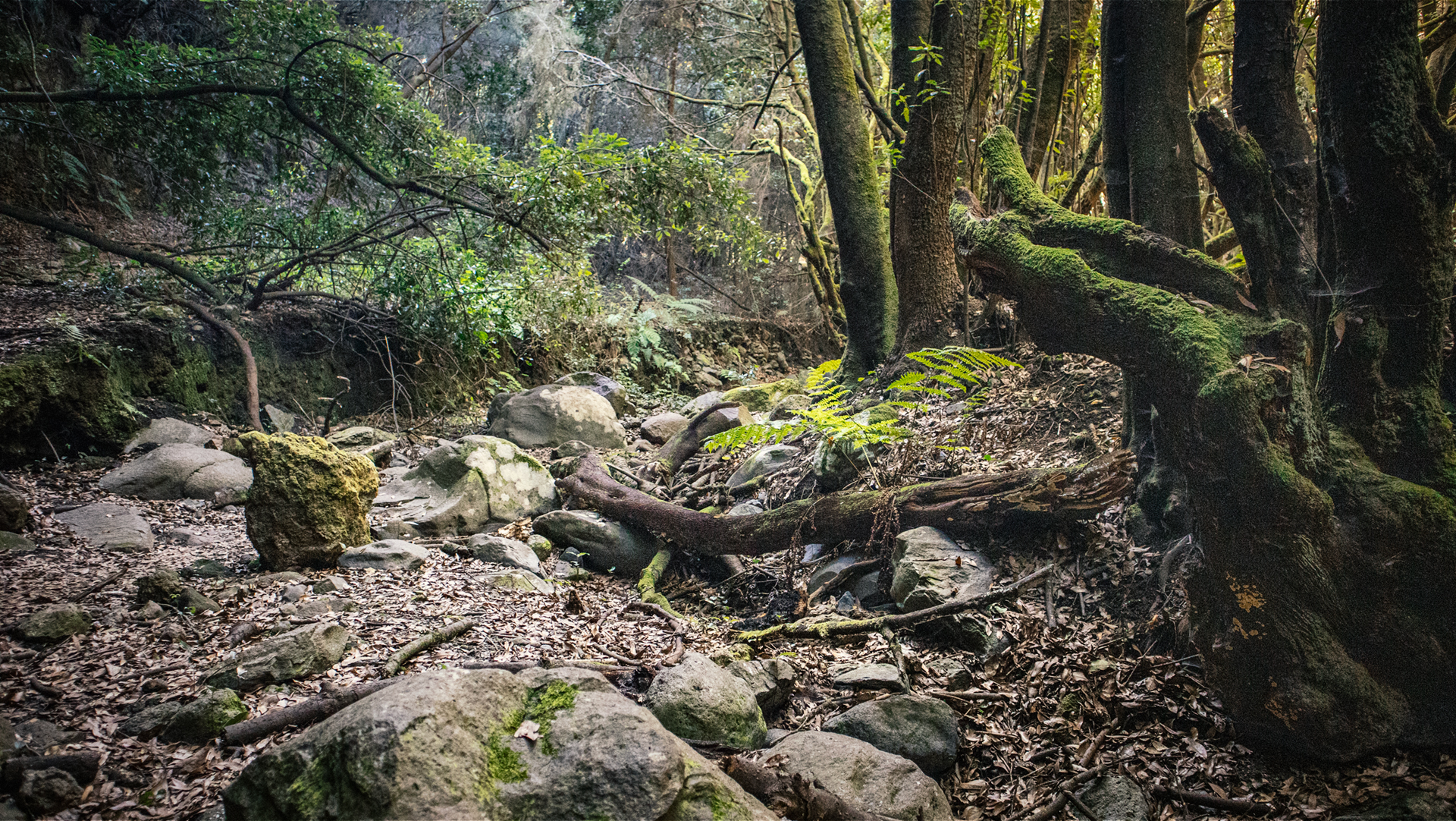
From around 700 metres above sea level, in the humid regions of the north and northeast, the Laurisilva begins — the laurel forest, a living relic of the Tertiary. Canarian laurel, Til (Ocotea foetens), Indian persea (Persea indica), tree heather, and Canarian holly form a dense canopy under which a permanently moist, green atmosphere develops. The most significant stands are protected by the Los Tilos Biosphere Reserve near San Andrés y Los Sauces. Hiking through this forest means moving through a world of vegetation whose origins reach back millions of years.
Pine Forest: The Water-Pumping Forest
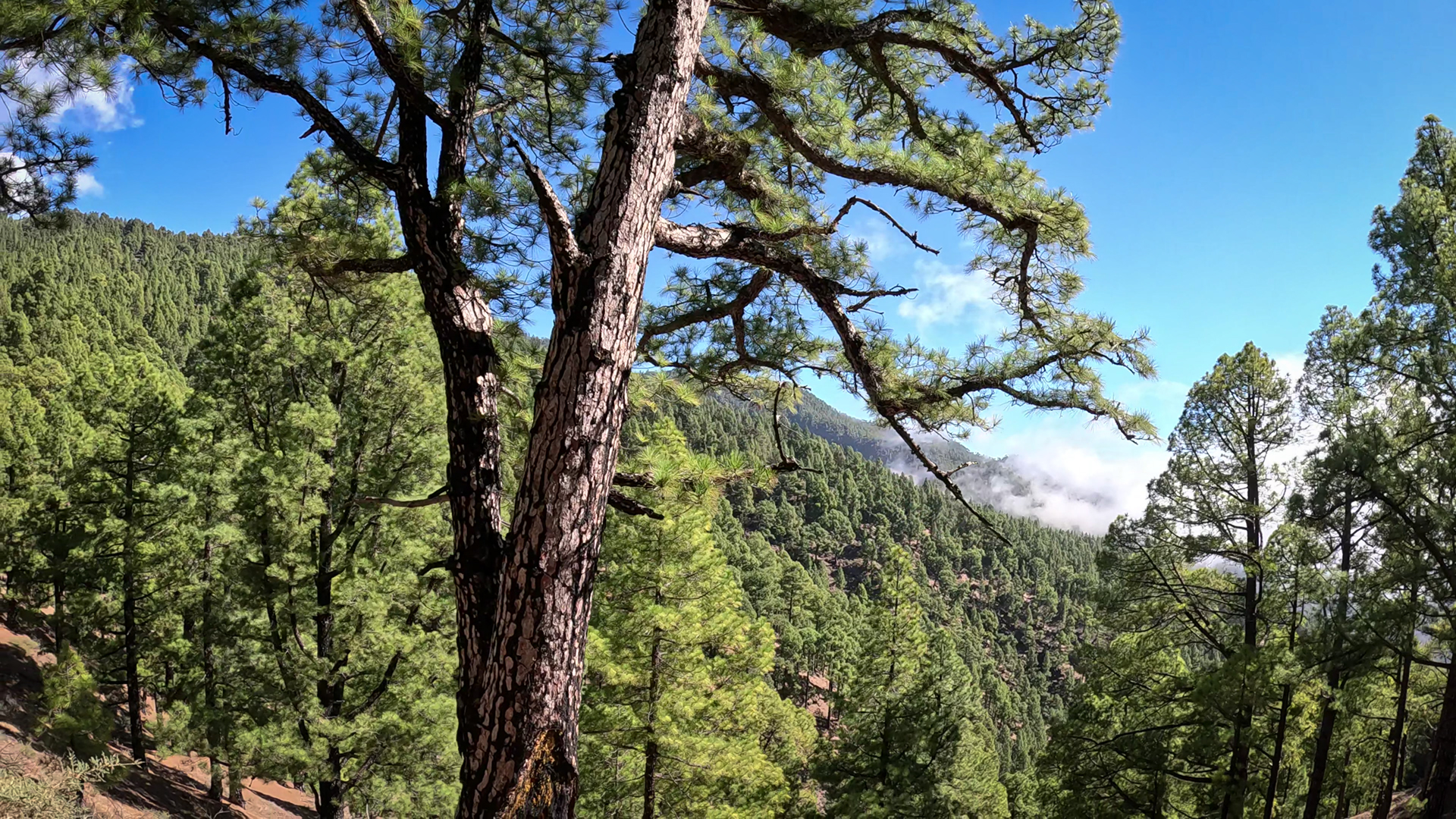
The Canarian pine (Pinus canariensis) defines the mid and upper mountain zones of La Palma. On the drier western side its range begins at around 1,200 metres, while on the wetter eastern side it typically dominates at higher elevations. Its long needles capture moisture from the trade wind clouds. This so-called horizontal precipitation contributes significantly to replenishing the island’s groundwater: water collects on the needles, drips onto the forest floor, and is slowly channeled into the subsoil. The pine forest is also extraordinarily resistant to fire. The thick bark protects the tree from many blazes; after a fire, the Canarian pine can re-sprout from its protected core.
High Zone: Tajinaste and Codeso
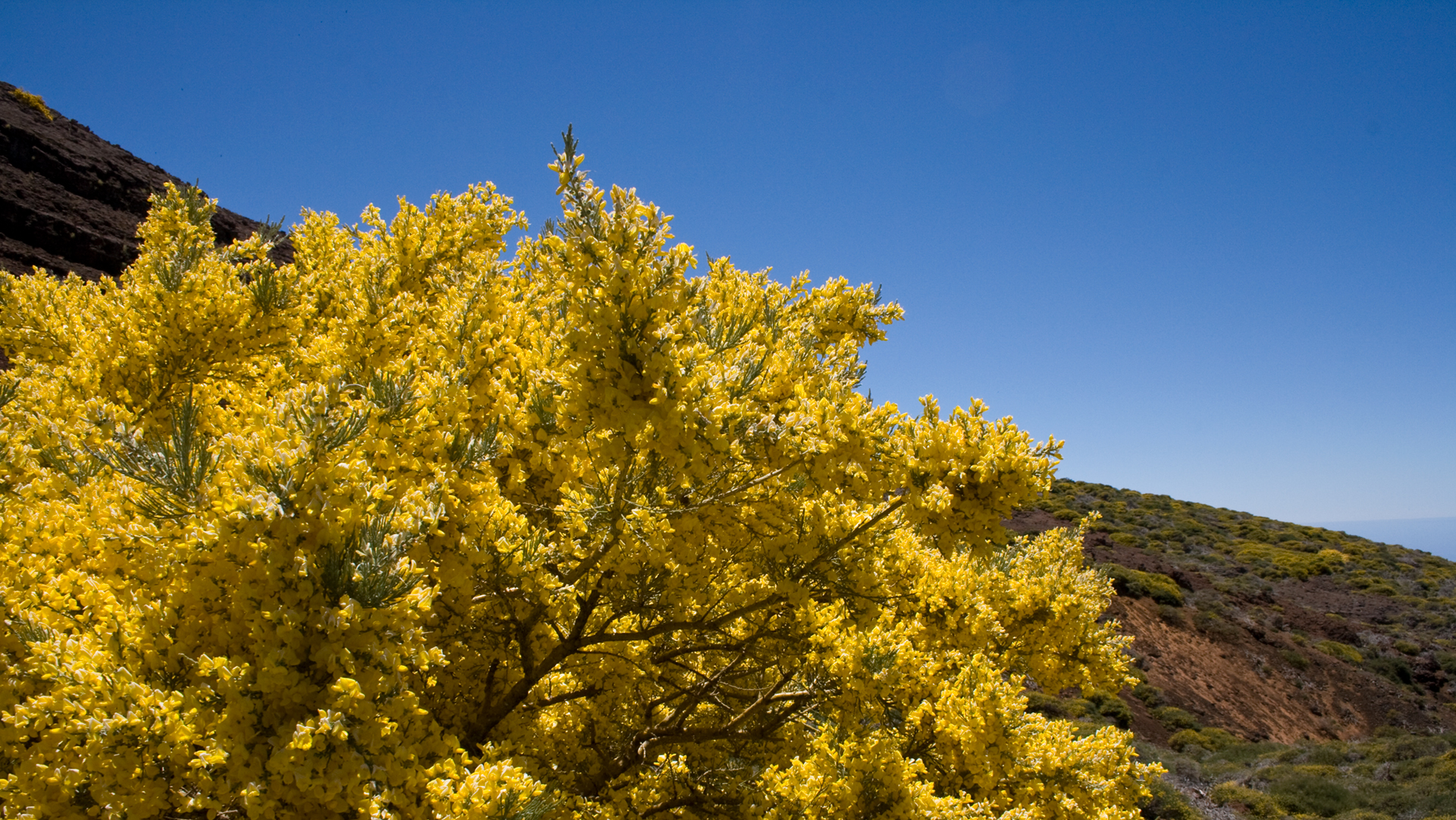
Above approximately 2,000 metres the high mountain zone begins, above the tree line. Here vegetation becomes noticeably sparser. Wind, frost, and intense solar radiation dictate the conditions. Codeso shrubs, Teide broom, and other hardy highland plants characterize the landscape. The botanical highlight, however, is the Tajinaste rosada (Echium wildpretii), the pink-flowering viper’s bugloss. This plant, which can reach three metres in height, is strictly endemic to La Palma’s summit region. Between May and July it transforms the high-altitude terrain into a unique botanical spectacle.
Why La Palma Is Truly Green
La Palma’s flora is a botanical masterwork — from the succulent plants of the coastal zone to the ancient laurel forests and the fire-resistant pine forests, up to the endemic flowering spectacle of the high mountain zone.
Anyone who learns to recognise the plants of the island reads La Palma like a living book about climate, volcanism, and evolution. And that book is well worth reading.
Frequently Asked Questions
What makes La Palma the greenest Canary Island?
Are there cacti on La Palma?
What plants are typical of La Palma?
Where can you find the most beautiful laurel forest on La Palma?
When does the Tajinaste rosada bloom on La Palma?
This article is based on the on-the-ground knowledge of the Gequo editorial team – publishers of the Reisezeit hiking guides and operators of Sunhikes.com. Last updated: May 2026