The Laurel Forest: La Palma’s Living Natural Heritage from the Tertiary
About 20 million years ago, a primeval laurel forest of bay trees and related species covered large parts of the northern hemisphere: North Africa, southern Europe, and the Canary Islands. When the climate turned colder and drier during the ice ages, this forest disappeared from the European and North African mainland. In the Canary Islands it survived — sheltered by mild Atlantic temperatures and watered by the humid trade wind clouds.
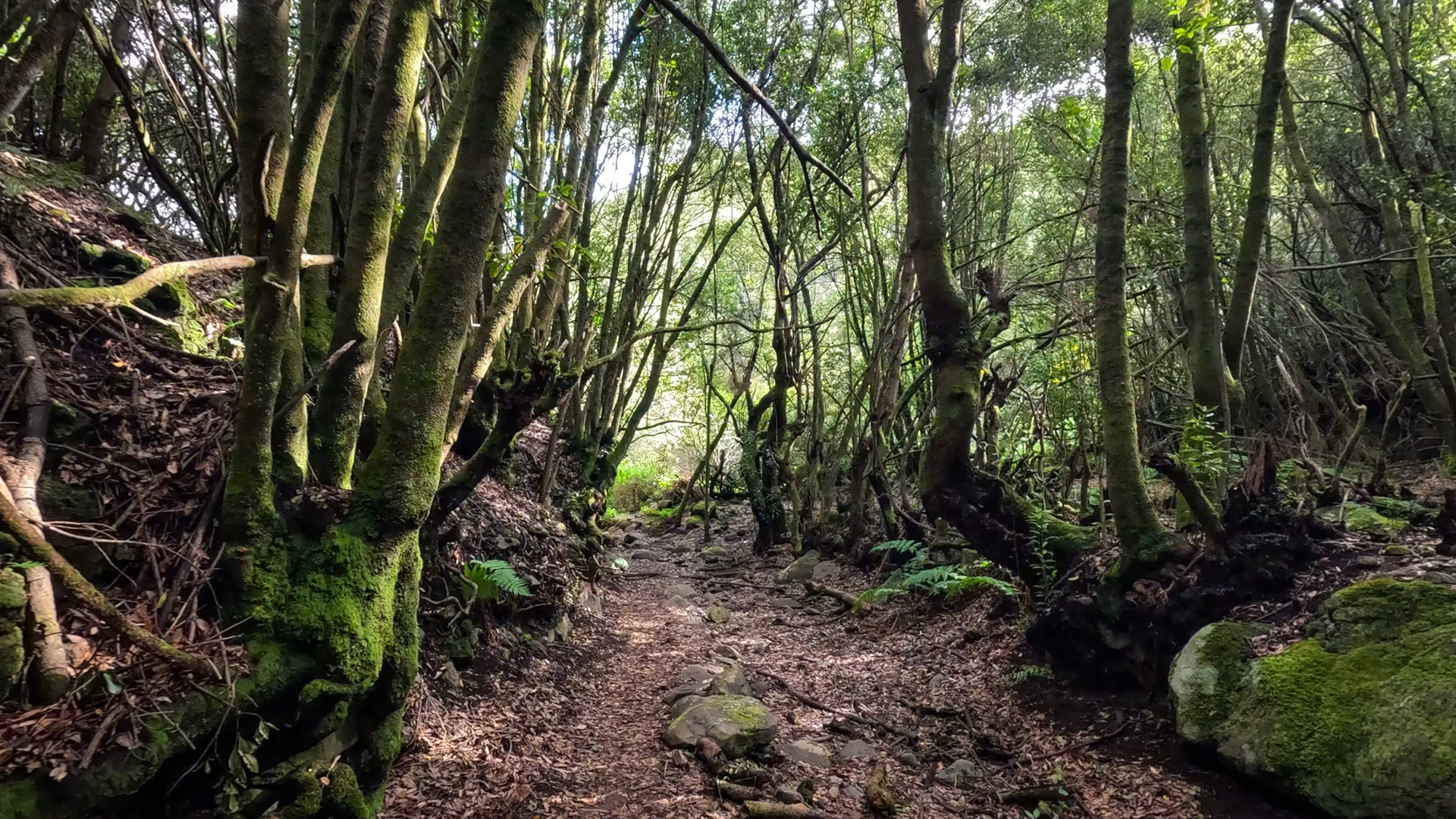
The Laurisilva, as the laurel forest is scientifically known, is therefore no ordinary woodland. It is a living fossil, a remnant of a long-vanished world of vegetation that today exists in only a few places on Earth.
La Palma’s Green Heart: The Laurel Forest
La Palma has one of the largest and best-preserved laurel forest areas in the Canary Islands. The UNESCO Biosphere Reserve Los Tilos in the humid northeast is its beating heart — but the forest extends across other humid outer slopes and gorges in the north as well. Where the northeast trade wind presses its clouds against the mountain slopes, a permanently moist microclimate is created. Mosses, ferns, and ancient trees form a dense green canopy under which time seems to move more slowly.
Los Tilos: The First Biosphere Reserve in the Canary Islands
The El Canal y Los Tilos area near San Andrés y Los Sauces was declared the first UNESCO Biosphere Reserve in the Canary Islands in 1983. The Barranco del Agua, a dramatic gorge at the heart of the forest, is its scenic centerpiece: steep rock walls, smooth boulders carved by water, giant ferns, and a stillness rarely found in the more tourist-heavy parts of the island.
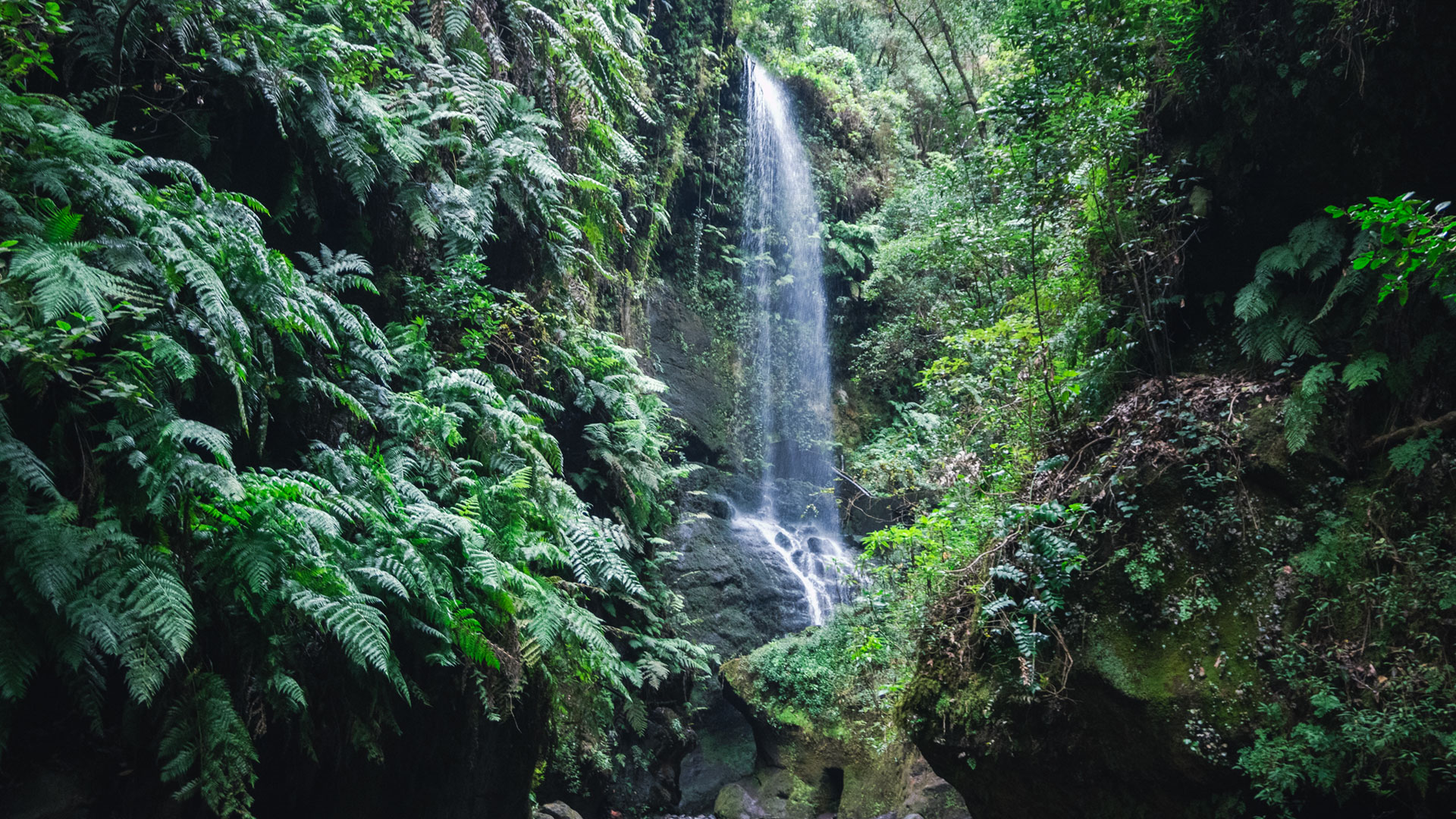
Various characteristic Laurisilva species grow in the laurel forest: the Canarian laurel, the til tree (Ocotea foetens), the Indian persea, tree heather, and the Canarian holly. Particularly impressive is the diversity of mosses, lichens, and ferns. The rooting chain fern (Woodwardia radicans) can develop fronds several metres long, appearing on the damp cliff faces almost like a relic from another geological era.
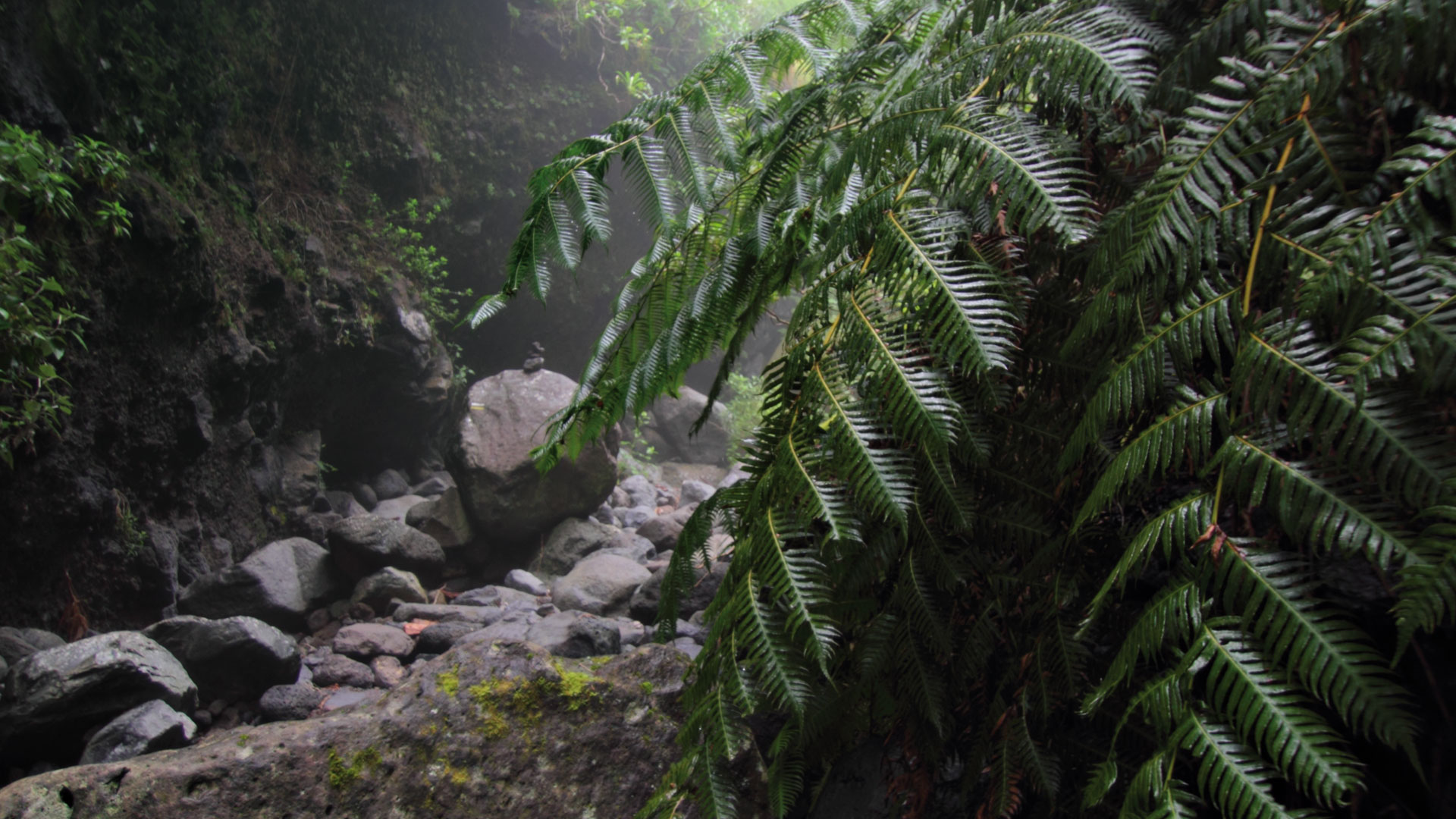
Marcos y Cordero: Water Channels Through the Ancient Forest
The Marcos y Cordero springs in the interior of the Biosphere Reserve are among La Palma’s best-known natural attractions. A spectacular hike leads along an old water channel through thirteen tunnels carved into the rock, the longest of which measures nearly 400 metres. The route combines engineering history with a nature experience: the water galleries reveal how vital the springs were — and still are — for the island’s water supply, while the trail winds through one of the most impressive laurel forest landscapes on La Palma.
Cubo de la Galga: The Laurel Forest for Beginners
The Cubo de la Galga on the east coast offers a more accessible introduction to the Laurisilva. A short walking route passes through a dense, humid forest alongside a stream, showcasing the typical vegetation of this unique climate zone in a small area. Unlike the more demanding hikes through the gorges of Los Tilos, the Cubo de la Galga is suitable for less experienced hikers and families.
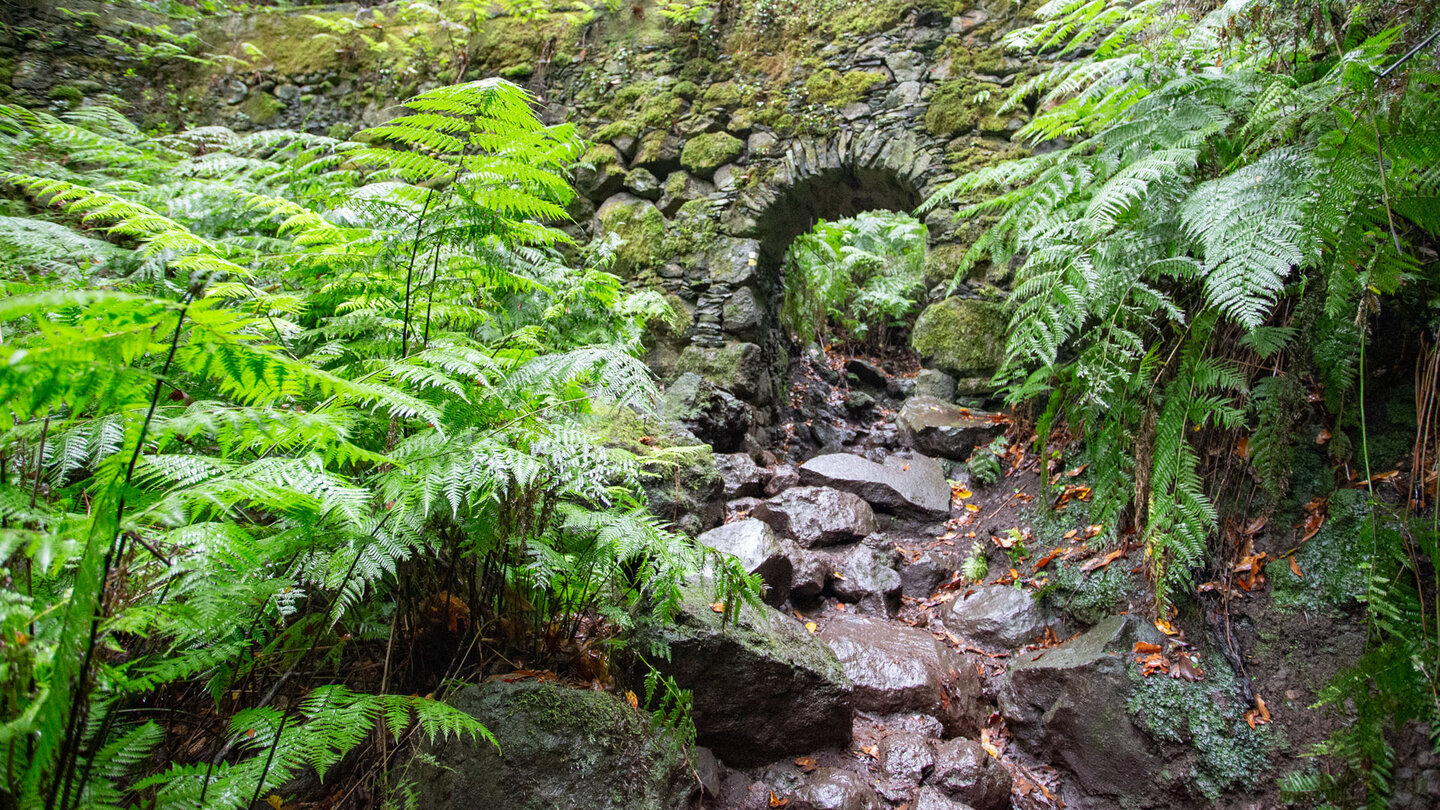
Fauna of the Laurel Forest
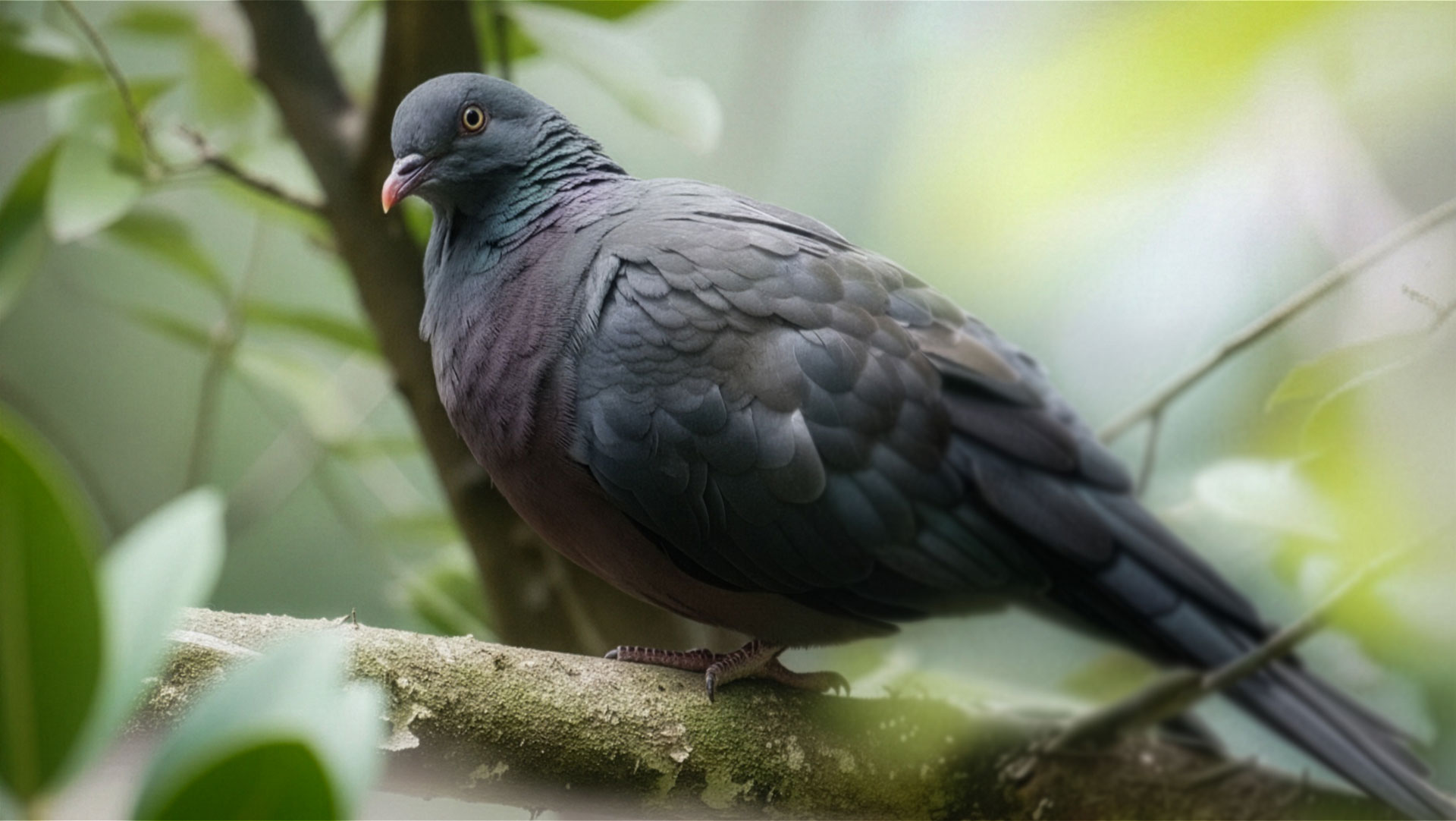
The laurel forest is not only botanically exceptional but also a habitat for rare animal species. Particularly well known are the island’s two endemic species: the laurel pigeon (Columba junoniae) and Bolle’s pigeon (Columba bollii, also known as the dark-tailed laurel pigeon; Spanish: Paloma turqué).
Both species are perfectly adapted to life in the dense forest canopy and are among the characteristic inhabitants of the ancient laurel forests.
The humid stream beds of the forest also provide suitable habitat for the Iberian water frog (Pelophylax perezi). Contrary to common assumption, however, this is not an endemic species of the Canary Islands.
A Walk Through Earth’s History
The laurel forest is La Palma’s green memory — an ecosystem over 20 million years old that has survived on the island thanks to the mild Atlantic climate and the sheltering trade wind clouds.
Anyone hiking through Los Tilos, the Cubo de la Galga, or the humid gorges of the north experiences not just a forest, but a piece of Earth’s history.
Frequently Asked Questions
What is the Laurisilva?
How do you get to the Los Tilos Biosphere Reserve?
Are there laurel pigeons on La Palma?
Where is the most beautiful laurel forest on La Palma?
Why is the laurel forest on La Palma so humid?
This article is based on the on-the-ground knowledge of the Gequo editorial team – publishers of the Reisezeit hiking guides and operators of Sunhikes.com. Last updated: May 2026