Santa Cruz de La Palma – The Most Beautiful Old Town in the Canary Islands
On 3 May 1493, the Spanish conquistador Alonso Fernández de Lugo founded Santa Cruz de La Palma. What grew from this early settlement is today considered one of the best-preserved Renaissance old towns in the Canary Islands – and arguably the most charming capital in the Canaries.
Today, Santa Cruz de La Palma is the capital of the island and, after Los Llanos de Aridane, its second-largest city. With around 16,000 inhabitants, it is compact enough to explore on foot – and large enough to have genuine urban life.
The Balcones Típicos
The most iconic image of Santa Cruz de La Palma is the wooden balconies along the Avenida Marítima. These elaborately carved, painted balconies in shades of green, blue, and brown are unique in the Canary Islands – each one a handcrafted original.
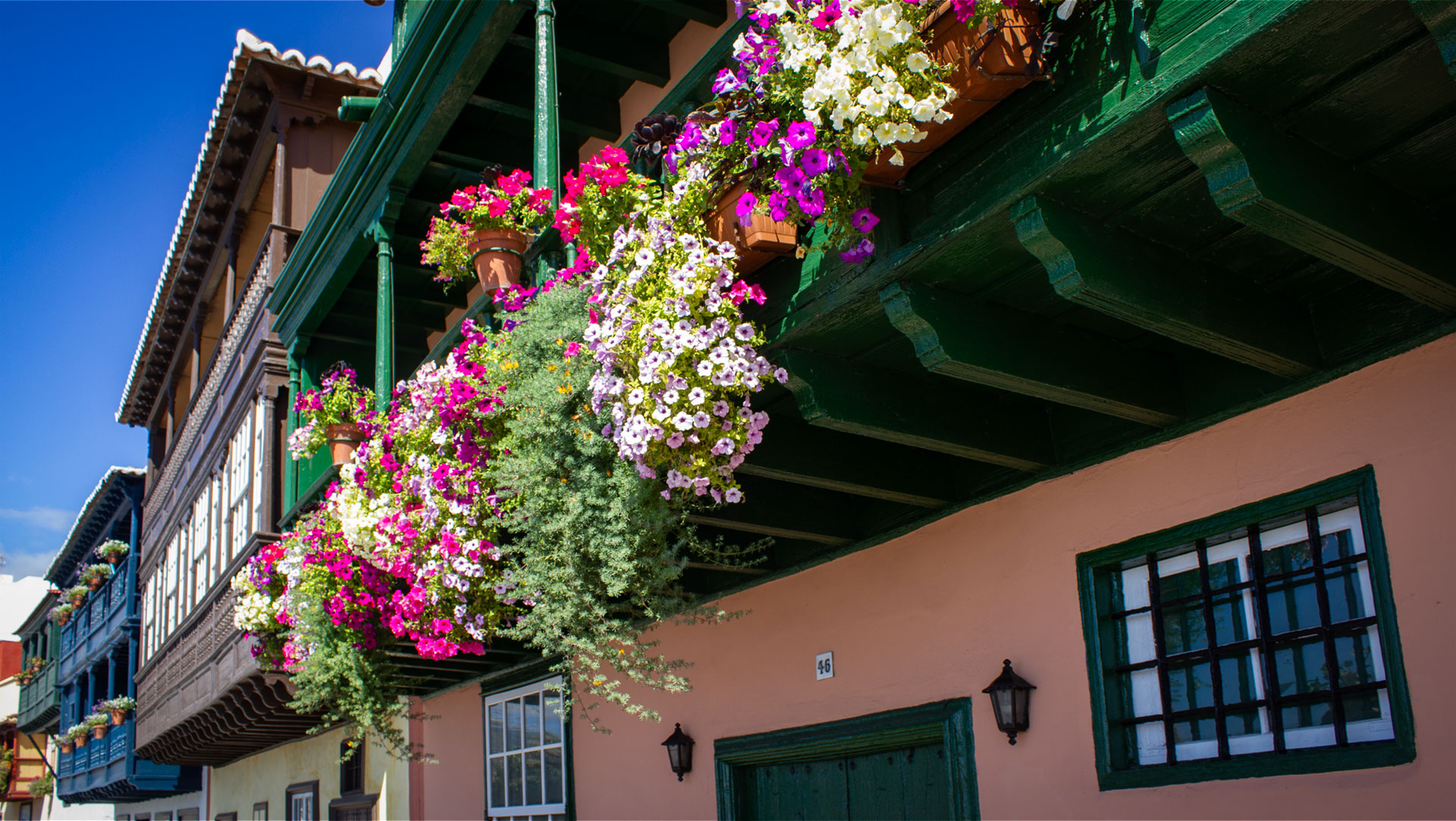
Today, the Balcones Típicos are the city’s most iconic landmark—photographed by millions of visitors and featured in Canarian travel brochures worldwide. The best overall view of the balcony row is from the harbour or from the ferry. While often associated with UNESCO recognition, it is actually the entire old town of Santa Cruz de La Palma that is protected as a historic-artistic monument (Conjunto Histórico-Artístico).
Plaza de España and Town Hall
At the heart of the old town lies the Plaza de España, home to the 16th-century Renaissance town hall (Ayuntamiento). The arcaded façade with its stone columns is one of the finest examples of colonial-era civic architecture in all of Spain.
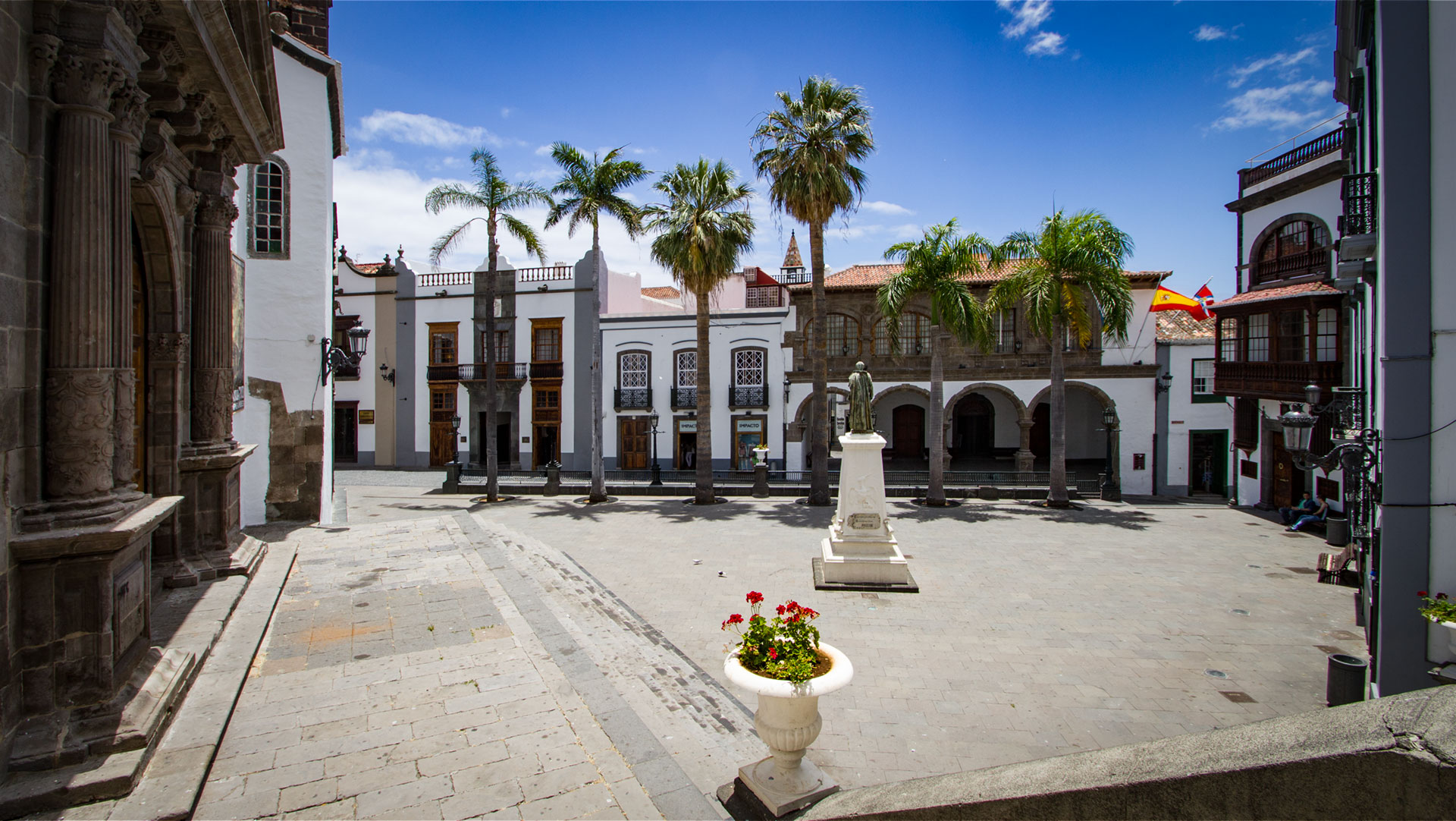
Calle O’Daly, the main pedestrian zone, leads from the Plaza de España northward and is lined with traditional shops, cafés, and historic buildings.
The Naval Museum (Museo Naval)
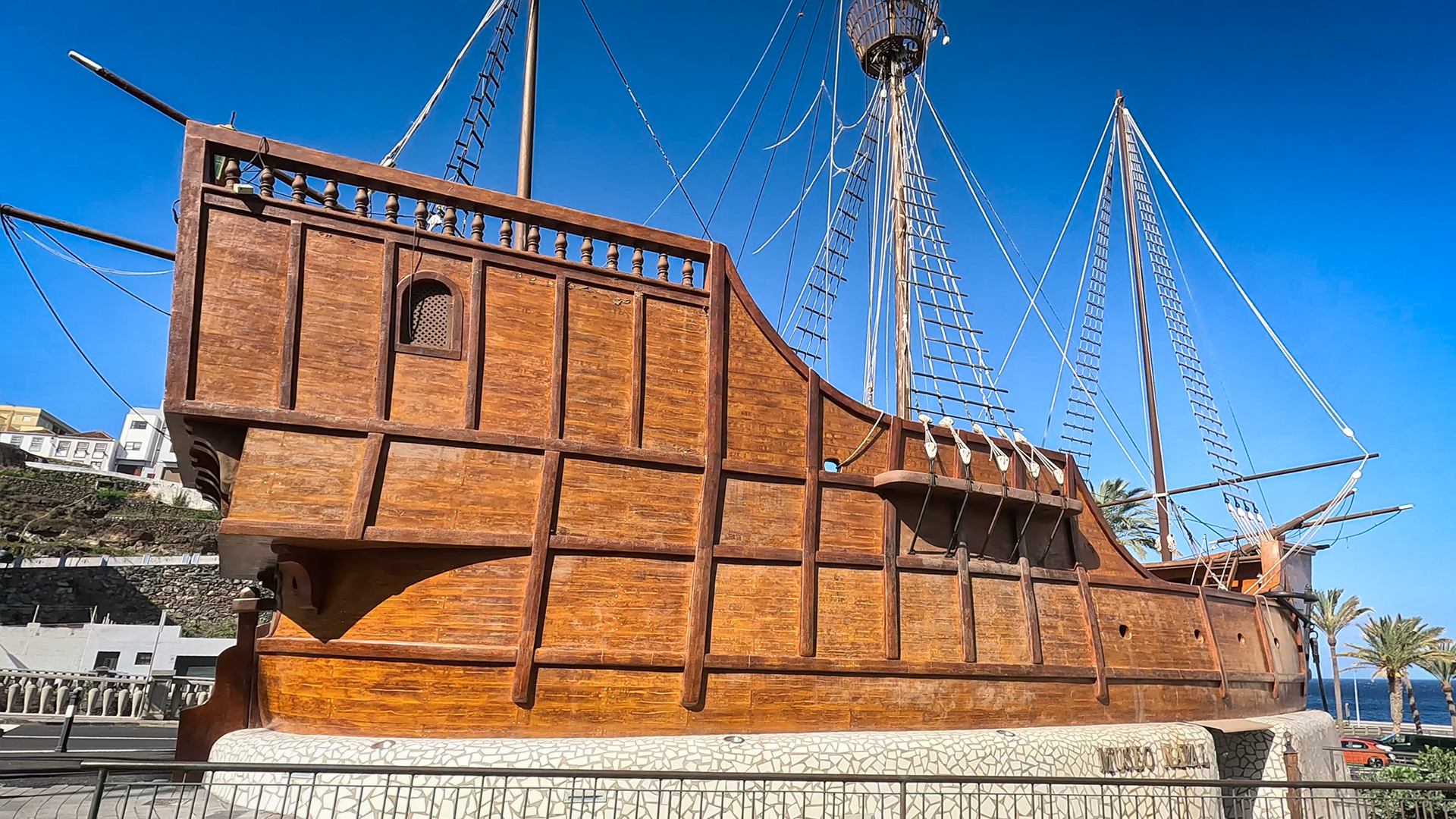
On the Avenida Marítima stands a full-size replica of the Santa María, the flagship of Christopher Columbus. Inside, the Museo Naval presents La Palma’s rich maritime history – from the colonial era to modern seafaring.
Top Sights at a Glance
| Sight | Location | Note |
|---|---|---|
| Balcones Típicos | Avenida Marítima | Free access, best light in the morning |
| Plaza de España + Town Hall | City centre | Free entry, open daily |
| Iglesia de El Salvador | Plaza de España | Renaissance portal, open Tue–Sat |
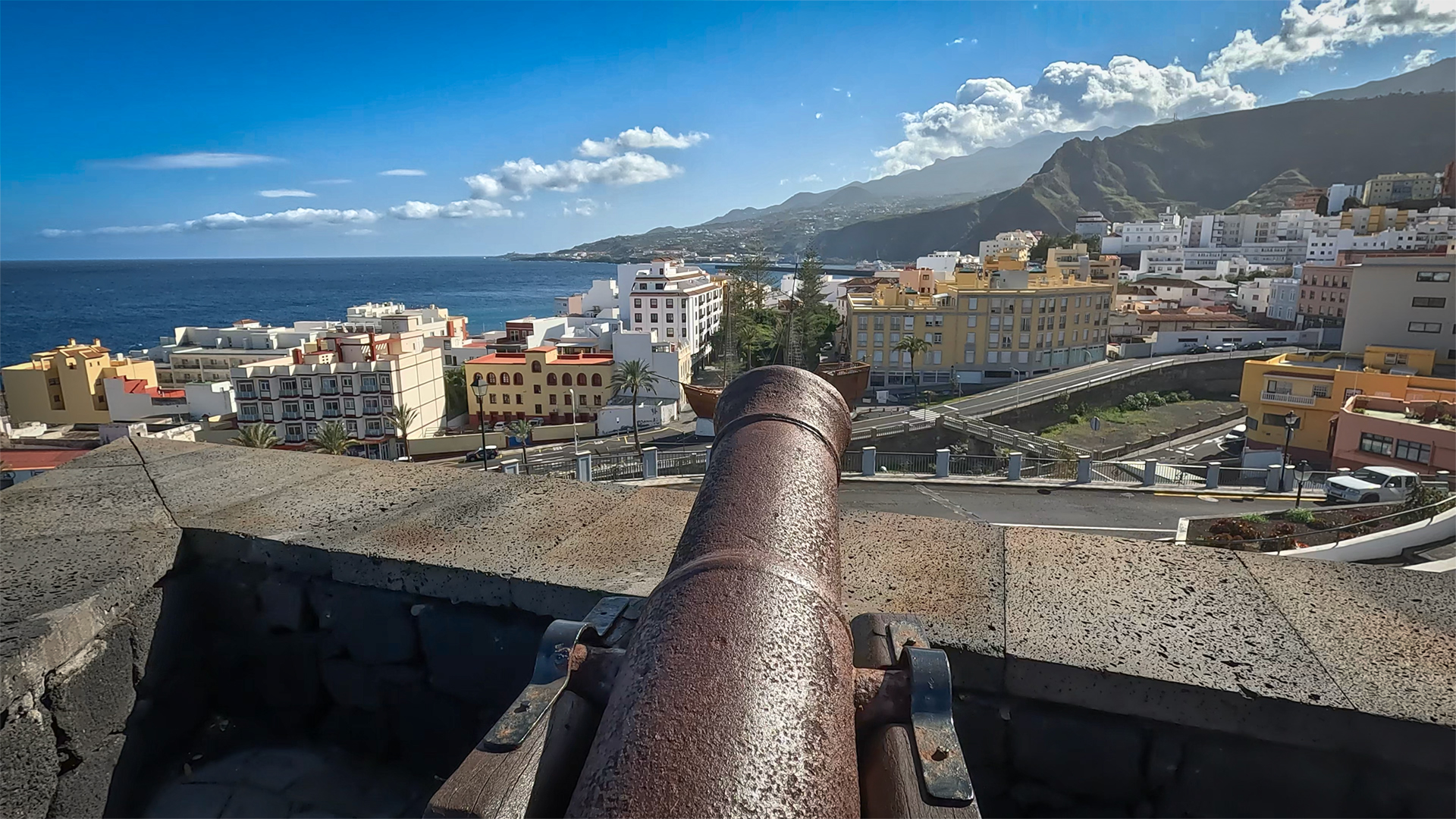
| Castillo de La Virgen | Above Plaza Alameda | 15 min. climb, panoramic views |
| Castillo de Santa Catalina | Avenida Marítima | Exterior free, interior not accessible |
| Museo Naval (Santa María) | Avenida Marítima | Admission: ~€3 |
Old Town Walking Tour
A complete walking tour of the old town takes 2 to 3 hours: harbour and Balcones Típicos, Plaza de España, Calle O’Daly, Iglesia de El Salvador, Castillo de La Virgen – and back along the promenade.
Frequently Asked Questions (FAQ)
When is the best time to visit the old town?
Is there parking in the old town?
How long does a visit to the old town take?
The Bajada de la Virgen
Every five years, Santa Cruz de La Palma hosts the island’s largest festival: the Bajada de la Virgen de las Nieves. Processions, carnival floats, and tens of thousands of visitors transform the city for weeks.
The next Bajada takes place in 2030. If you’re planning ahead, timing your visit to coincide with the Bajada makes for an unforgettable La Palma experience.
Shopping and Dining in Santa Cruz
Calle O’Daly offers a good selection of souvenir shops with local products: embroidery, Arehucas rum, Miel de Palma (palm syrup), and Canarian cigars.
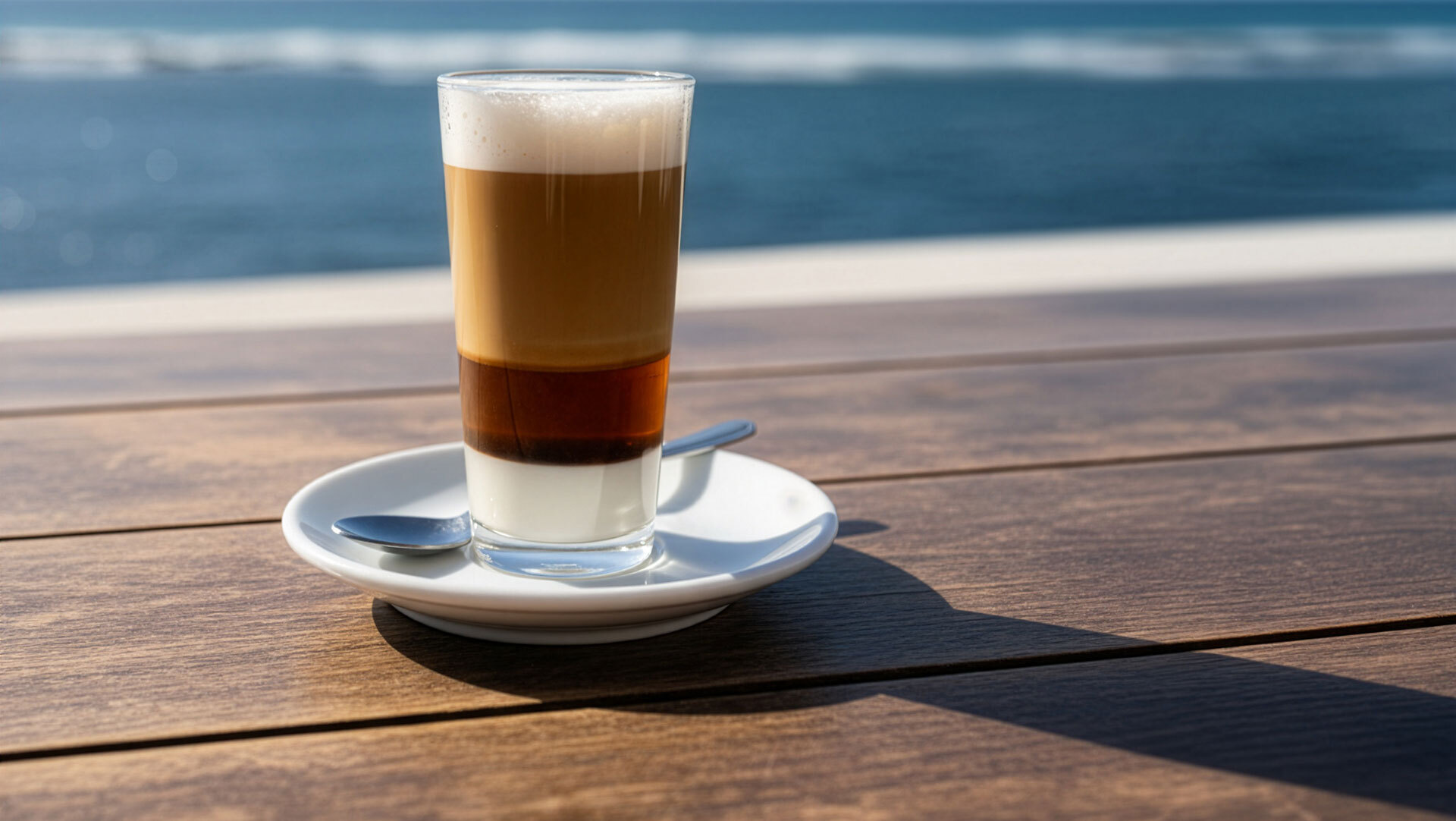
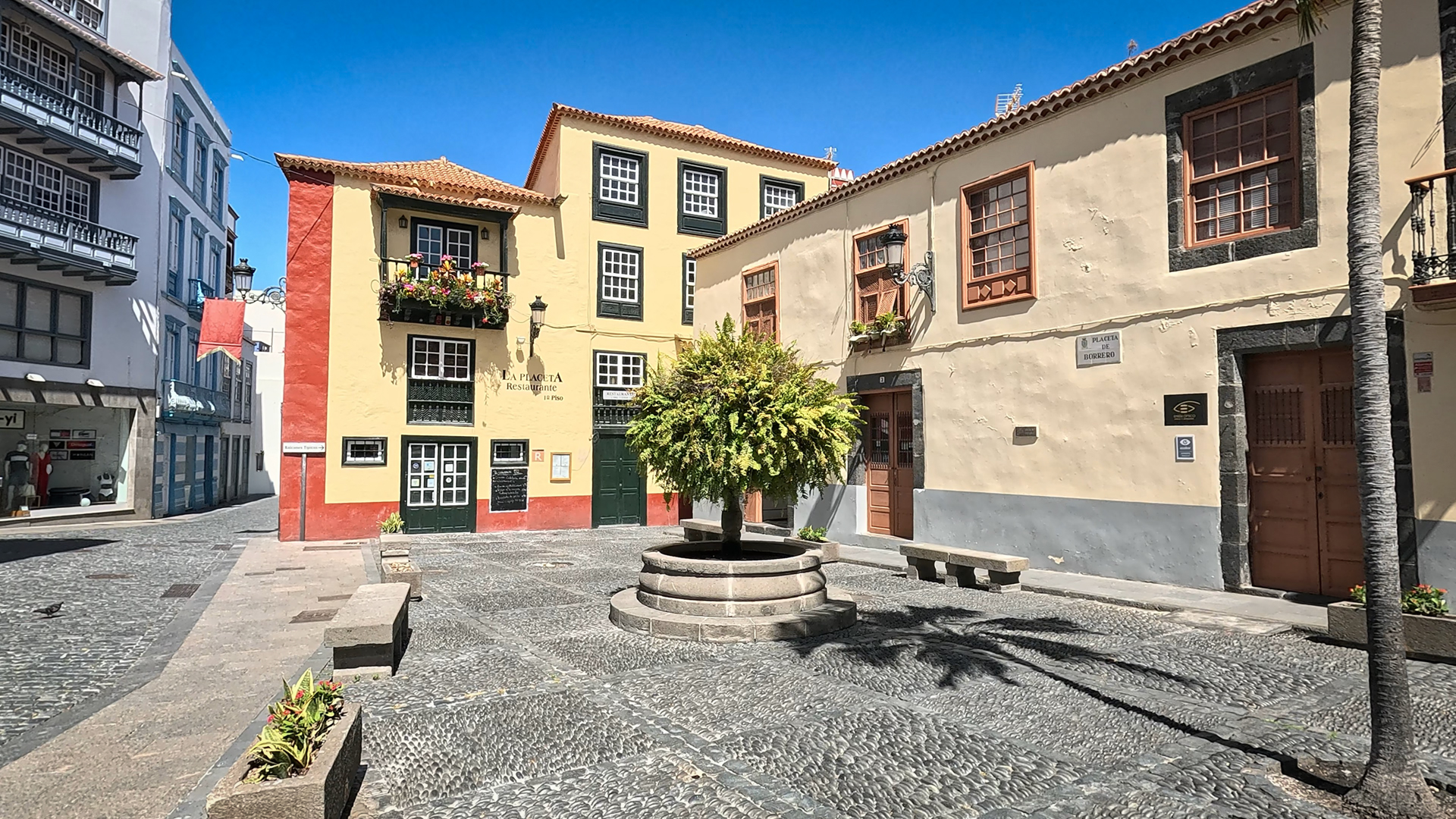
If you’re spending the evening in Santa Cruz, you’ll find excellent dining options around the Plaza de la Alameda, along the waterfront promenade, and tucked away in the old town’s narrow side streets. Restaurante La Placeta (right on the picturesque Plaza de la Placeta) and Chinchal El Canal are wonderful spots for traditional Canarian cuisine and fresh fish.
This article is based on the on-site expertise of the Gequo editorial team – publishers of the Reisezeit hiking guides and operators of Sunhikes.com. As of May 2026