Balcones Típicos: La Palma’s Most Famous Wooden Balconies
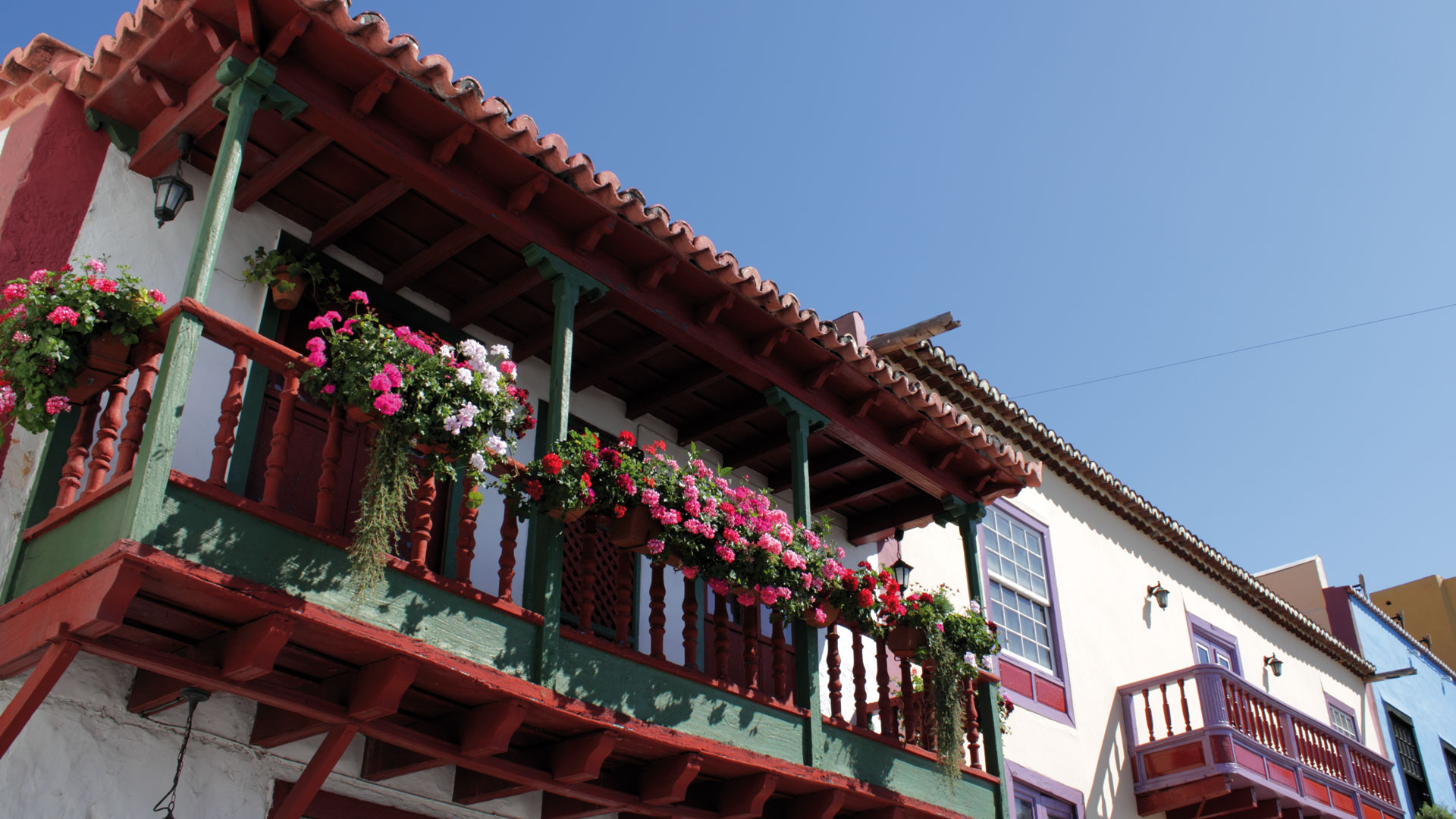
There is one image that represents La Palma on almost every travel brochure: artfully carved wooden balconies spanning multiple floors, colourful façades, and behind them the deep blue Atlantic. This iconic motif was born on the Avenida Marítima of Santa Cruz de La Palma — and is today one of the most recognisable views in the Canary Islands.
But the Balcones Típicos are more than a beautiful photo subject. They tell the story of a prosperous trading city, its architecture, and the special way the Palmeros have dealt with climate, space, and materials.
Behind the Façade: The Unusual Story of the Balconies
Anyone standing today in front of the famous wooden balconies on the Avenida Marítima is looking at the rear façades of historic townhouses. The grand façades of these buildings originally faced what was then the main street, the Calle O’Daly (Calle Real).
When the houses were built in the 16th and 17th centuries, the present-day coastal road did not yet exist. The Atlantic reached right up to the buildings. The wooden balconies facing the sea were therefore not originally mere decorative elements — they served practical purposes: providing ventilation, offering privacy, and allowing pleasant cooling of the interior rooms through the open wooden lattices.
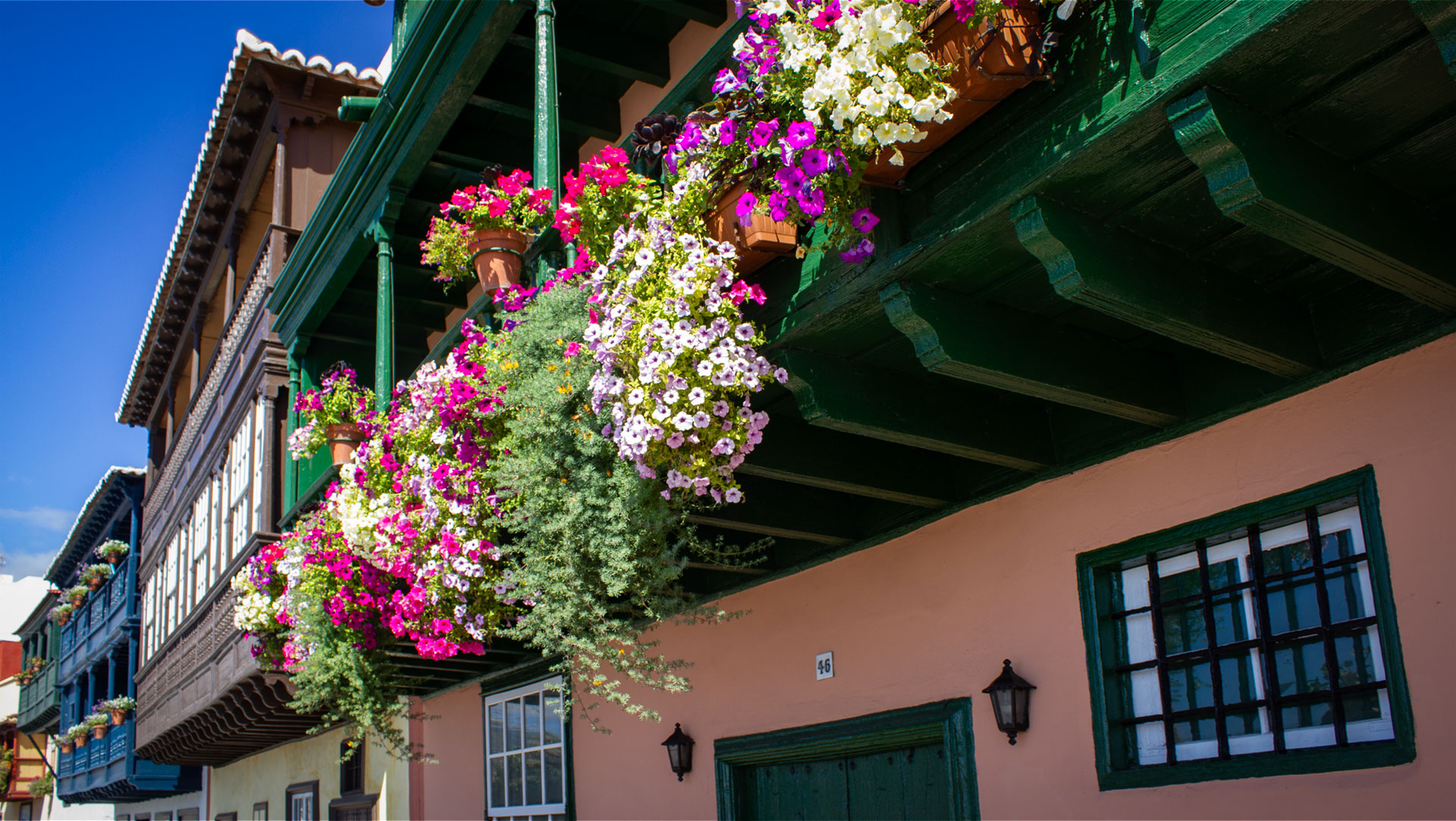
The filigree lattice structures (celosías) trace back to the architectural influences of Andalusian-Moorish building art that reached the Canary Islands via Spain. Over time, these functional additions became the artful landmarks that define the city’s appearance today.
Masterworks in Canarian Pine
Each balcony is a one-of-a-kind piece that showcases the exceptional craftsmanship of past centuries. The structures were made from tea wood, the particularly resin-rich heartwood of the Canary Island pine.
This remarkably durable wood has withstood the humid Atlantic climate and salty winds for centuries. The filigree lattices, railings, and decorative elements were traditionally made with precise wooden joinery — in some cases assembled without a single nail.
Although the typical Canarian green predominates today, you’ll also find balconies in warm shades of brown, ochre, red, or natural wood tones. Together with the colourful façades, they form one of the island’s most beautiful architectural ensembles.
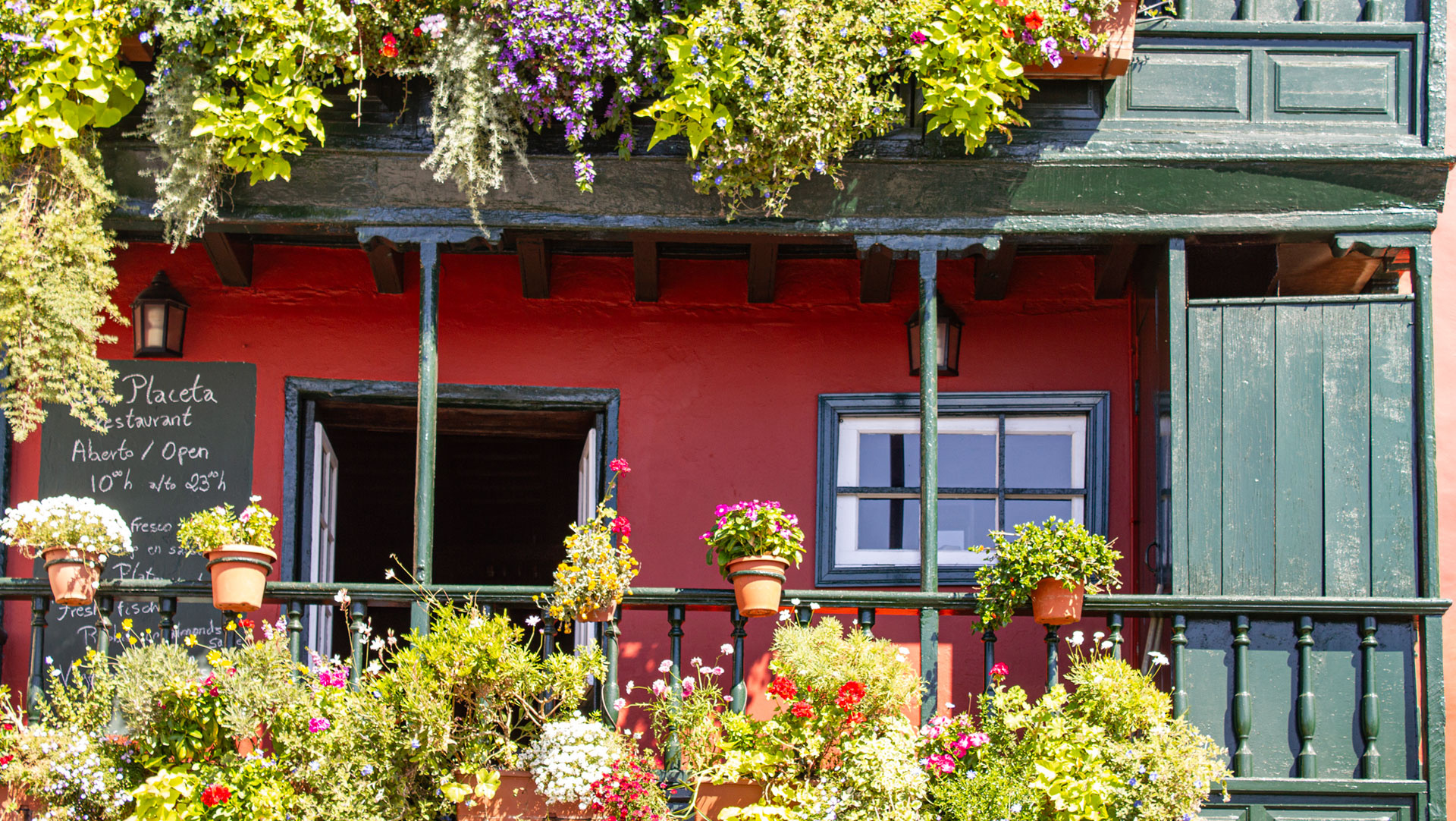
Photo Tip: The Balconies in the Morning Light
The Avenida Marítima is at its most beautiful in the early morning. As the light rises over the Atlantic and slowly warms the façades, the wooden balconies are especially impressive.
Those out between 8 and 9:30 a.m. will typically find the famous row of houses still in a peaceful atmosphere — no large tour groups, and the best light for atmospheric photographs.
Where to Find the Most Beautiful Balcones Típicos
The most famous continuous balcony row is on the Avenida Marítima between approximately house numbers 40 and 60, near the main post office.
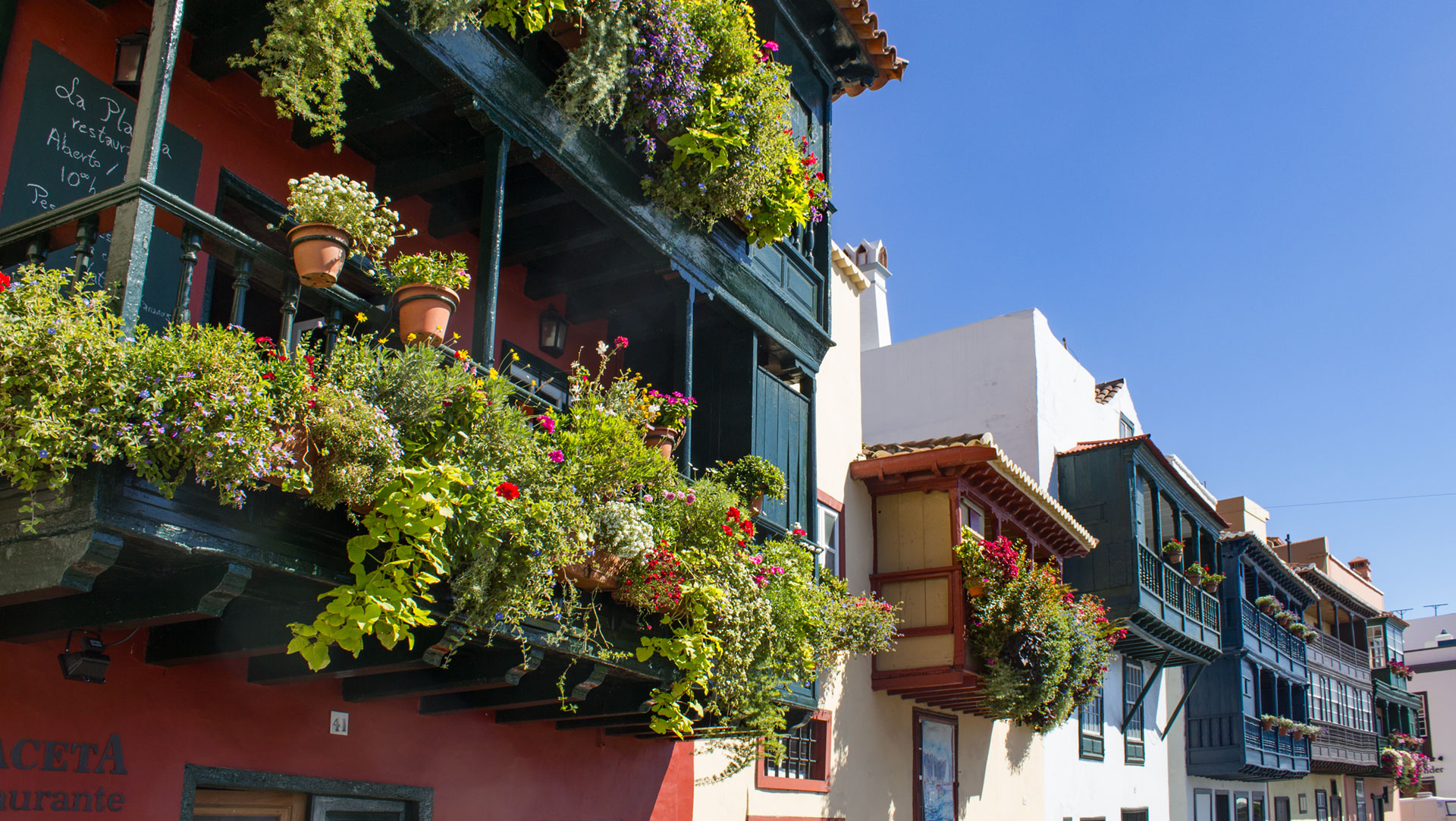
But the historic old town of Santa Cruz de La Palma has many more discoveries to offer. Around the Calle O’Daly, Plaza de España, Plaza de Santo Domingo and the small side streets, numerous traditional houses with ornate wooden balconies can be found. Those who take their time and stroll through the old town on foot will discover, alongside the well-known photo spots, many lesser-known, authentic details.
Beach Tip: Combining Architecture and the Atlantic
Directly opposite the historic balcony row lies the Playa de Santa Cruz. The black city beach of fine volcanic sand is a perfect complement to a tour of the old town.
Thanks to the offshore breakwaters, the sea here is generally calm. Showers, changing facilities, and good infrastructure make it ideal for a swimming break after strolling through the historic city centre.
The Balcones Típicos at a Glance
| Category | Details |
|---|---|
| Location | Avenida Marítima, Santa Cruz de La Palma (famous balcony row approximately between house numbers 40 and 60) |
| Material | Tea wood — the exceptionally durable heartwood of the Canary Island pine |
| Architectural Style | Traditional Canarian architecture influenced by Andalusian-Moorish building art and the Mudéjar style |
| History | Originally functional back balconies of historic townhouses from the 16th and 17th centuries |
| Special Feature | One of the most recognisable landmarks of Santa Cruz de La Palma and one of the island’s most photographed subjects |
| Status | Part of the protected historic ensemble of the old town (Bien de Interés Cultural) |
| Combination Tip | Directly opposite is the Playa de Santa Cruz — perfect for combining an old town tour with a swim in the Atlantic |
Conclusion
The Balcones Típicos are La Palma’s most iconic image — and even more beautiful in person than any photograph. They connect history, craftsmanship, and the distinctive character of an old Atlantic city.
Those who stroll along the Avenida Marítima in the morning, admire the carved wooden balconies, and then let their gaze drift over the Atlantic experience one of the finest moments Santa Cruz has to offer.
Frequently Asked Questions
Are the Balcones Típicos a UNESCO World Heritage Site?
Why were the balconies built from wood?
Is there an admission fee to see the Balcones Típicos?
Can you see inside the houses with balconies?
Can you swim near the Balcones Típicos?
This article is based on the on-the-ground knowledge of the Gequo editorial team – publishers of the Reisezeit hiking guides and operators of Sunhikes.com. Last updated: May 2026