Caldera de Taburiente – Where La Palma Reveals Its Ancient Core
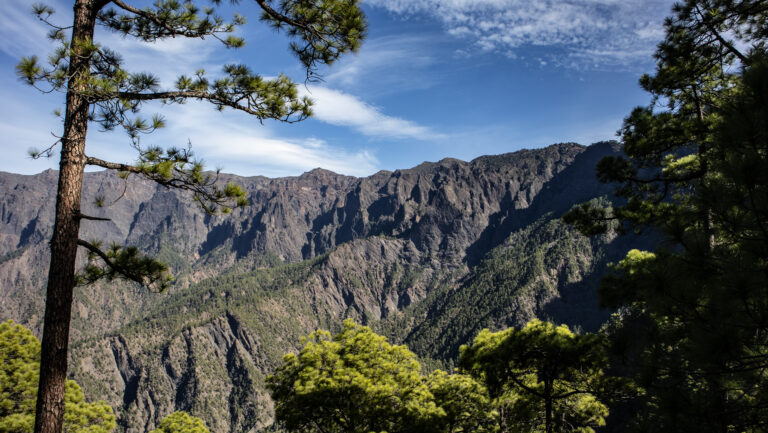
There are places on La Palma that make you feel as though you’re seeing the island in its purest form — raw, ancient, and wrapped in a silence that feels like reverence. The Caldera de Taburiente, at the very heart of the island, is one such place. Anyone who has stood on its crater rim and looked down into the more than 1,700-metre-deep basin carries those images for a long time.
A Crater Carved by Erosion
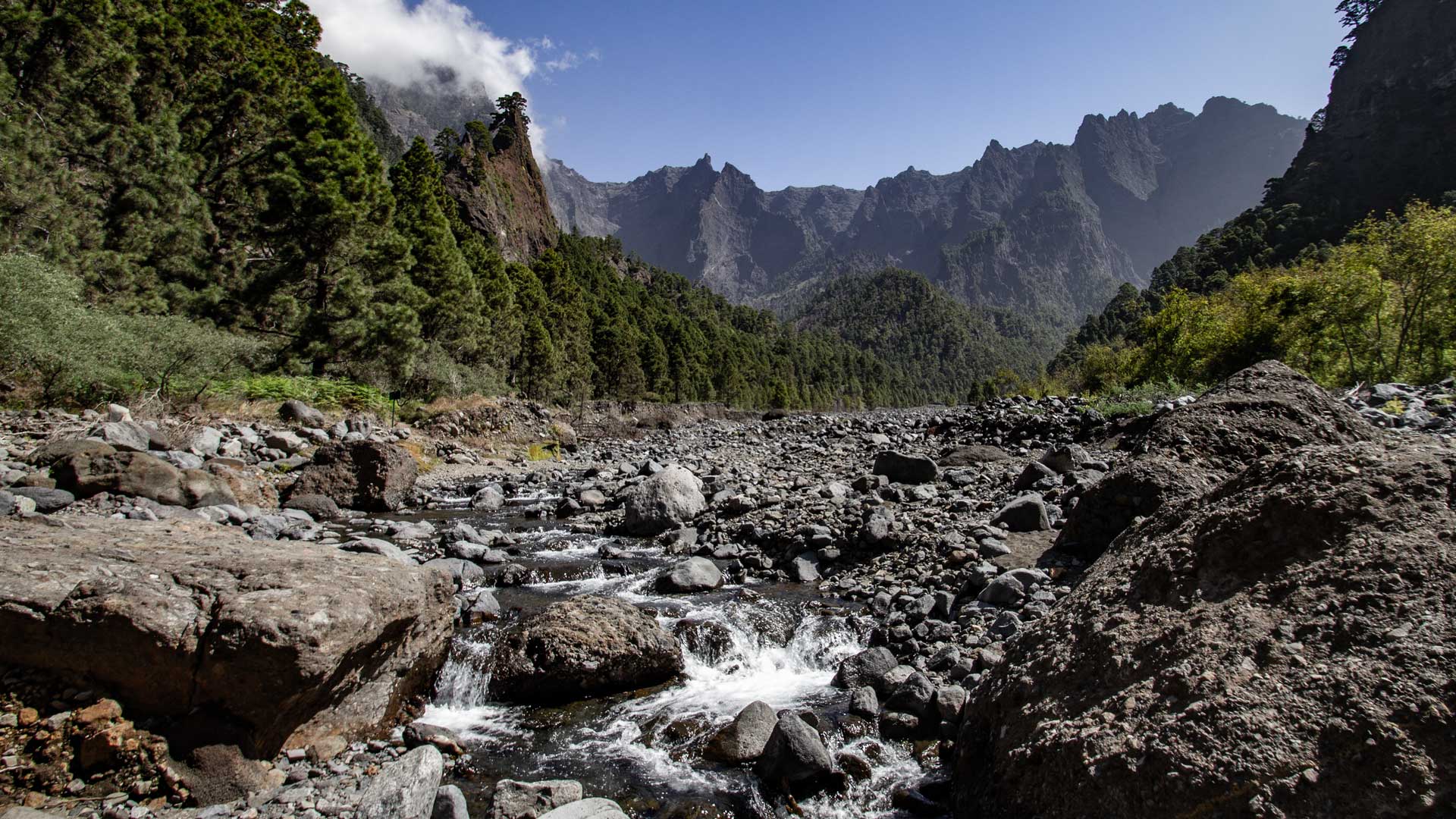
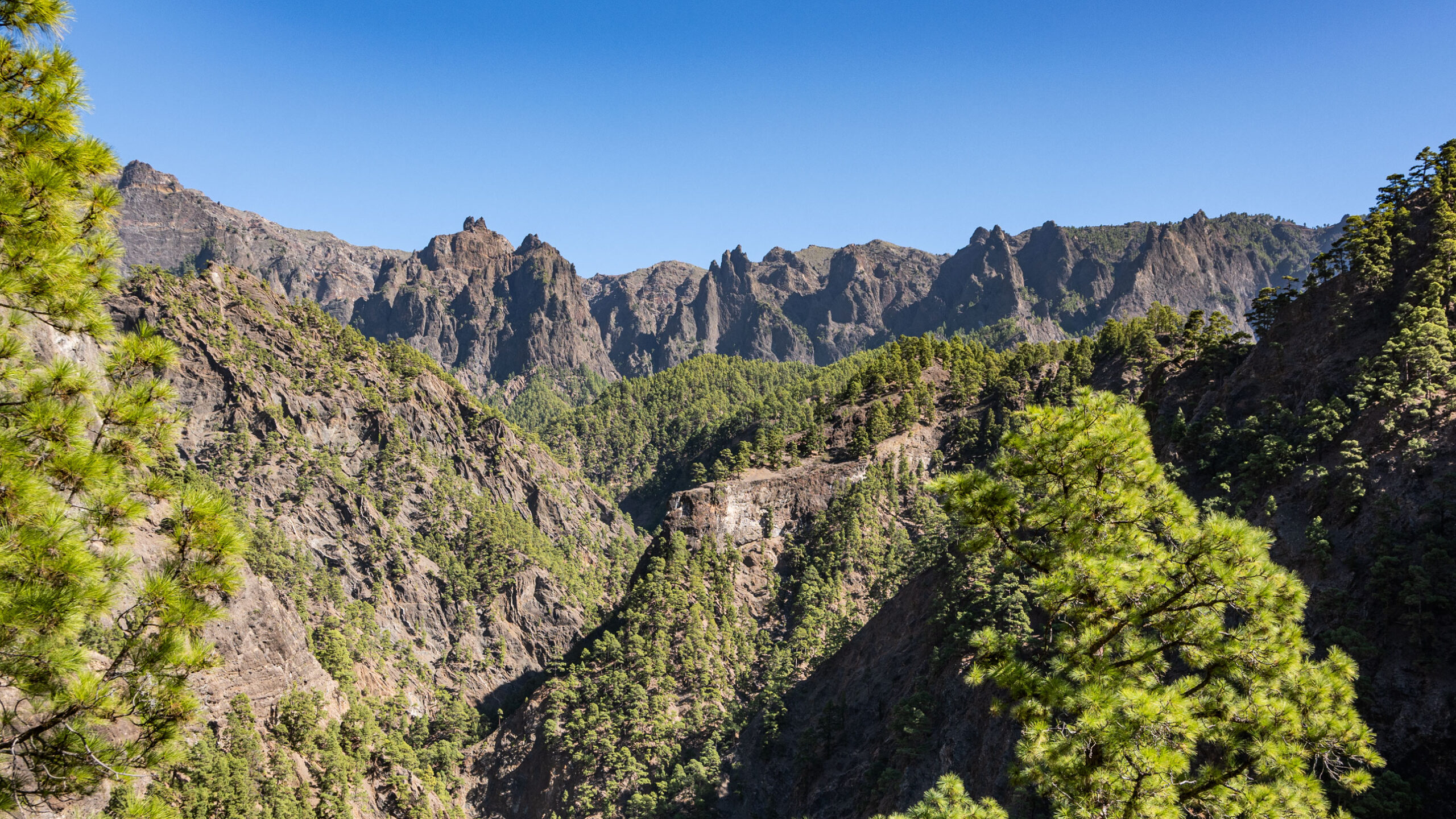
The Caldera de Taburiente is not a volcanic crater in the classic sense — it’s a vast erosion crater that formed over millions of years. First, a massive volcanic mountain rose here; over time, rain, streams, and erosion carved it away, leaving behind a vast basin, one that today ranks among the most impressive landscapes in the entire Canary Islands. It measures around nine kilometres across. It has been protected as a national park since 1954.
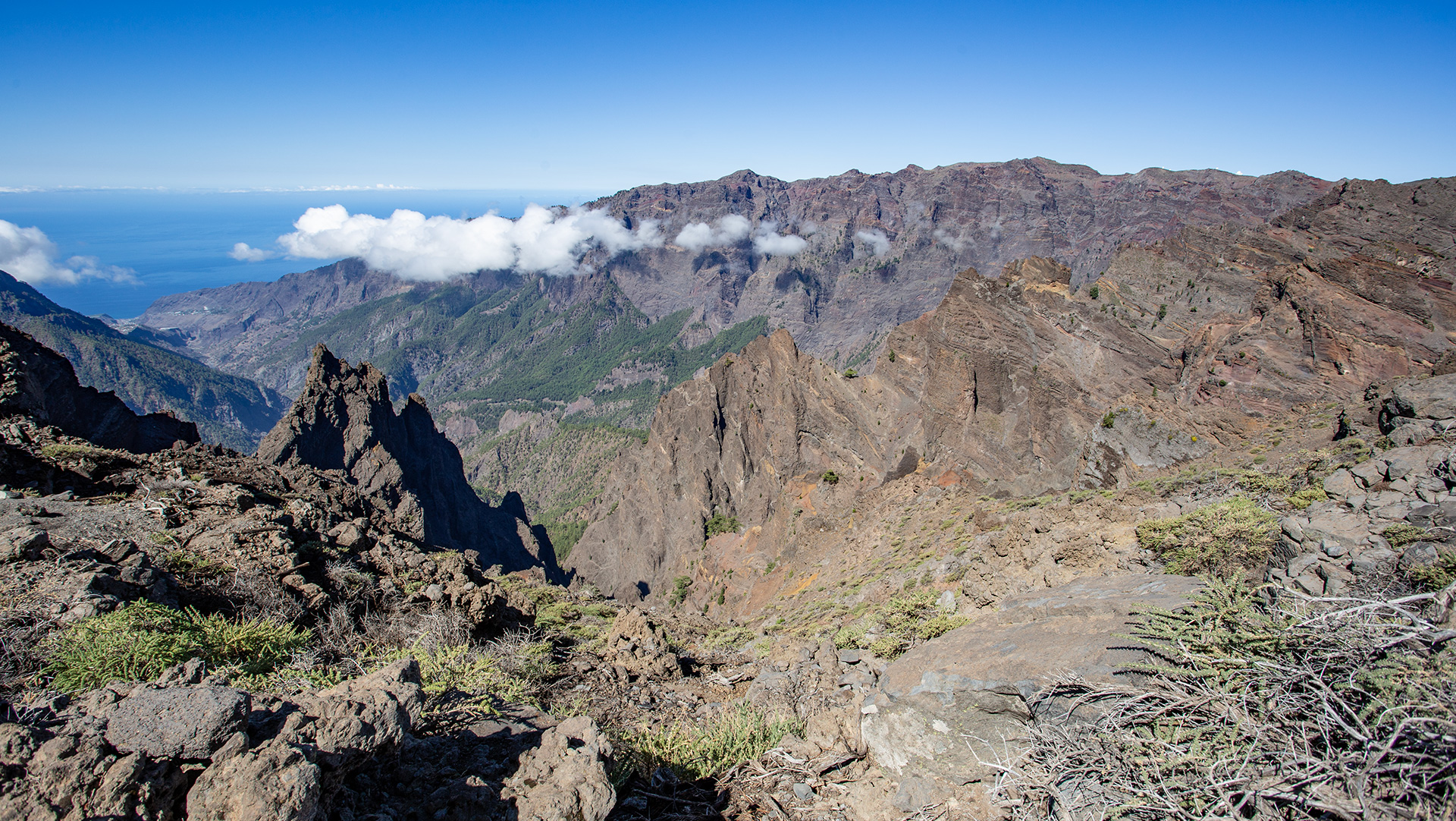
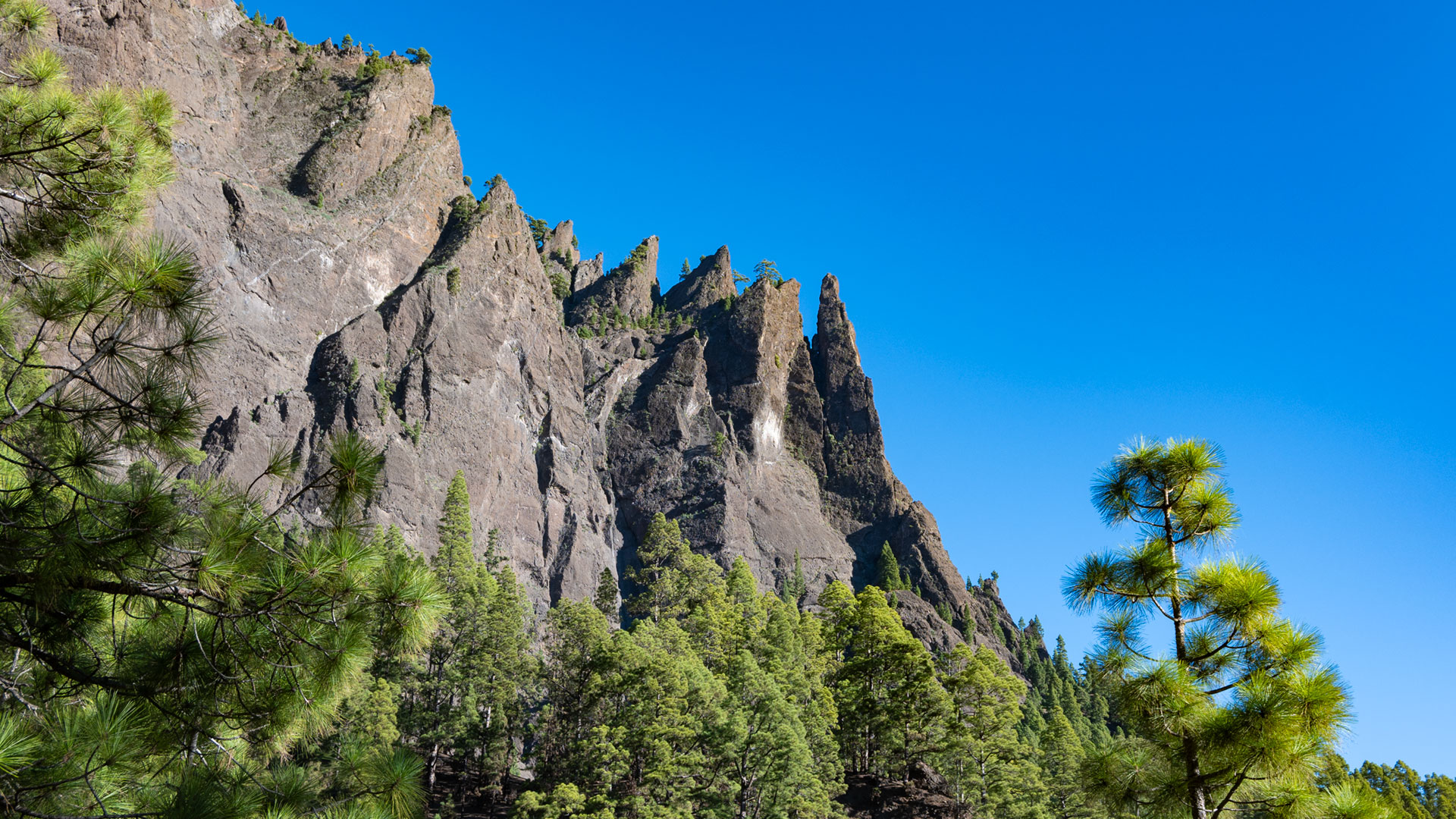
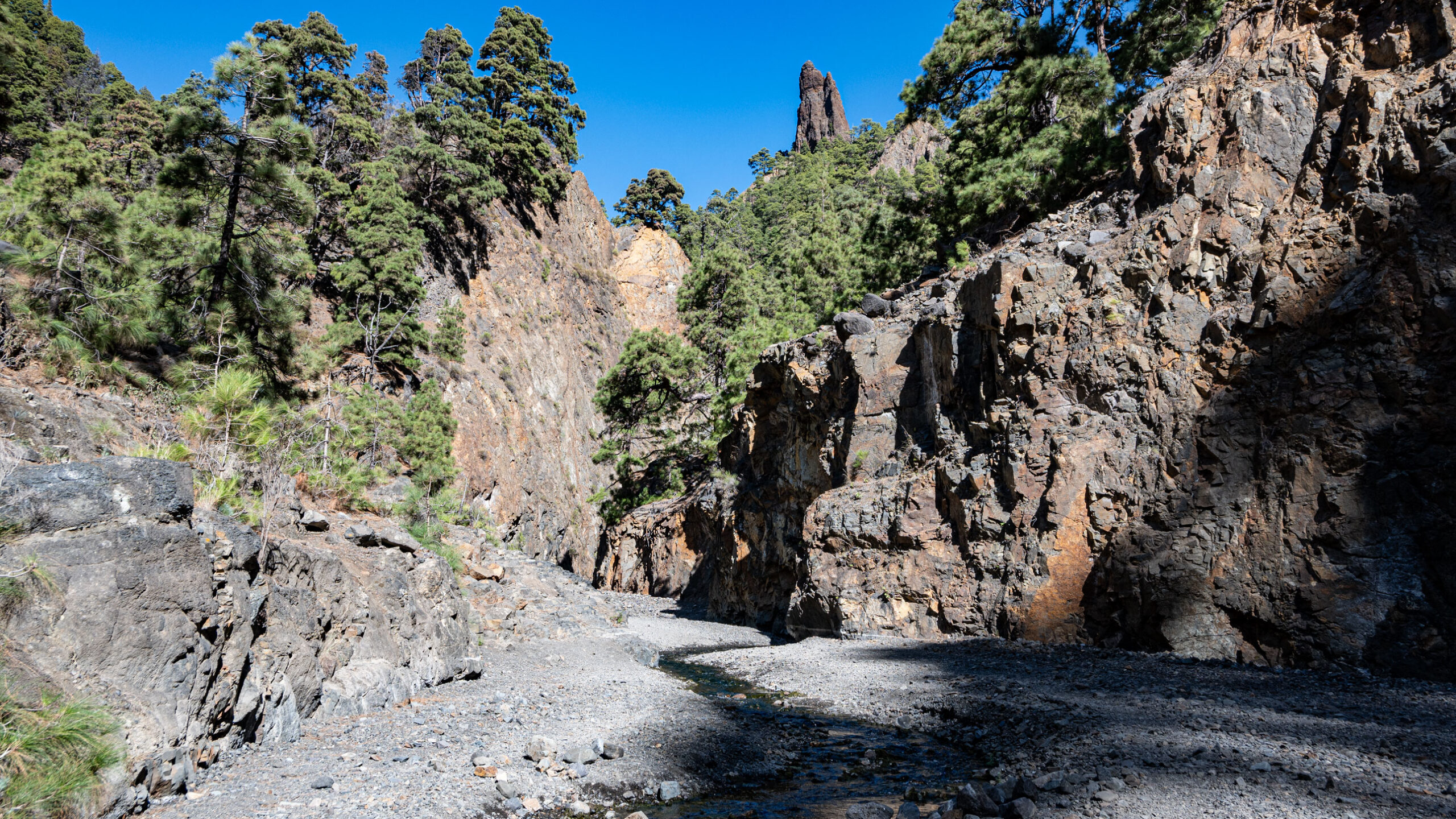
The water that collects inside drains to the sea through a single gorge: the Barranco de las Angustias, the “Ravine of Anguish.” The name alone promises drama, and what you find there lives up to it. Towering rock walls, submarine pillow basalt formations, and a stream that flows year-round make the Barranco de las Angustias one of the most striking gorges in the Canary Islands.
La Cumbrecita – The Easiest Access Point
The easiest way into the national park is via La Cumbrecita, at around 1,310 metres. From here, paved paths lead to several viewpoints right on the crater rim. At the Mirador de los Roques, the view opens up into the Caldera: bizarre rock spires rise from the greenery like petrified sentinels, pine-covered slopes plunge into the depths, and the horizon dissolves into nothing but rock and air.
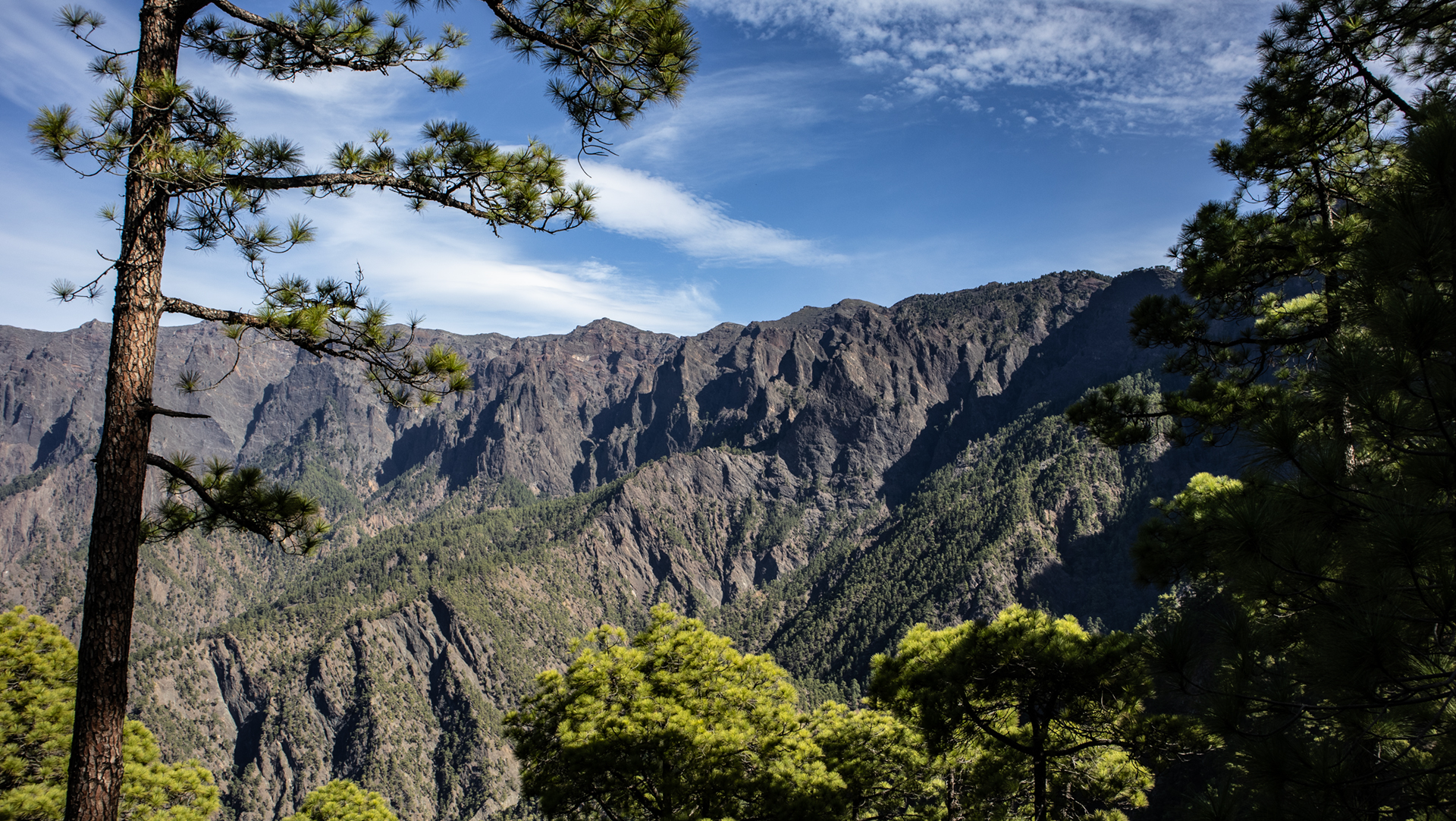
The trail is short and suitable for families. A second path leads to the Mirador Lomo de las Chozas, offering a wider view of the Caldera. Together, both trails form an easy loop of just under three kilometres — ideal for a first impression.
Important – Reservation Required:
Driving to the La Cumbrecita car park requires a mandatory, free time-slot booking in advance at reservasparquesnacionales.es. Without a booking, entry is not possible. Book early, especially during peak season.
Los Brecitos – The Trailhead for Hikers
Those wanting to go deeper head to Los Brecitos, at 1,080 metres. From there, one of La Palma’s most beautiful trails leads into the heart of the Caldera: 13.9 kilometres to the park’s centrepiece, the Playa de Taburiente — a broad gravel riverbed where several streams converge. The descent covers around 1,150 metres in elevation. Along the way, you pass the Cascada de Colores: a waterfall whose rock is coloured yellow, red, green, and white by iron-rich mineral springs — one of the island’s most colourful natural spectacles.
Hikers setting off into the Caldera de Taburiente from the classic starting point of Los Brecitos use the shuttle service. It takes them from the car park in the Barranco de las Angustias, near Los Llanos de Aridane, up to the trailhead.
The most practical option is to leave your own car directly at the large car park in the Barranco de las Angustias — the hike’s finishing point. The shared taxis typically depart once full (4 to 8 passengers), costing around €9 to €10 per person. If you’re in a hurry, you can charter the entire taxi to leave straight away. Shuttles typically run from around 8:00–8:30 a.m. until late morning, around 11:30 a.m. — advance booking usually isn’t necessary for individuals, since the drivers coordinate hiking groups directly on site.
Long-Distance Hiking at the Caldera
For seasoned or athletic hikers, the Caldera de Taburiente offers one of the island’s most spectacular challenges. The long-distance GR-131 trail circles the national park along its highest peaks right at the crater rim, rewarding hikers with breathtaking views down into the basin. Those who’d rather experience the interior itself opt for the classic traverse: starting at the Los Brecitos viewpoint, descending to the Playa de Taburiente, and finally finishing through the imposing Barranco de las Angustias.
Local guides know the Caldera in all its facets and offer both day tours and multi-day traverses. GetYourGuide offers a selection of vetted operators on La Palma.
Practical Information: Visitor Centre El Paso
The national park’s visitor centre in El Paso features exhibitions on the Caldera’s geology, flora, and fauna. It offers detailed trail maps, information on current trail closures, and advice for planning your route. Stopping by beforehand saves time and helps you get your bearings.
The Visitor Centre in El Paso
Visitor centre: Parque Nacional Caldera de Taburiente
Address: Ctra. General Padrón 47, 38750 El Paso
Phone: +34 922 49 72 77
Opening hours: daily 9:00 a.m.–2:00 p.m. & 3:00–6:00 p.m.
Entry: Free
La Cumbrecita car park: free, booking required (reservasparquesnacionales.es)
From Los Llanos: Take the LP-3 via El Paso, then turn onto the LP-4 (approx. 30 mins).
Getting to Los Brecitos: LP-3, then forest track LP-302 (approx. 45 mins, partly unpaved)
Frequently Asked Questions (FAQ)
How long does a visit to the Caldera take?
Do you need to book a visit to the Caldera in advance?
Are there places to eat inside the national park?
Can you see the Cascada de Colores from La Cumbrecita?
Camping in the Caldera de Taburiente
The campsite at the Playa de Taburiente is one of the most extraordinary places to spend the night in the Canary Islands. You sleep right inside the national park, just a few metres from the bed of the Río Taburiente, surrounded by pines and the Caldera’s basalt walls. The sound of running water drowns out the rest of the world. Permits must be requested in advance — either online through the national park’s booking portal or directly at the El Paso visitor centre.
The campsite is open year-round but has limited capacity. During peak season, from May to September, booking well in advance is strongly recommended. Bring enough water and food for your entire stay in the park, as there are no supply facilities. Lighting fires is prohibited within the national park.
The Geology of the Caldera – A Window into the Island’s Origin
A visit to the Caldera is also a journey into the story of how La Palma was formed. The Caldera de Taburiente is the core of the island’s oldest part — the basalt walls rising here are over two million years old. In many places you can clearly see submarine pillow basalt: rock that once solidified beneath sea level, before La Palma rose out of the Atlantic. These rock formations offer a geological window into a prehistoric past.
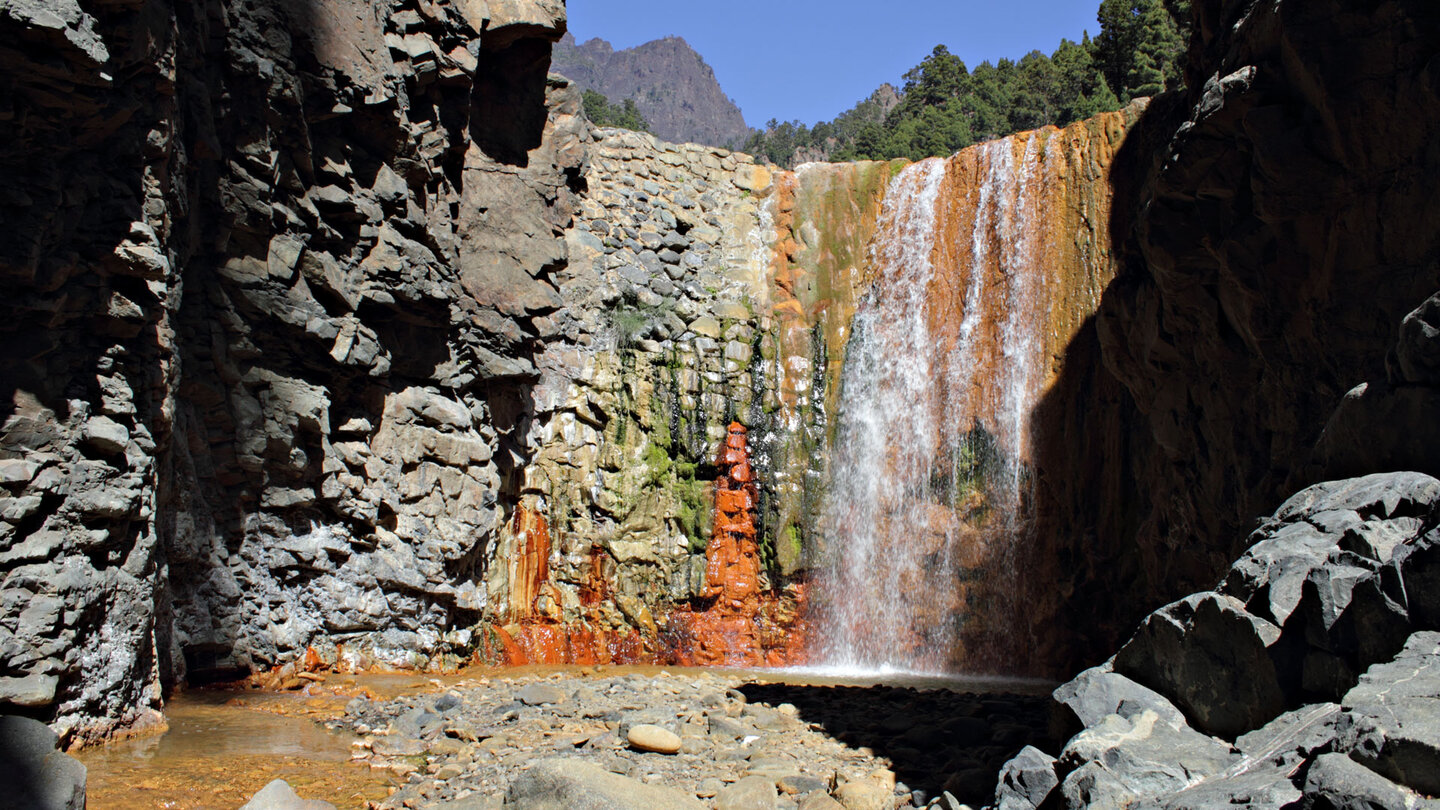
Especially striking is the Cascada de Colores, named for the mineral colouring of its rock. The colours — ranging from bright ochre yellow through rust red to deep green — are created by iron-rich mineral springs seeping through cracks in the volcanic rock. Each colour tells the story of a different geological layer.
Flora and Fauna in the National Park
The national park is home to five distinct vegetation zones — from subtropical laurel forest on the humid northern slopes to heathland and high-mountain steppe near the summits. The Canary pine (Pinus canariensis) is the dominant tree species and a true survivor: it’s fire-adapted and resprouts from its bark after wildfires. The understorey is home to tree heather, Canary Island juniper, Viñátigo, and dozens of endemic plant species.
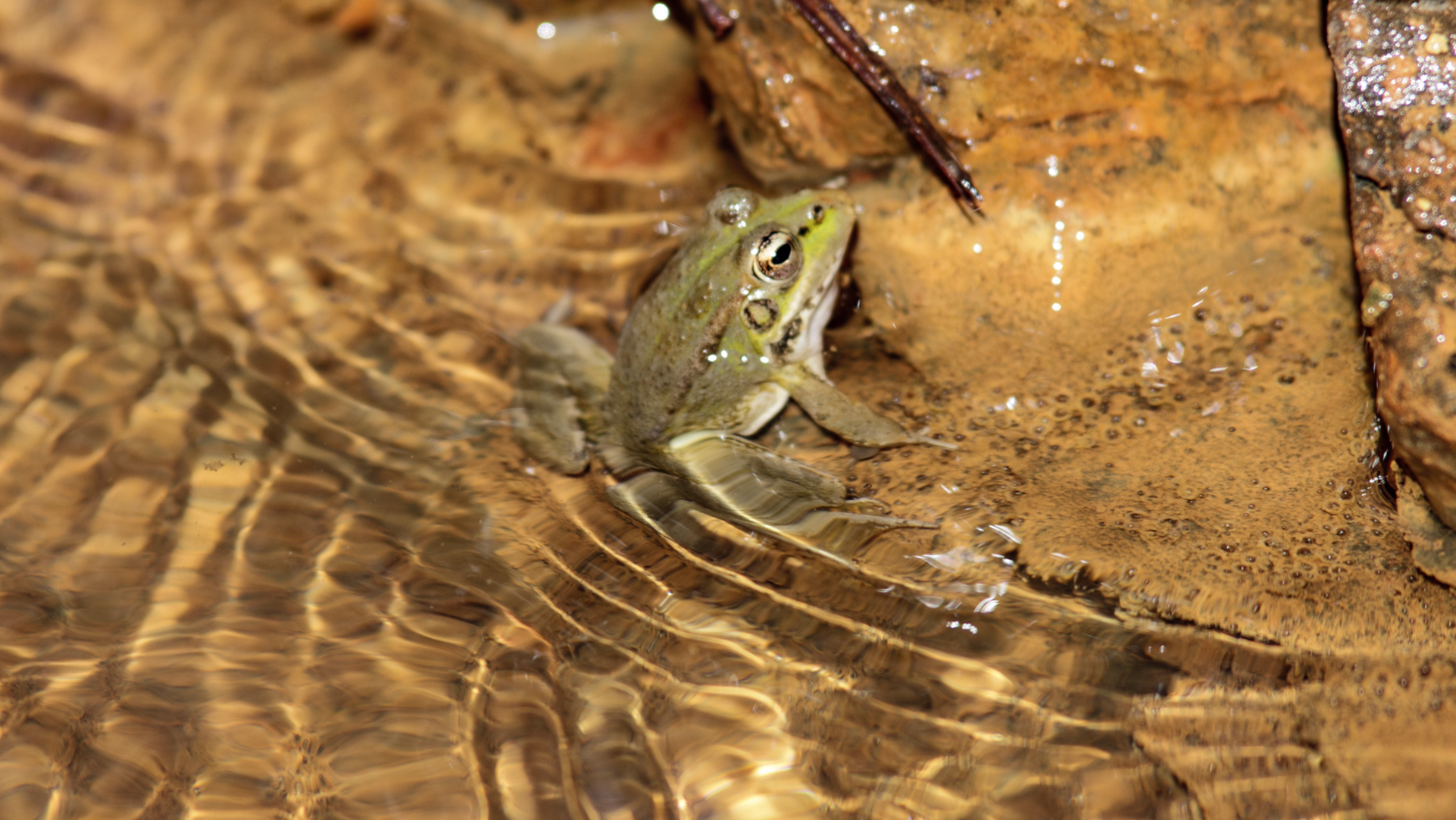
Wildlife here is elusive yet diverse. The La Palma chaffinch (Fringilla coelebs palmae) is easier to hear than to see — its song accompanies every hiker. The green woodpecker, the kestrel, and the Canary raven are other typical residents.
Excursion Tips and Providers
For visitors who want to explore the national park with an experienced guide, several local operators are available on La Palma. Guided day tours usually combine La Cumbrecita in the morning with a descent to Los Brecitos in the afternoon. Multi-day Caldera traverses with an overnight stay at the Playa de Taburiente offer a truly special experience: for two days you’re cut off from the outside world, surrounded by nothing but rock, water, and pine forest.
Anyone wanting to use the Caldera region as a holiday base will find holiday homes and fincas in El Paso within easy reach of both Caldera access points. El Paso is listed on Clariso.eu with a good selection of vetted accommodation — from rustic fincas with mountain views to spacious villas with private pools.
Accommodation tip: El Paso sits between Los Llanos and the Caldera — an ideal base for hikers. Clariso.eu lists vetted holiday homes right in the municipality of El Paso, many with views of the national park.
Practical Tips for Your Visit
Sunscreen and plenty of water are essential in the national park — especially in summer, when the sun beats down intensely on the Caldera’s open sections. Binoculars are worthwhile for birdwatching. Proper hiking boots are a must for any trail beyond the short viewpoint loops. Mobile reception is patchy inside the Caldera.
Parking outside designated car parks is prohibited within the national park and is monitored. The time-slot booking applies to La Cumbrecita. Los Brecitos requires no advance registration, but the unpaved LP-302 dirt track requires a 4×4 or a vehicle with high ground clearance.
Caldera de Taburiente: The Heart of La Palma
Protected as a national park since 1954, the Caldera de Taburiente is the beating heart of La Palma. It offers spectacular hiking routes, a perennial mountain stream, and the famous Cascada de Colores (Waterfall of Colours). La Cumbrecita serves as the ideal gateway for a quick visit, while Los Brecitos is the main starting point for longer hikes into the crater’s interior. Note: Don’t forget to book your parking reservation for La Cumbrecita in advance.
This article is based on the on-the-ground knowledge of the Gequo editorial team – publishers of the Reisezeit hiking guides and operators of Sunhikes.com. Last updated: May 2026