Hike to Playa de la Veta: through the tunnel to the hidden beach
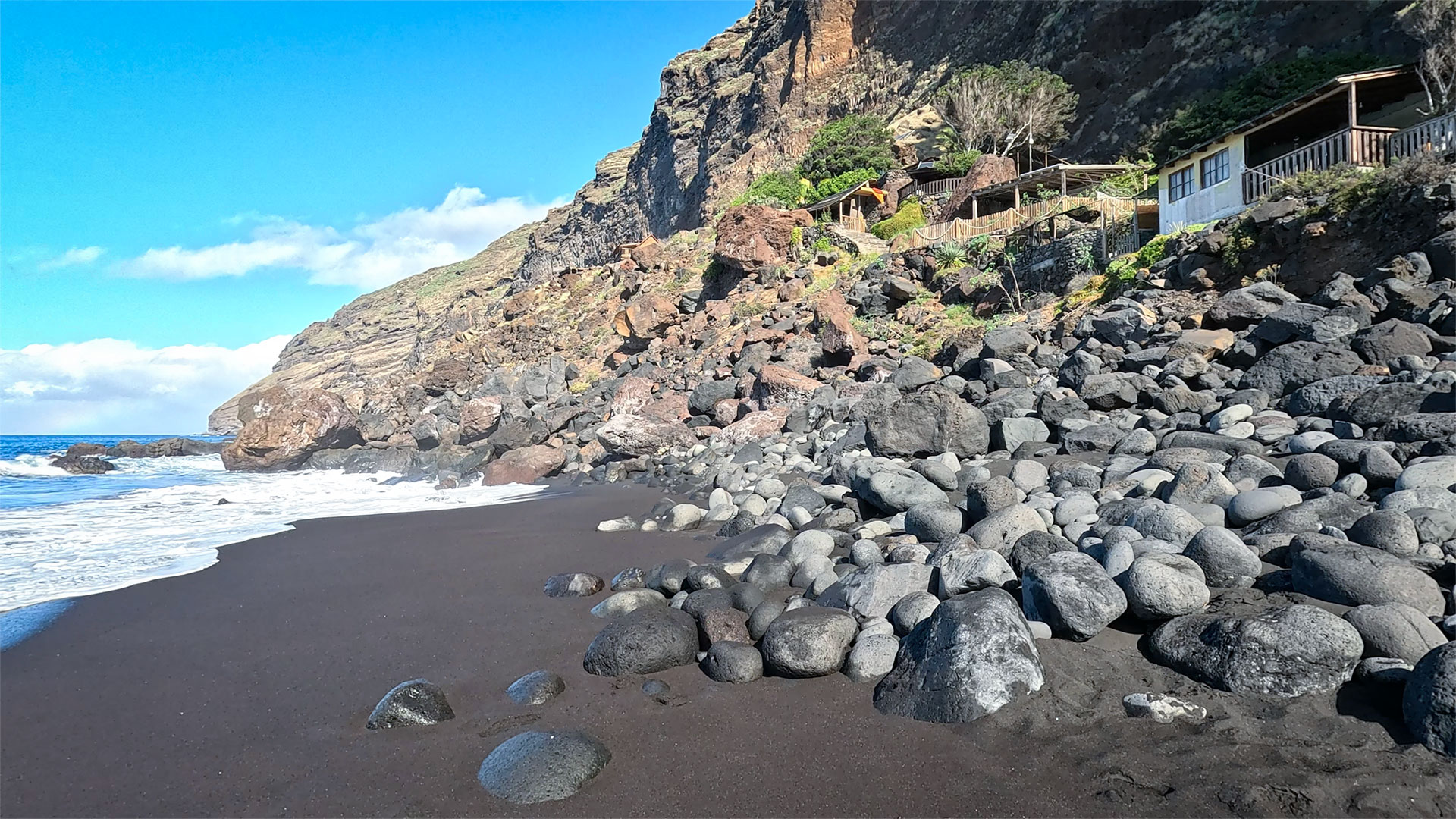
Playa de la Veta is one of the strangest places in La Palma: a black sand beach right at the foot of a huge cliff, with a seaside hamlet of around 50 colorful houses, which can only be reached on foot through a rock tunnel or by boat. The hike there is short but impressive: 1.7 km, 242 m, easy, 1:00–1:30 hours.
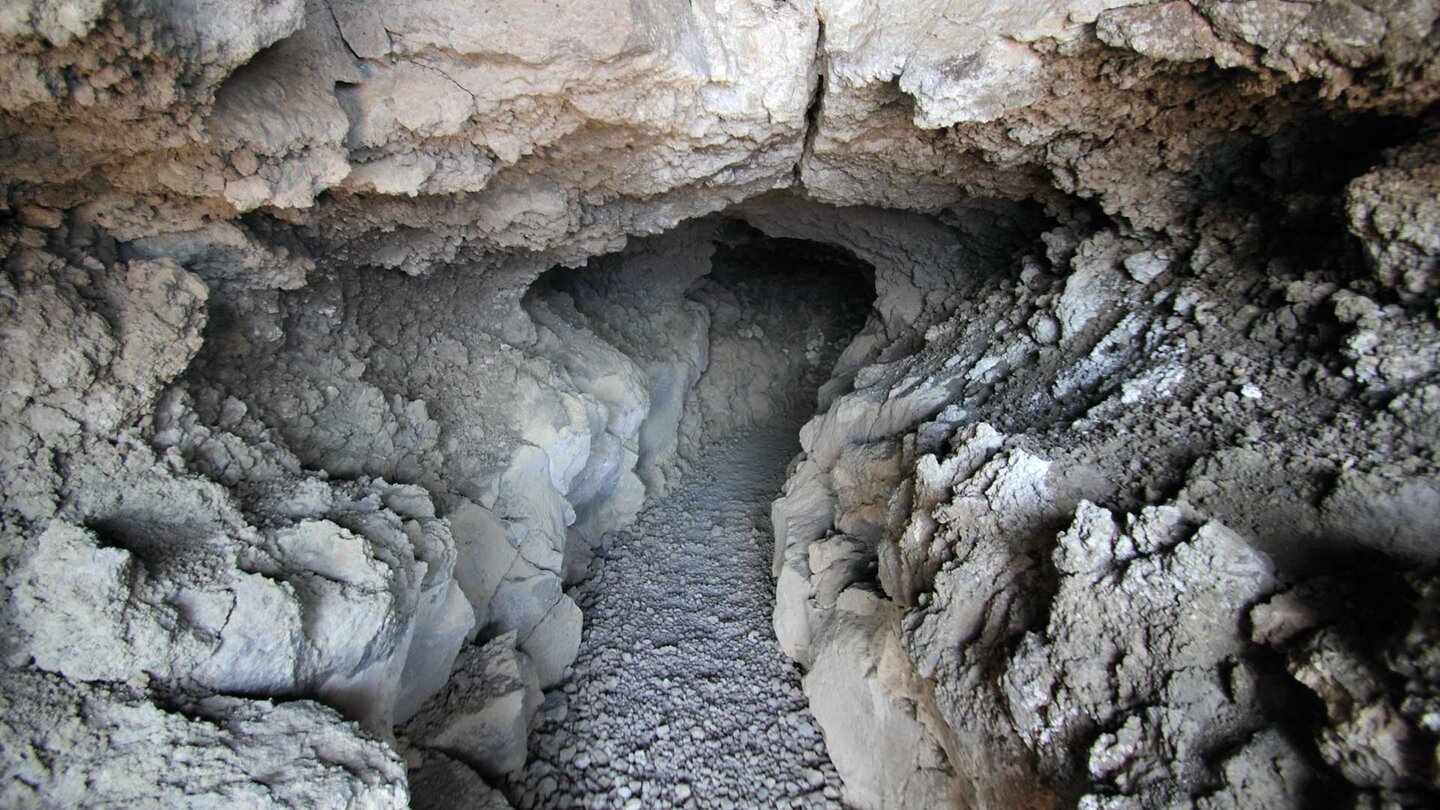
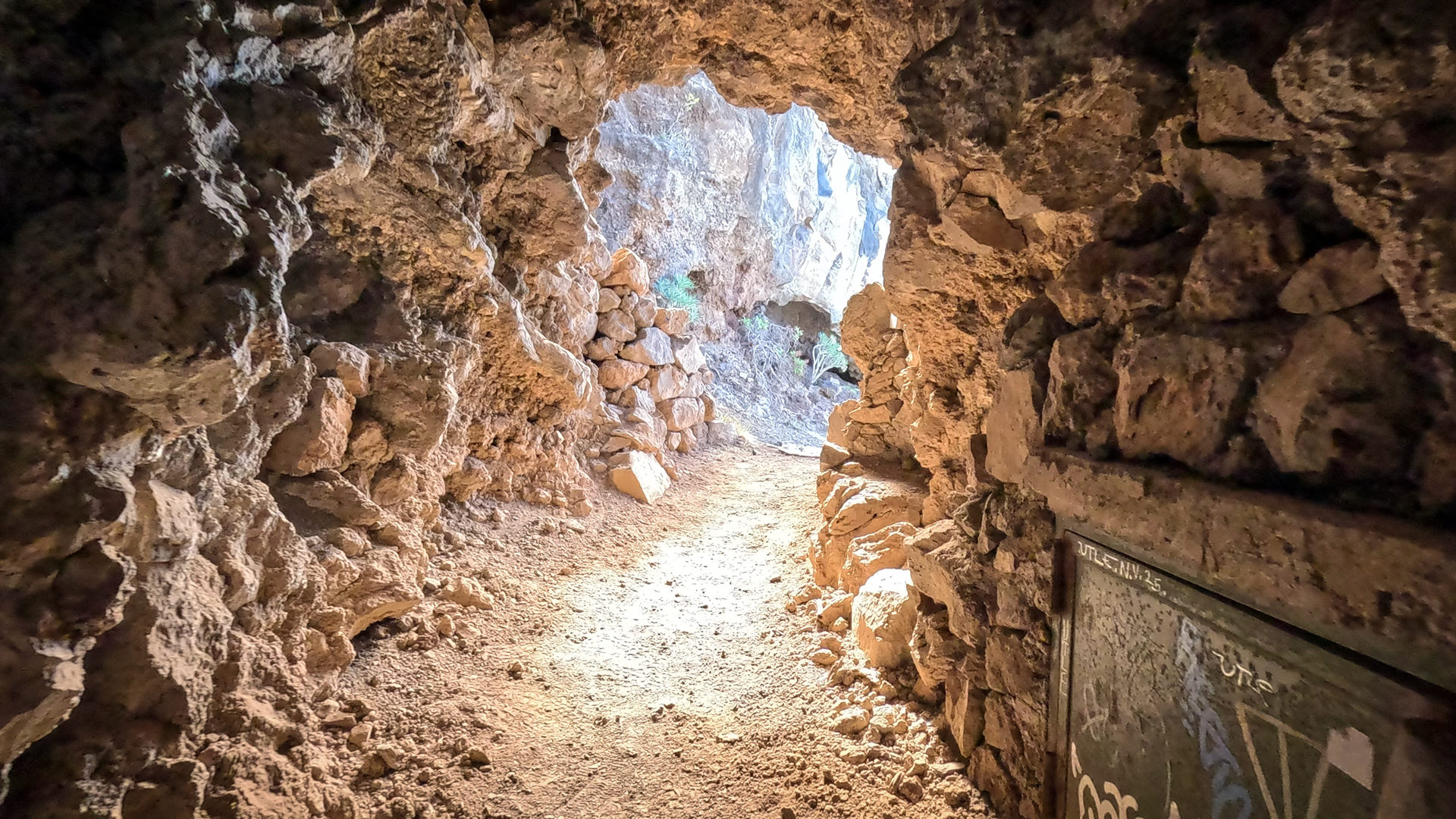
The approximately 30 meter long tunnel is equipped with light switches at both ends – if you forget your headtorch you can still get through. However, caution is advised: there are rocky ledges at head height. Behind the tunnel the cliffs open up and the path winds steeply over scree down to the beach.
La Veta was historically the port of the Aguatavar district, which was an important centre of grain cultivation between the 16th and 18th centuries. Goods were transported by ship via the port. In the hot summer months, the small settlement provided a refuge for the residents of the surrounding areas. This tradition lives on: on weekends, the owners of the houses liven up the beach.
Route facts at a glance
| Route type | Out and back |
|---|---|
| Distance | 1.7 km |
| Altitude | 242 m ascent / 242 m descent |
| Highest point | 256 m |
| Lowest point | 19 m (Playa de la Veta) |
| Duration | 1:00 – 1:30 hours |
| Difficulty | easy (requires sure-footedness, easy to follow) |
| Starting point | Parking at the end of the access road above Playa de la Veta |
| Path marker | no official marking |
| Protected area | no special protection status |
| Equipment | Water, sun protection, sturdy shoes |
Directions
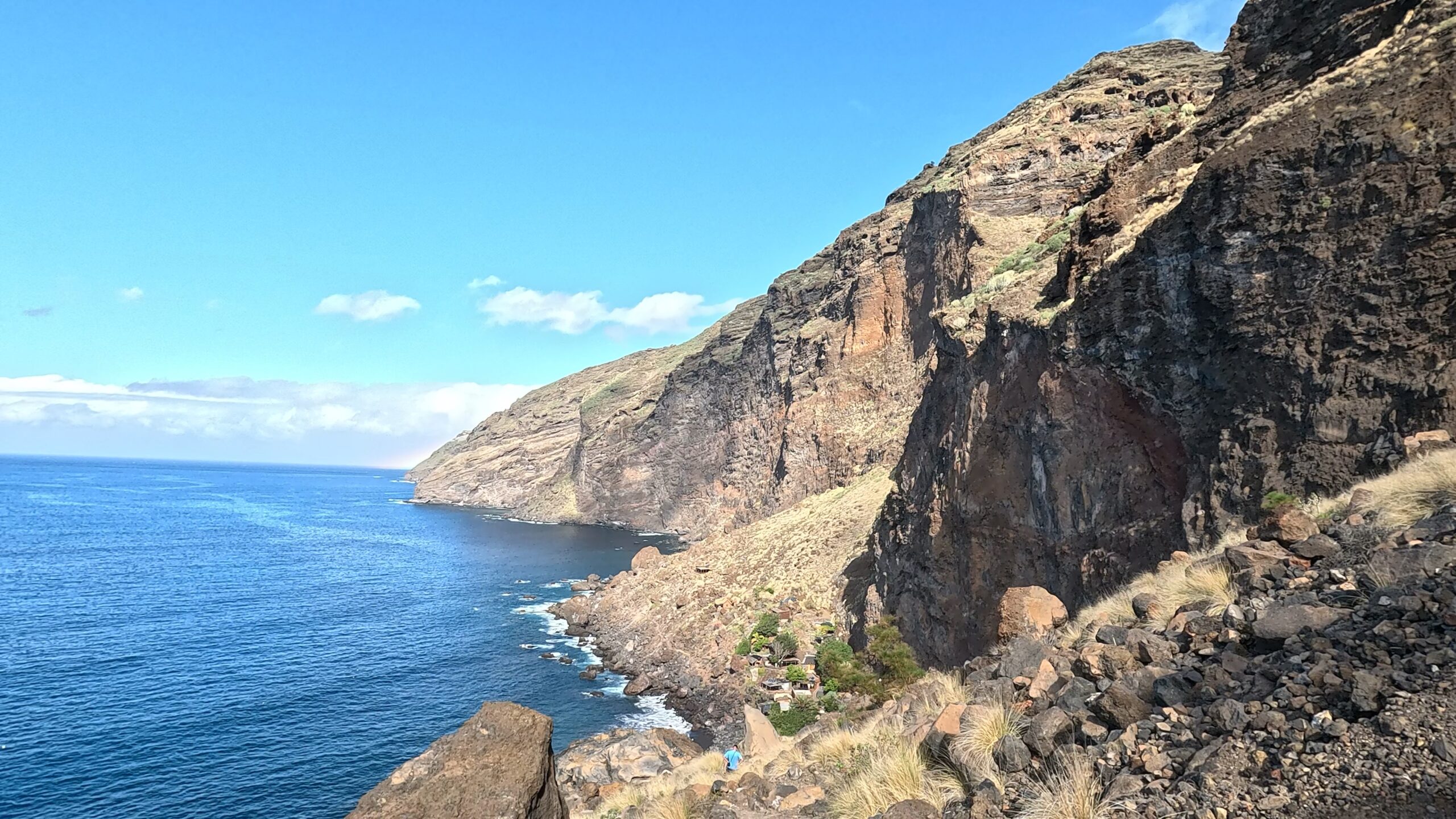
From Tijarafe drive approx. 300 meters towards Puntagorda, then turn left onto Calle Acceso al Colegio. Keep right in front of a water reservoir. After about 1.6 km, a steep, narrow road branches off to the left to Playa de la Veta. Sunhikes note: No approach for nervous or inexperienced drivers. The access road is very narrow and steep. Parking at the end of the street.
The route in detail
Car park to the rock tunnel
From the car park at the end of the access road, a concrete path leads to a pedestrian tunnel that allows you to cross the steep wall. The approximately 30 meter long tunnel is equipped with light switches at both ends. However, be careful at head height – rocky ledges. Anyone who enters the tunnel experiences one of the most unusual transitions on La Palma: the wall separates the street from the coast, the tunnel breaks through it.
Descent to Playa de la Veta
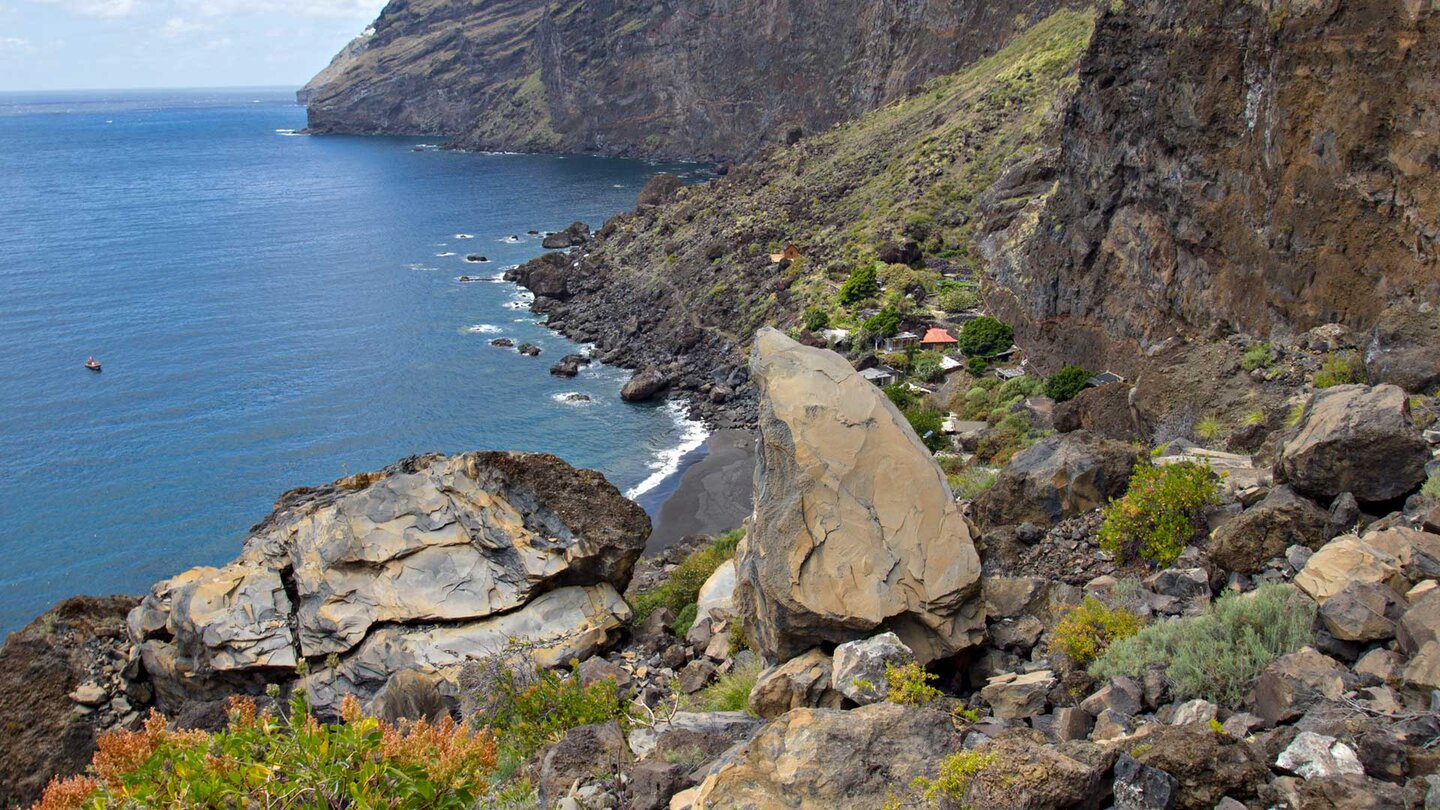
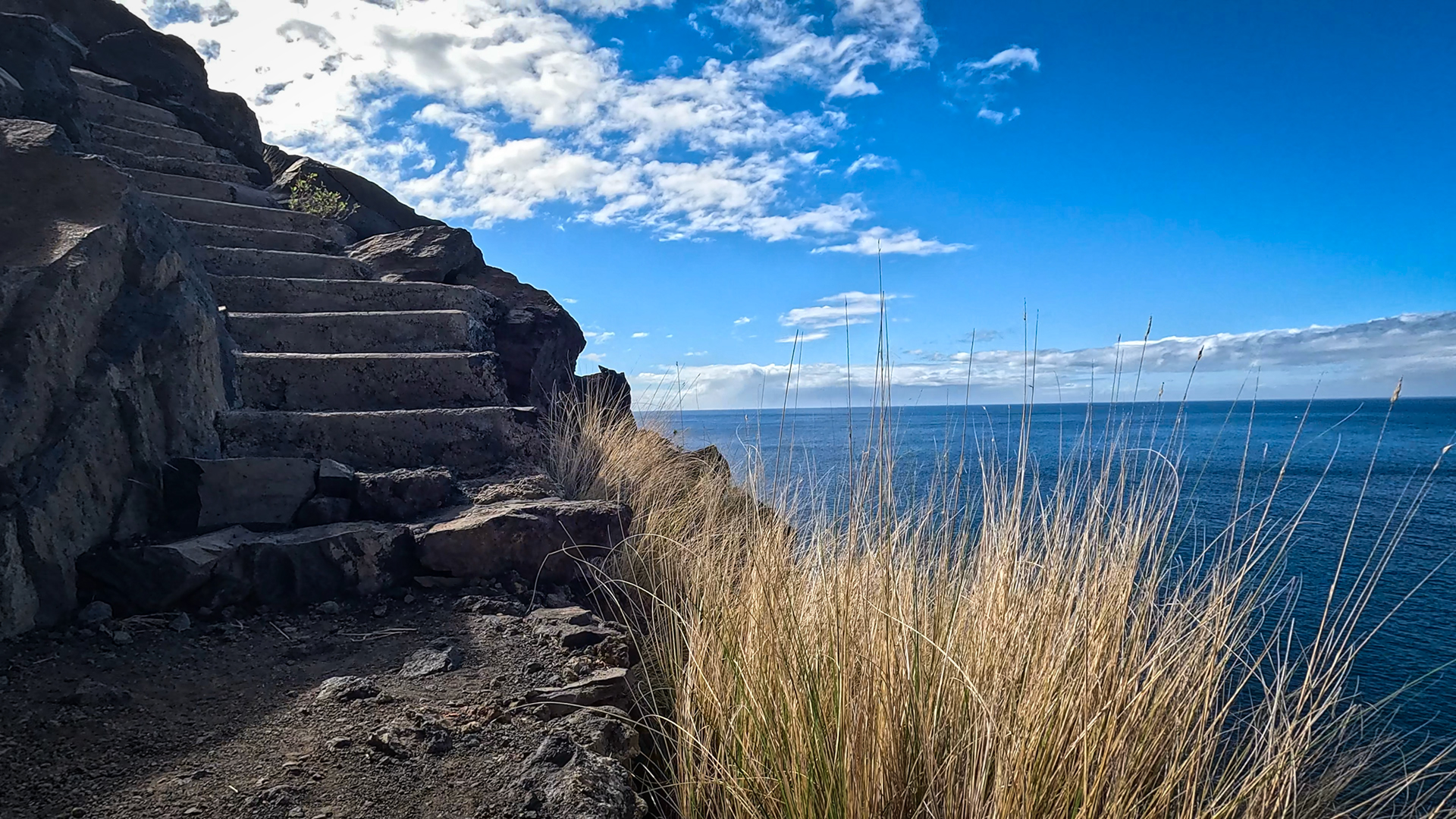
At the end of the tunnel there is a breathtaking view of the island’s cliffs. Behind the tunnel, the path initially runs, secured by a fence, along the impressive steep wall above the coast. Then it winds its way down, partly steeply and over slippery scree. In places there are steps past the rocky cliffs down to the black sand beach of Playa de la Veta.
Above the beach are the charming cottages of the seaside hamlet with colorful gardens and a small plaza. On weekends, residents bring this place to life. Both sides of the beach are bordered by boulder fields. Small paths that branch off from the beach offer the opportunity to explore a bit of the coast.
The Playa de la Veta and its history
La Veta was the only natural harbour on this section of the west coast of La Palma. During the period of grain cultivation in the Aguatavar region – from the 16th to the 18th century – it was the transshipment point for the harvest. Ships anchored here and goods were carried over the scree to the water. The cliffs made a land route impossible; the only connection was the sea.
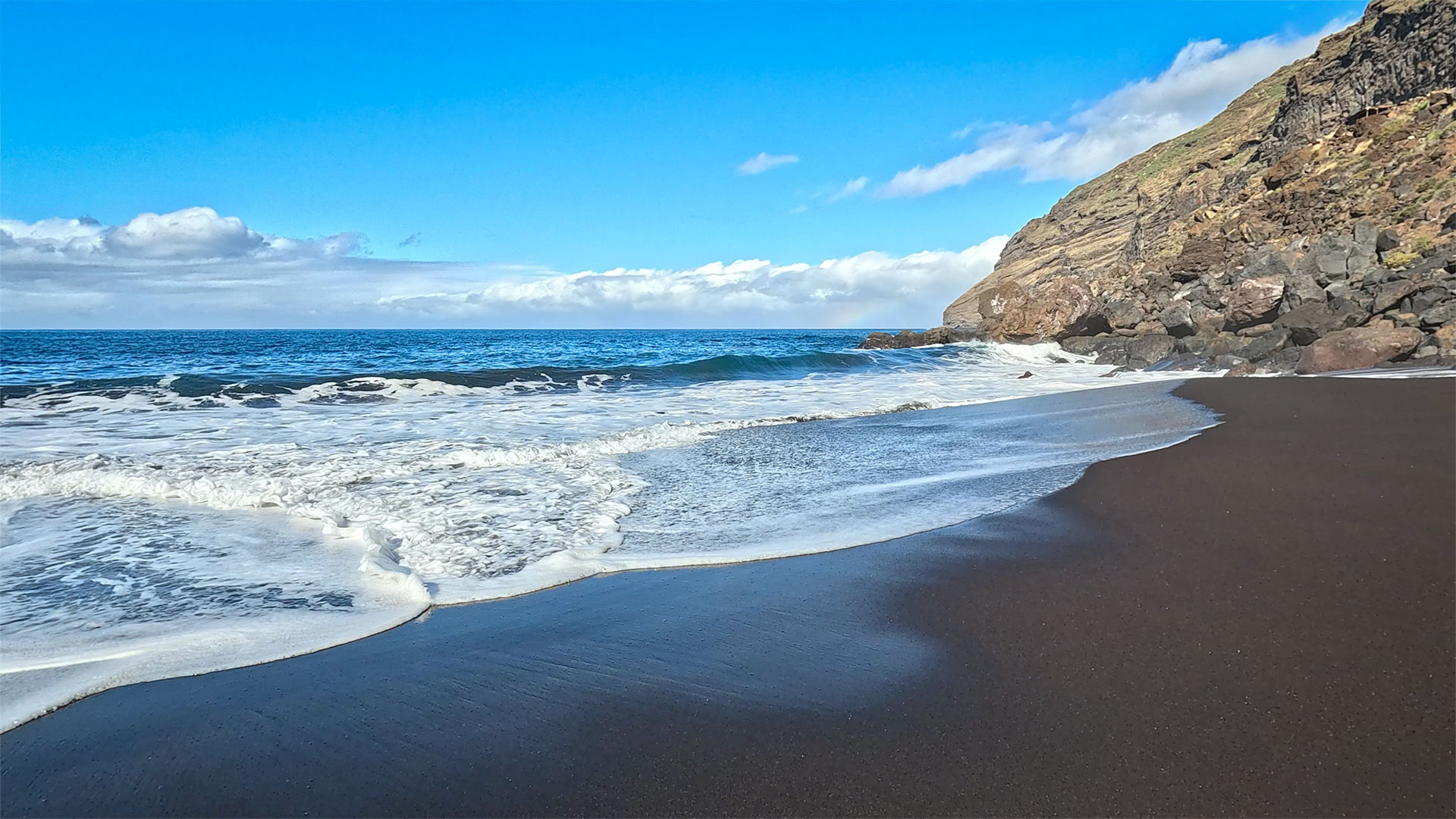
Today Playa de la Veta is a seaside hamlet. The houses belong to families from Tijarafe and the surrounding communities who have summer resorts here – a Canarian tradition. The sand area varies greatly depending on the water level and surf. Only experienced swimmers should swim here as the currents are very strong.
The rock tunnel — infrastructure for a beach without a road
The pedestrian tunnel to Playa de la Veta is not a natural formation, but an entrance blasted into the rock – an infrastructure measure that allows settlers without road access to reach the beach. There are such tunnels in several places on the cliffs of La Palma; the one to Veta is one of the best known and most accessible to tourists. Light switches inside and out: an unexpected modernity in a remote rock face.
Best travel time
| Season | Character | Note |
|---|---|---|
| Spring (March–May) | Steep coast lush green, pleasant temperatures | Optimal conditions; scree dry |
| Summer (June–Aug) | Hot; Settlement busy on weekends | Early start; Intensive sun protection |
| Autumn (Sept–Nov) | Clear light for photos | Good conditions; moderately frequented |
| Winter (Dec–Feb) | Rain possible; Scree slippery | Be careful on the descent |
Accommodation: Clariso Tijarafe
Playa de la Veta is located in the municipality of Tijarafe. Holiday homes in Tijarafe with views of the Atlantic and cliffs can be booked directly on clariso.eu — Holiday homes Tijarafe. Villa Piccola Stella, Casa Caracol and Casa Victor are all nearby and are ideal as a base for this short tour.
Combinable tours
Playa de la Veta is a short tour — ideal as a complement to one of the longer routes in the region. Anyone who visits the tunnel in the morning will still have energy for in the afternoon:
| Tour | Dates | Character |
|---|---|---|
| El Jesús Gorge and Culture Hike | 9.4 km, moderate | Barranco del Jurado Gorge on the same day |
| Hike to Porís de Candelaria (Pirate Bay) | 4.8 km, moderate | Second hidden coastal town in Tijarafe |
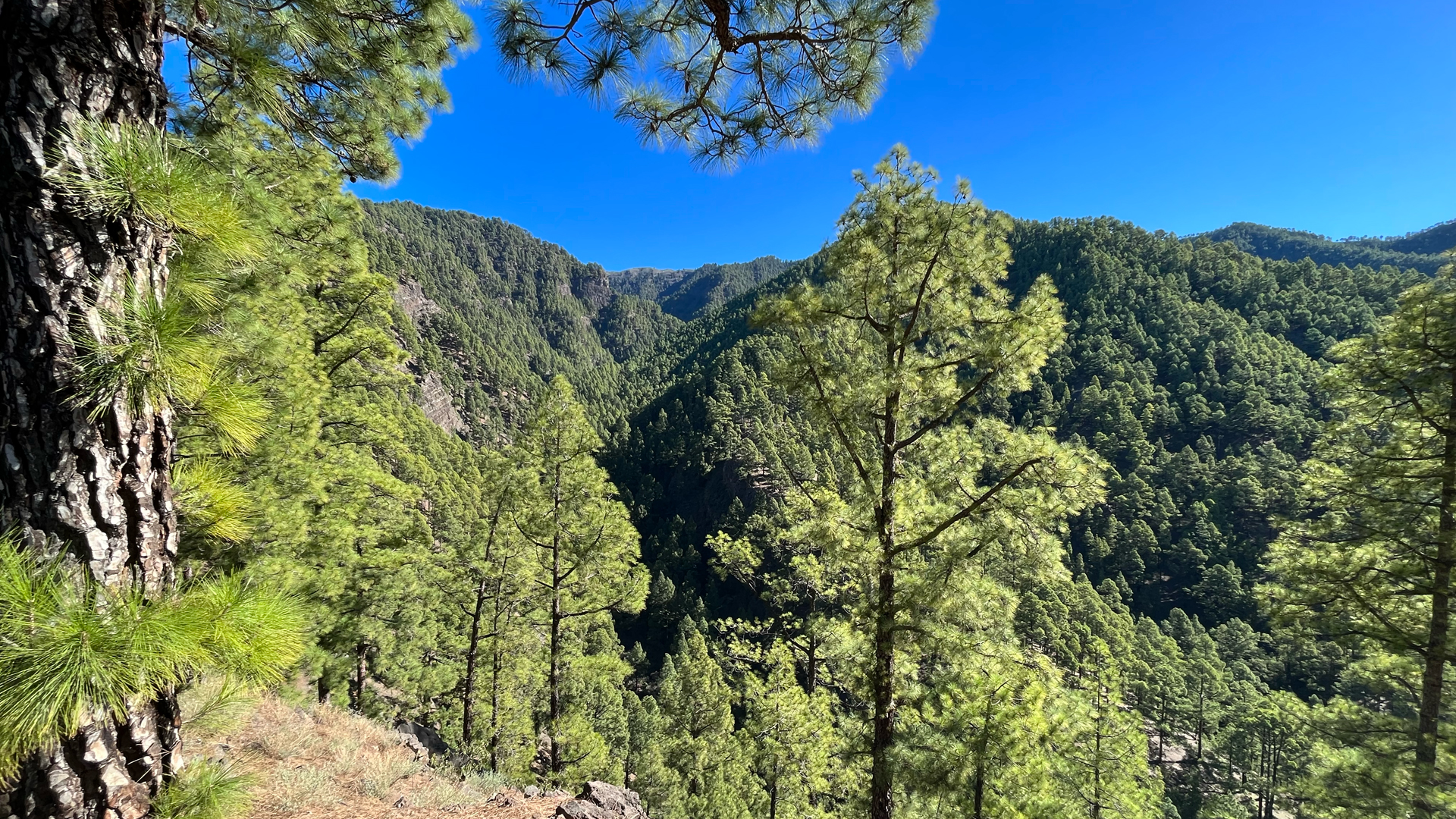
| Circular hike Barranco de Jieque | 8.1 km, moderate | Pine forest circuit as a half-day tour |
GPS track and 3D route planner
The GPS track shows the tunnel entrance and the exact descent path over the scree – helpful as there are no official route markings. With the free 3D route planner, the route can be extended individually or combined with the coastline – directly in the browser, without an app.
To the route page on Sunhikes: Hike to Playa de la Veta
3D route planner from Sunhikes – customize and combine routes
Practical Tips
Emergency call 112. No refreshment stops on the route. Take enough water with you. The beach can only be reached via the tunnel or by boat – no alternative access. Swimming warnings: Currents at Playa de la Veta are strong, experienced swimmers only.
Frequently asked questions
Is the tunnel lit?
Can you swim at Playa de la Veta?
Is the access road accessible by any car?
Aguatavar: the vanished grain region
The district of Aguatavar, whose port was Playa de la Veta, is hardly known today. Between the 16th and 18th centuries, this region was one of the most important grain-growing zones in La Palma. The combination of the dry western climate, the well-watered terraced fields and direct access to the sea via the Veta made Aguatavar a supply centre. With the decline in grain cultivation and migration in the 19th and 20th centuries, the cultivation structure almost completely disappeared.
What remains: the settlement on the beach, the houses, the plaza, and the tunnel. And the silence. Playa de la Veta is one of the quietest places in La Palma on weekdays – no street noise, no tourist traffic. Just the sea, the cliff and the sound of the surf.
Black sand beaches on La Palma
La Palma is known for its black sand beaches. The black sand is created by the erosion of basalt rock – the island’s basic material. Volcanic rock breaks up into fine grains, is transported by the sea and is deposited in quieter bays. Playa de la Veta is one of these beaches: black, rough, picturesque. If you are looking for quiet, white sandy beaches, you will only find a few alternatives on La Palma – Puerto Naos on the west coast is the most prominent.
The strong currents at Playa de la Veta are typical of the unprotected west coast beaches of La Palma. The open Atlantic meets the cliffs without natural protection from reefs or offshore islands. This makes these beaches both surfing spots and danger areas for bathers.
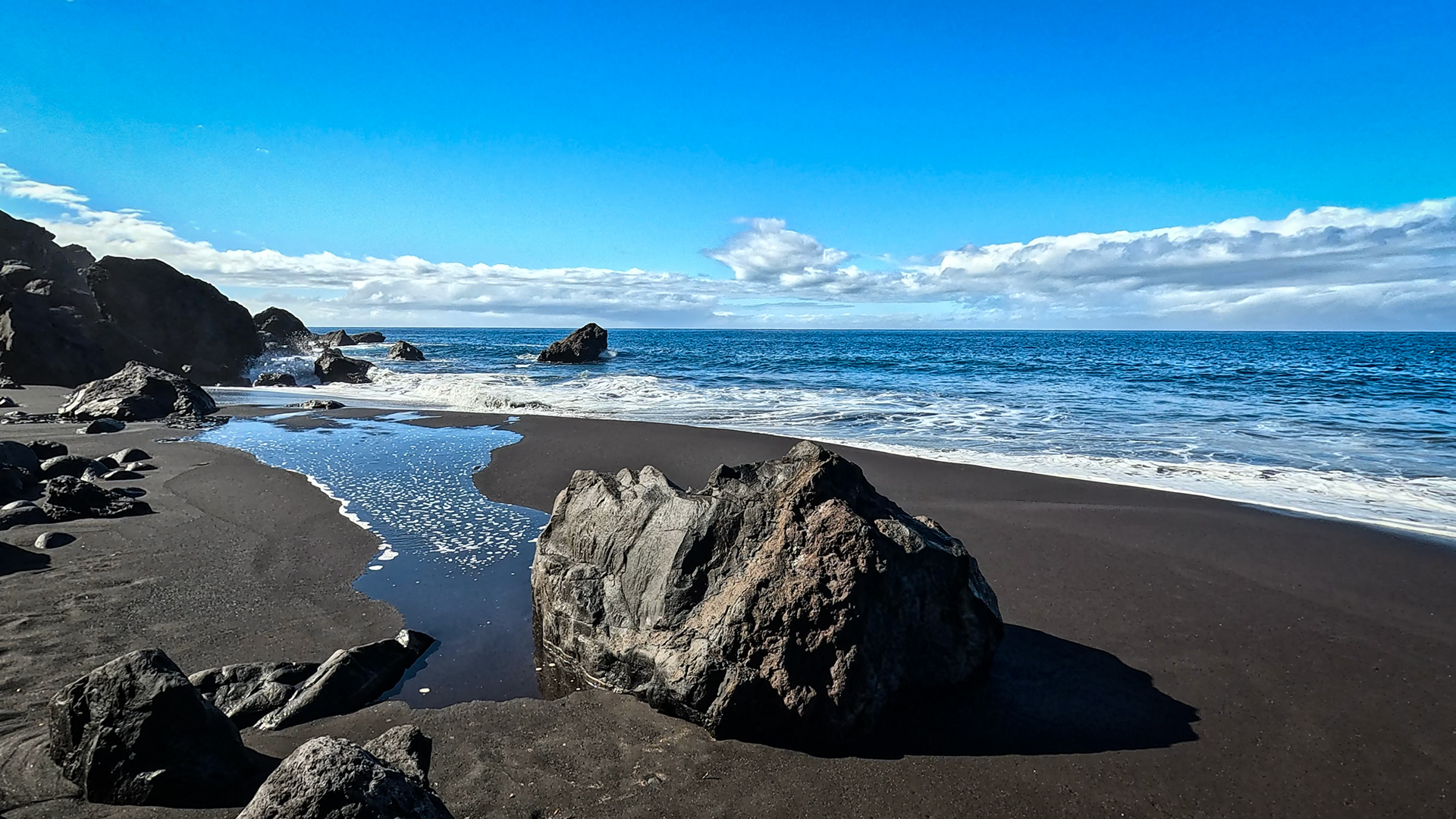
Anyone who knows Playa de la Veta has visited one of the least known coastal towns in La Palma. Most holidaymakers drive past it on the LP-1 without knowing that there is an entire settlement behind the steep wall. The tunnel is the secret: visible only if you specifically look for it. La Palma has several such hidden coastal towns — the pirate cove Porís de Candelaria is the best known — but Veta is quieter and more authentic. Visit the settlement on the weekend: the houses, the small gardens, the plaza. This is La Palma in miniature.
One last note for families: The short hike to Playa de la Veta is suitable for children aged around 6 and over who are sure-footed. The tunnel is the highlight — kids love it. The descent over scree requires assistance and good shoes. On the beach: don’t forget any toys, because the black sand and the houses in the settlement offer plenty to keep you busy. Swimming is only for experienced swimmers – this also applies to teenagers. Playa de la Veta is an excursion, not a resort beach.
This article is based on the on-the-ground knowledge of the Gequo editorial team – publishers of the Reisezeit hiking guides and operators of Sunhikes.com. Last updated: May 2026