Water Sports on La Palma – the Blue Side of the Island
La Palma is an island most people first get to know from above – past deep gorges, over bare summits, and into the vast Caldera de Taburiente. But the island has a second, equally spectacular side that only reveals itself from the water: hidden sea caves unreachable from land, dolphins and whales in the deep Atlantic waters off the coast, and an underwater world full of volcanic structures.
The most recent geological changes caused by the Tajogaite volcanic eruption in 2021 have also created new habitats underwater. Where fresh lava met the Atlantic, a new ecosystem is slowly beginning to emerge.
Diving – Volcano Underwater
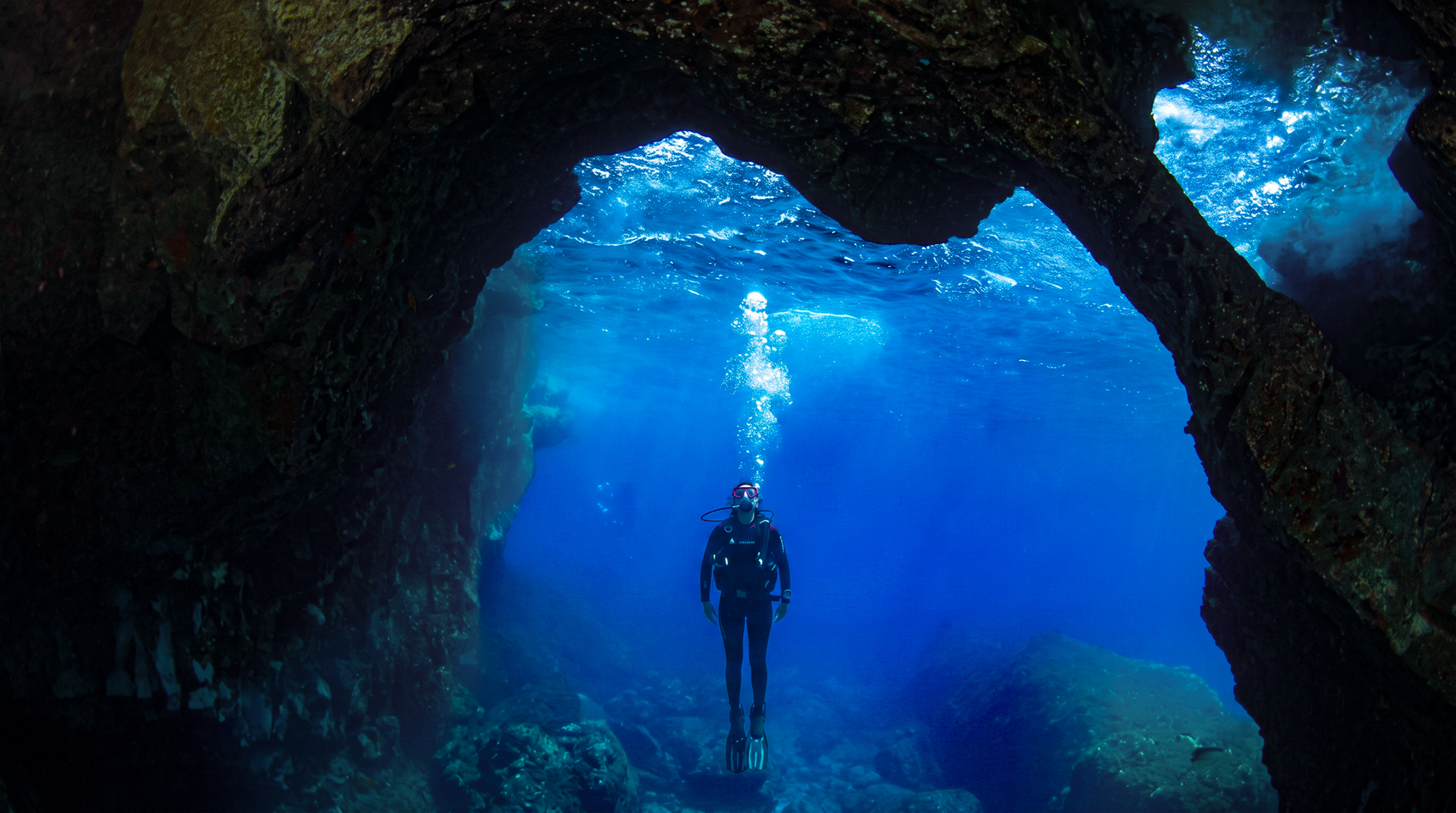
La Palma’s underwater world is one of the most extraordinary diving areas in the Canary Islands. The volcanic origin of the island is evident below the water surface too: bizarre lava tubes, massive basalt arches, dark rock formations, and steeply dropping underwater walls define the dive sites.
A particularly special experience is the 40 stone crosses of Malpique off the coast of Fuencaliente. They lie at around 20 metres depth and commemorate the Jesuit priests killed in a pirate raid in the 16th century. Visibility is frequently 20 to 40 metres, and more under optimal conditions. Water temperatures range year-round between approximately 18 and 24°C.
New Dive Site: Tajogaite
Since the 2021 volcanic eruption, La Palma’s west coast has changed. New lava formations have appeared underwater, and marine life is gradually returning to colonise them.
Important: The new lava delta of Tajogaite is a particularly sensitive protected area. Dives in this area are subject to strict rules and are only possible with licensed local dive centres and the required permits.
Recommended dive centres:
La Palma Diving Center (Los Cancajos): +34 633 495 597 (WhatsApp)
Buceo Sub La Palma (Los Cancajos): +34 686 756 979
Whale Watching – Encounters with Whales and Dolphins
The waters around the Canary Islands are among the most species-rich whale and dolphin habitats in Europe. Numerous species can also be observed off La Palma.
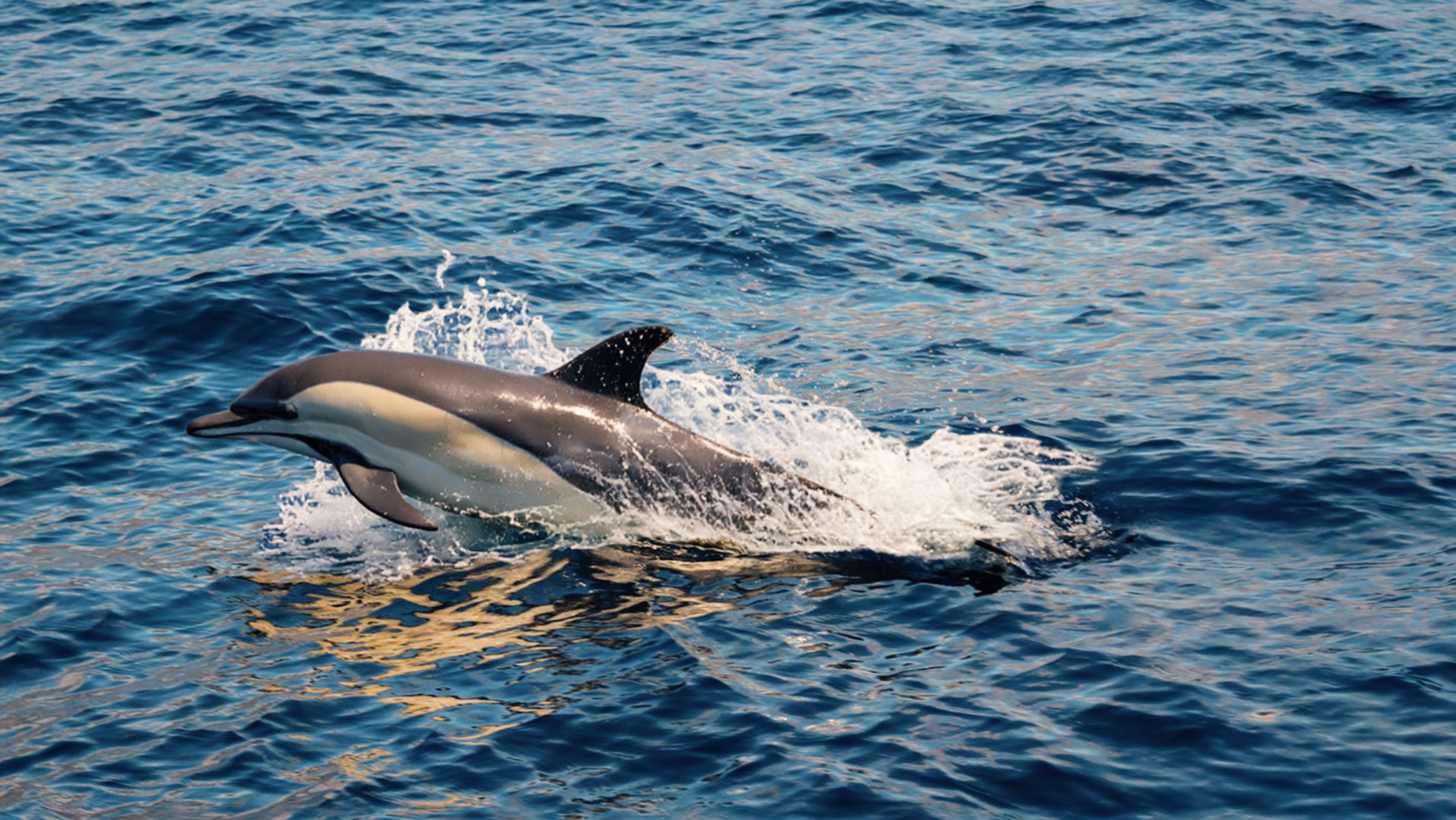
Year-round, common bottlenose dolphins and short-finned pilot whales can be observed. With luck, larger marine mammals such as sperm whales, fin whales, or occasionally even blue whales can be encountered in spring and summer. Almost all trips depart from the harbour at Puerto de Tazacorte. Tours typically last between two and four hours.
Whale Watching Providers:
- Ocean Explorer
Fast excursion boat with a marine biologist on board and plenty of information about the wildlife. - Fancy II
Comfortable catamaran, particularly popular with families. - Bussard
Historic wooden cutter with a small number of guests and a special atmosphere.
Cueva Bonita – the Magical Light Show of the Sea Cave
The Cueva Bonita (‘beautiful cave’) is one of the most celebrated natural wonders of the west coast. The impressive sea cave lies along the cliffs near Tijarafe and is accessible exclusively from the water.
Through its two large openings, light penetrates deep into the interior depending on the time of day, making the mineral-rich rock walls glow in different colours. Late afternoon is particularly impressive: the sun is low over the Atlantic and produces the famous light display inside the grotto.
Many boat excursions from Puerto de Tazacorte head to the Cueva Bonita and – depending on weather and swell – partly enter the entrance area.
Kayak & Stand-Up Paddling (SUP) – Exploring the Coast Under Your Own Steam
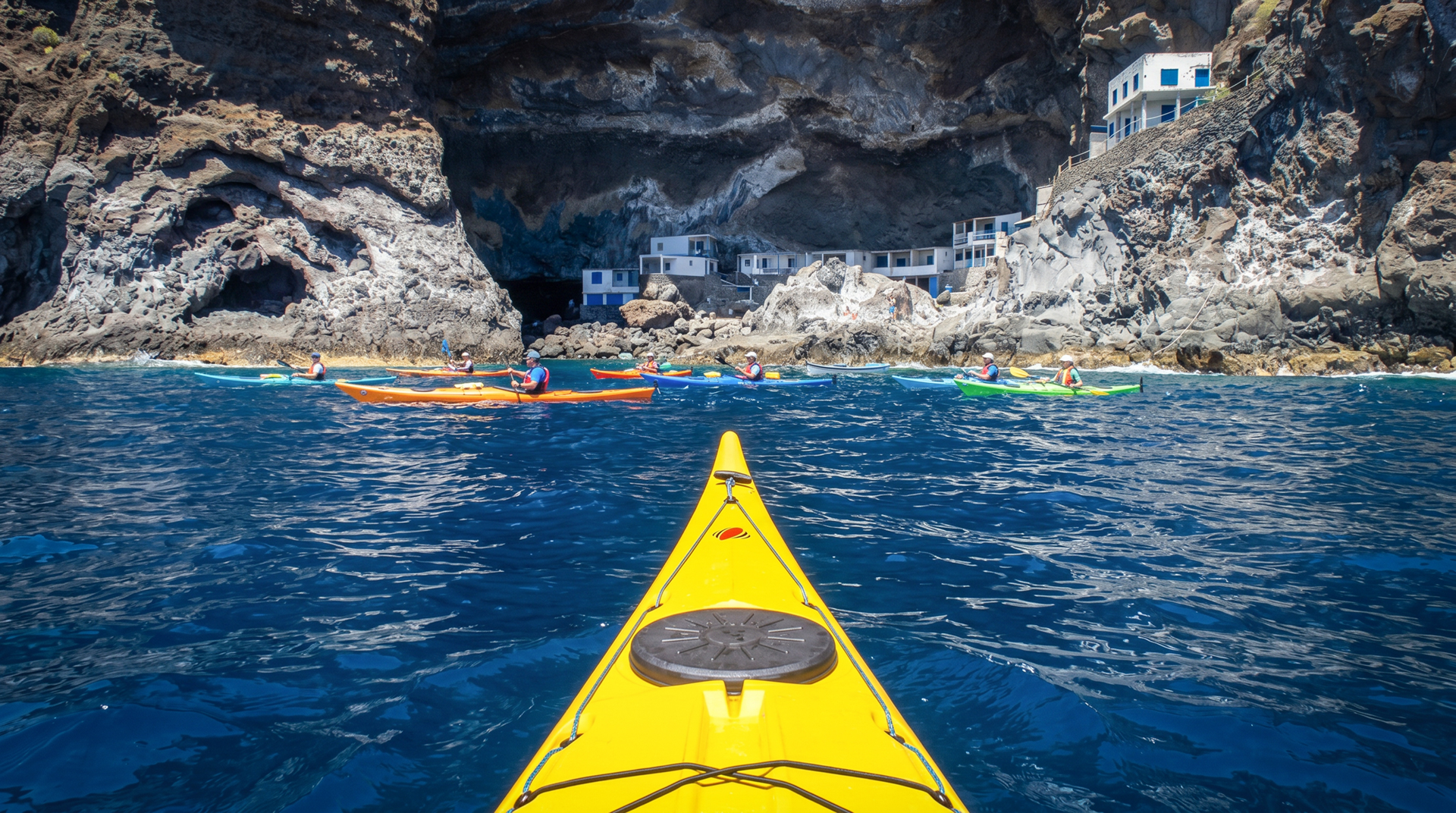
Those wanting to experience the coastline up close can best explore La Palma by paddle. By kayak or SUP you can reach hidden coves, small caves, and rock formations that are inaccessible from land.
Kayak to the Pirate Cove Porís de Candelaria
A special adventure is the trip from Tazacorte harbour to the famous Porís de Candelaria. The small settlement lies spectacularly inside a huge volcanic cave on the cliffs of Tijarafe. By kayak the journey takes approximately 45 minutes – depending on wind and swell.
SUP for Beginners
Sheltered areas are best suited for stand-up paddling:
- Los Cancajos: sheltered bay with good conditions for beginners
- Tazacorte harbour: sheltered area on the west coast
Snorkelling – Discovering the Underwater World Without a Diving Licence
The fascinating marine world of La Palma can also be experienced without a tank. The clear Atlantic water and the volcanic rock structures provide ideal conditions for snorkellers. Masks, snorkels, and fins can be hired from many dive centres on the island.
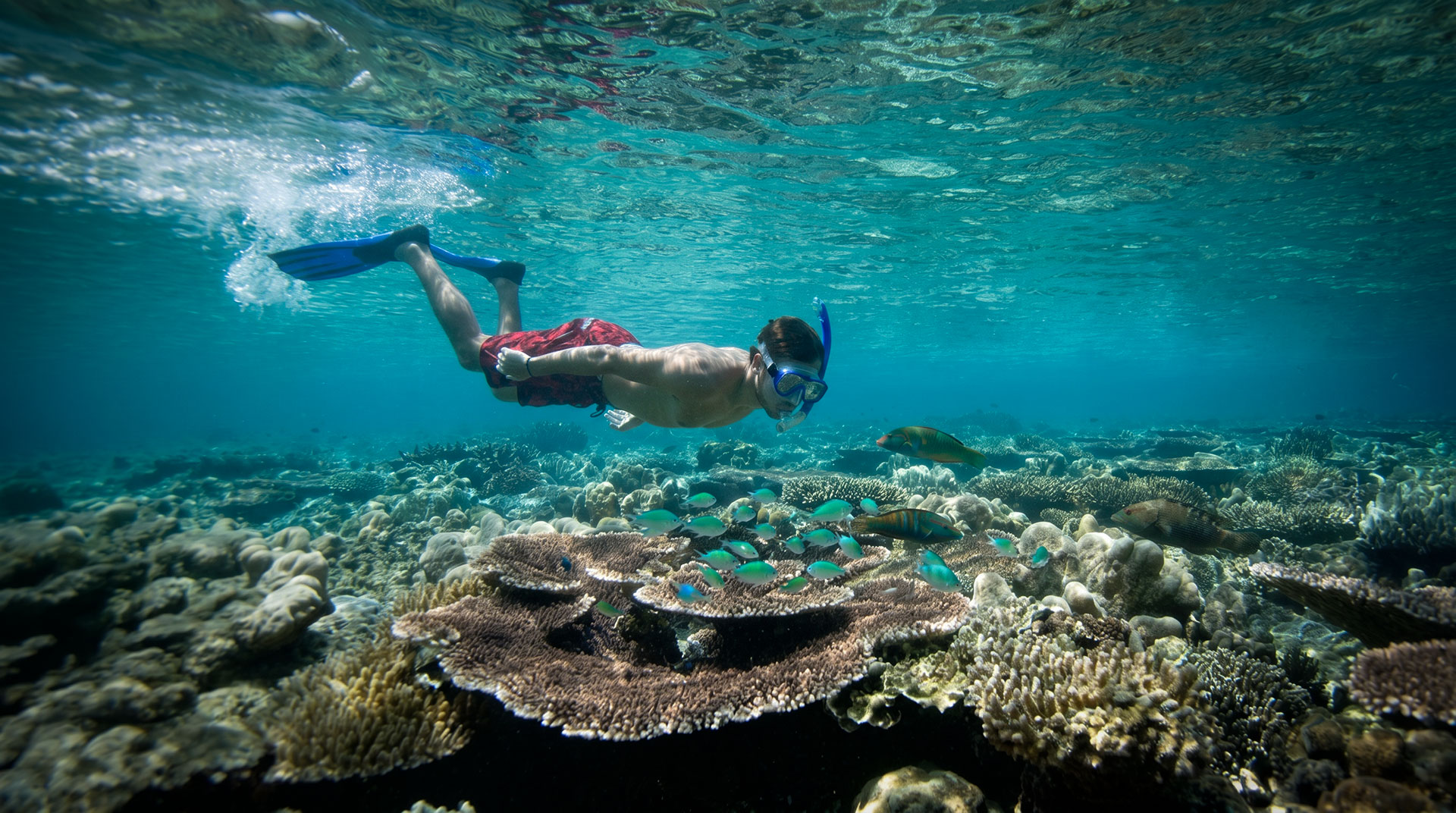
The Best Snorkelling Spots:
Los Cancajos: The sheltered bay on the east coast offers shallow entry points, calm water, and numerous fish among the lava rocks.
Charco Azul: Around the natural seawater pools near San Andrés y Sauces there are also calm areas for observing the underwater world.
The Best Time of Year for Water Sports on La Palma
| Activity | Best time to visit | Conditions |
|---|---|---|
| Diving | Year-round, particularly May to October | Best visibility in summer and autumn, 22–24°C water temperature |
| Whale Watching | Year-round | Higher chances of great whales from April to September |
| Kayak & SUP | July to October | Calmer seas on the west coast |
| Cueva Bonita | March to October | Best light display in the afternoon |
Safety tip:
While the west coast often offers very calm conditions in summer, Atlantic swell in winter can make even sheltered bays choppy. Before every tour, check current wind and wave conditions with the provider.
Frequently Asked Questions (FAQ)
How likely is it to actually see whales or dolphins on a whale watching tour?
Can you surf or windsurf on La Palma in the classic sense?
Are there dangerous sea creatures off the coast of La Palma?
Do I need a medical certificate to dive on La Palma?
What happens if a booked boat trip is cancelled due to bad weather?
This article is based on the on-the-ground knowledge of the Gequo editorial team – publishers of the Reisezeit hiking guides and operators of Sunhikes.com. Last updated: May 2026