Hike Roque de los Muchachos to Espigón del Roque
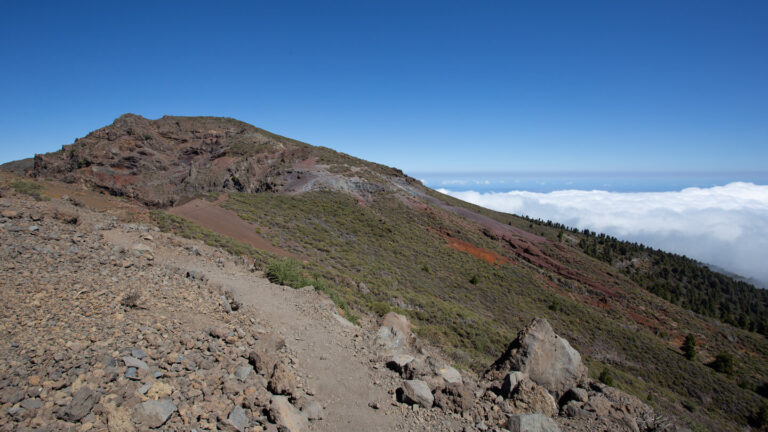
The shortest walk from the highest point of La Palma leads from the car park at Roque de los Muchachos to Espigón del Roque – a rocky outcrop with brick viewing platforms: 1.2 km, 90 m, easy, 0:45-1:00 hours. Anyone reaching the summit area of Roque de los Muchachos with 45 minutes to spare can easily complete this short walk. It shows the Caldera de Taburiente from a different angle than the well-known summit car park.
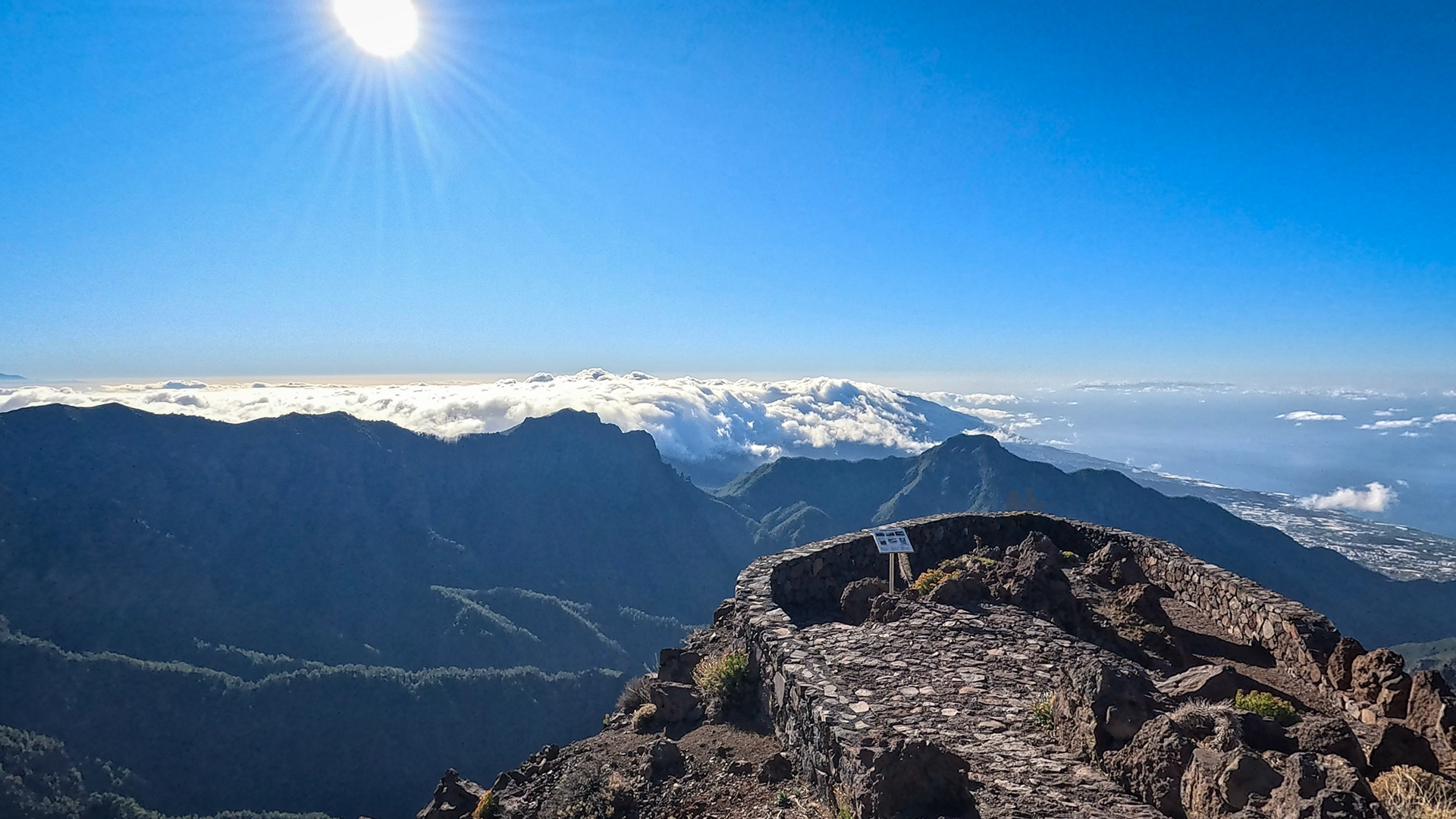
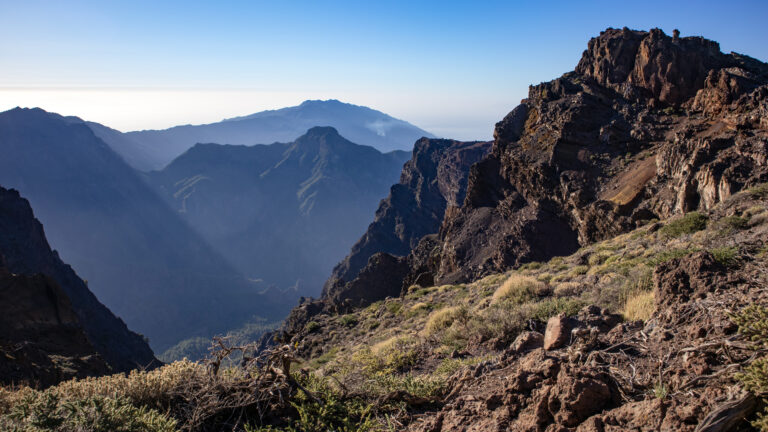
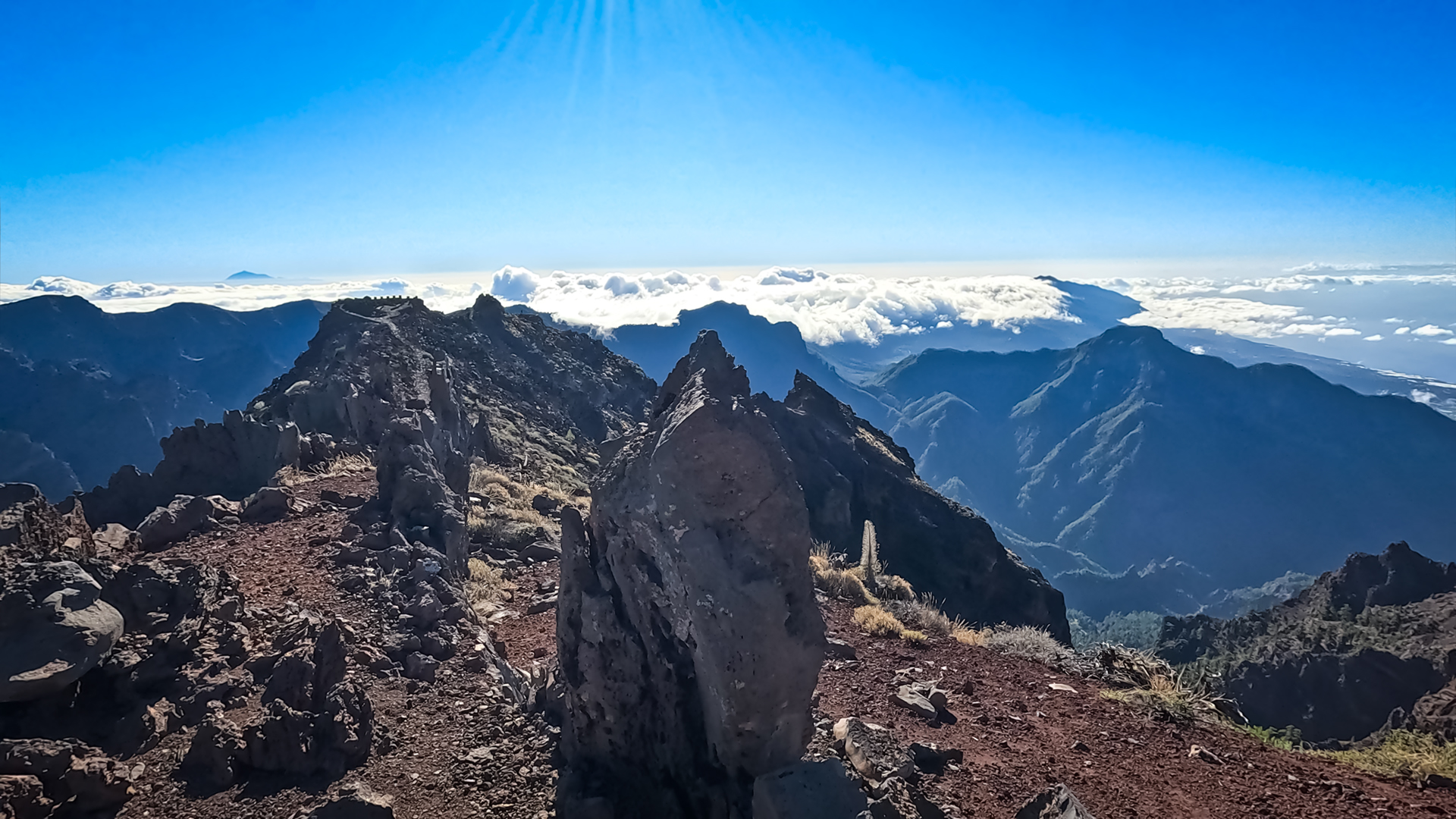
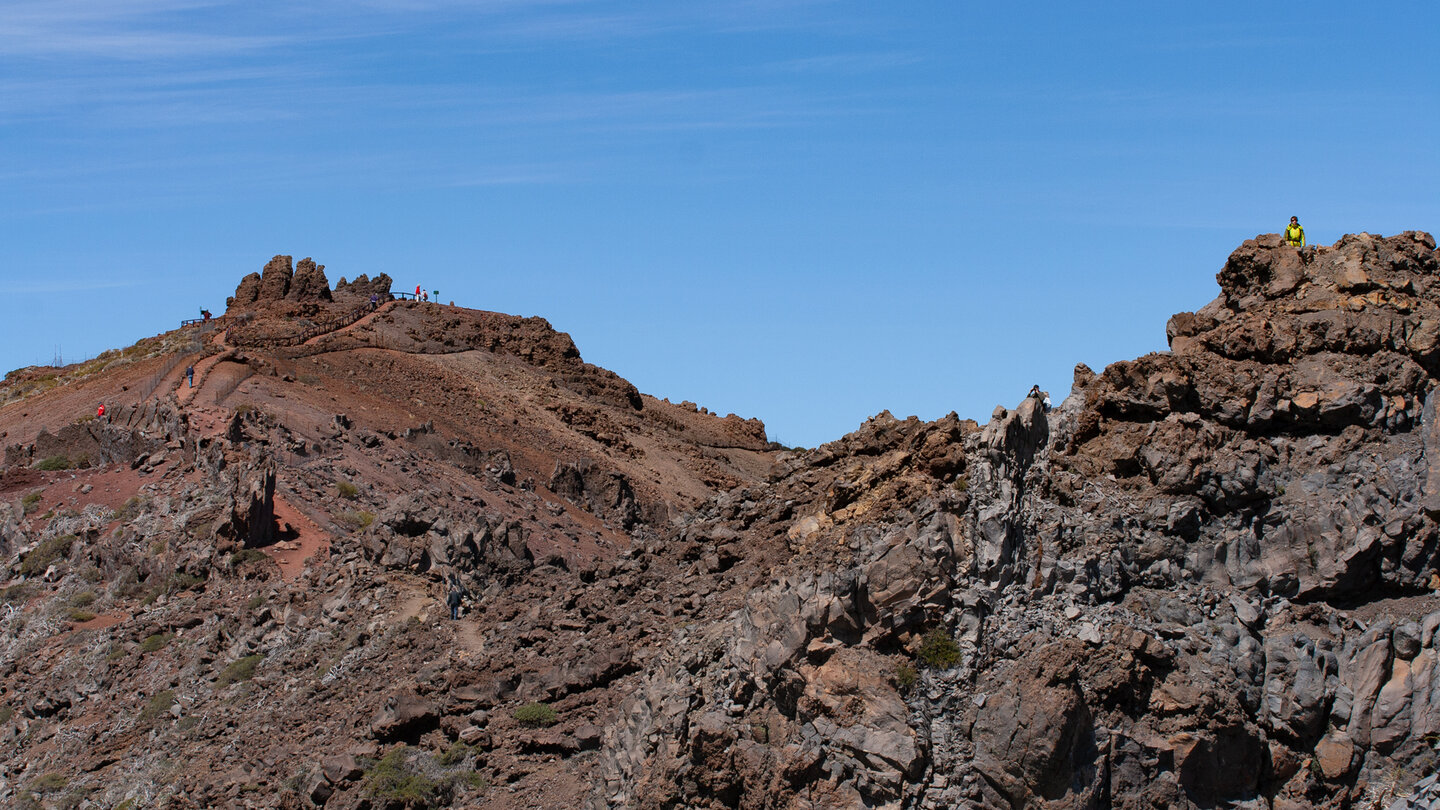
The path leads along reddish mountain ridges made of porous rock past viewing points. On the way: fenced-in plots of land where rare and endangered native plant species are cultivated for reintroduction. At the first rocky summit (viewing platform): View of the Barranco de los Cantos and the Barranco de Hoyo Verde. Continue to Espigón del Roque at 2,380 m – uninterrupted views over the entire national park, as far as El Hierro, La Gomera and Tenerife.
Route facts at a glance
| Route type | Out and back |
|---|---|
| Distance | 1.2 km |
| Elevation | 90 m ascent / 88 m descent |
| Highest point | 2,414 m |
| Lowest point | 2,306 m |
| Duration | 0:45–1:00 hrs |
| Difficulty | easy |
| Starting point | Roque de los Muchachos car park, LP-4/LP-403 |
| Trail markings | No official markings — easy to follow |
| Protected area | Caldera de Taburiente National Park (since 1954) |
| Equipment | Wind protection, sun protection, water |
The route in detail
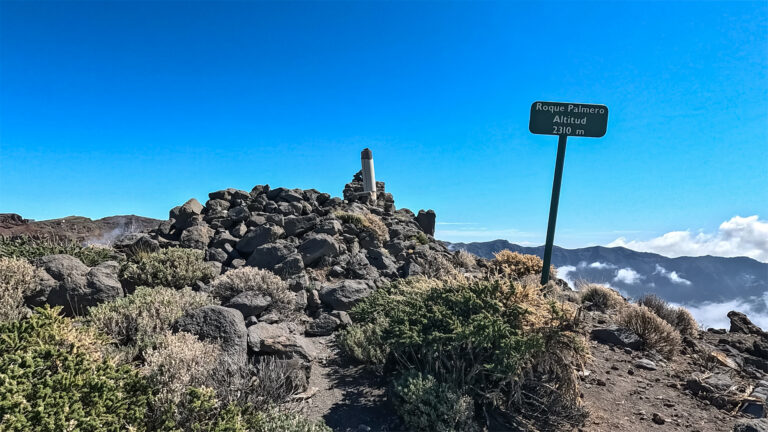
Next to the national park information hut, a paved path leads to the rock formation at the summit of the 2,426 m Roque de los Muchachos. The route descends along a reddish mountain ridge of porous rock, passing natural viewpoints. Then, via two hairpin bends downhill, along the hillside over a ridge to the Espigón del Roque. The rock spur sits at 2,380 m with a stone viewing platform. From here: an open panorama over countless ravines and ridges of the national park. In clear conditions: Tenerife, La Gomera, and El Hierro.
The Espigón del Roque: what is it?
In geography, an espigón (literally a mole or headland) refers to refers to a rocky outcrop that protrudes from the edge of a ridge. The Espigón del Roque de los Muchachos is a rocky spur that juts out about 50 m below the summit to the other side and thus allows an almost complete panoramic view: on one side the caldera escarpment, on the other the northern flank of the island.
The Roque de los Muchachos Observatory
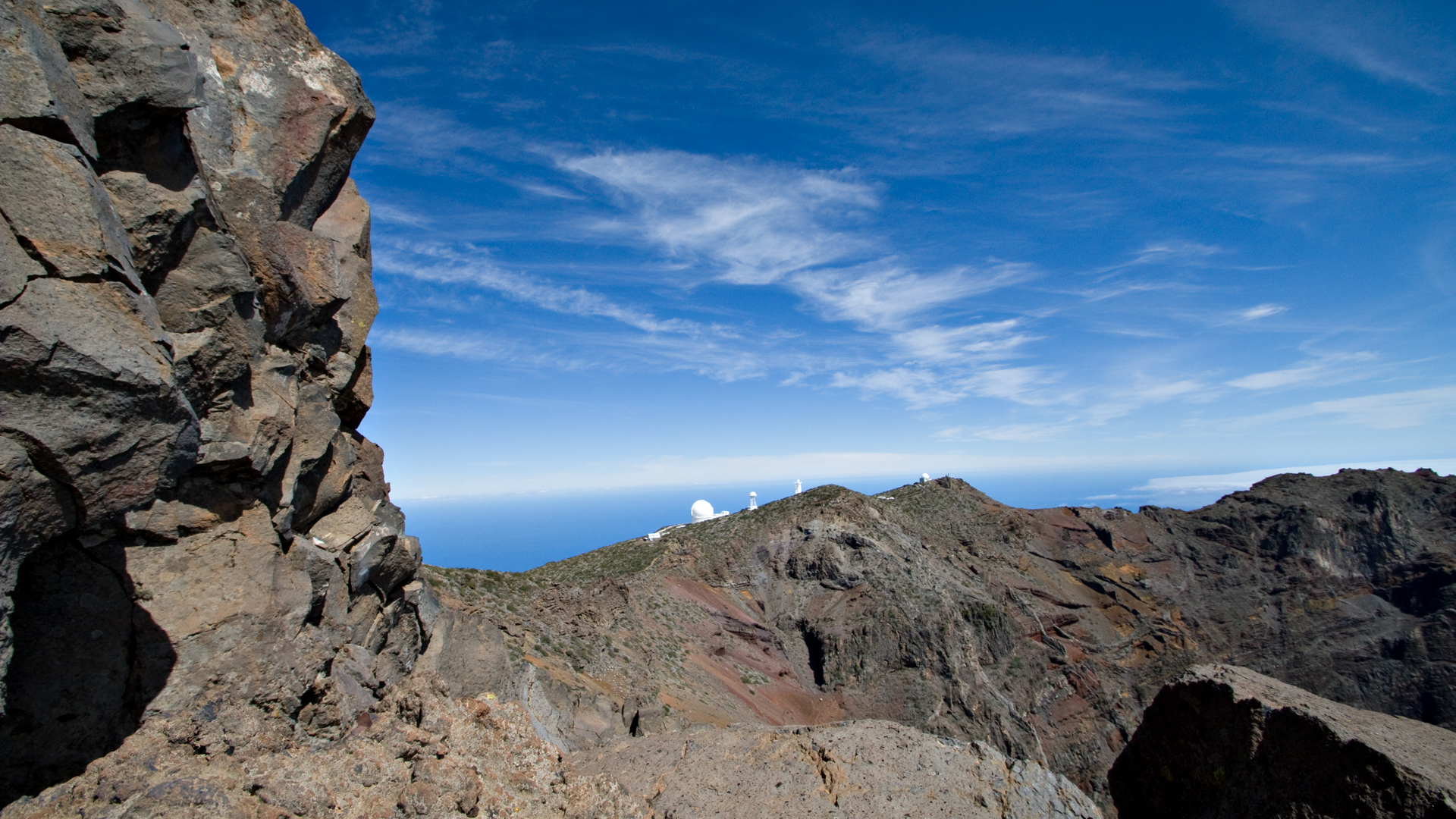
In the summit area of the Roque, you will find telescopes and observatory buildings of the ORM Astrophysical Observatory. The Isaac Newton Telescope, the William Herschel Telescope and several other instruments make the Roque de los Muchachos one of the most important stargazing sites in the world. On the Espigón route you pass some of these facilities directly. Guided tours of the observatory are available upon request (recommended only for those interested in technology).
Tajinaste on the summit ridge
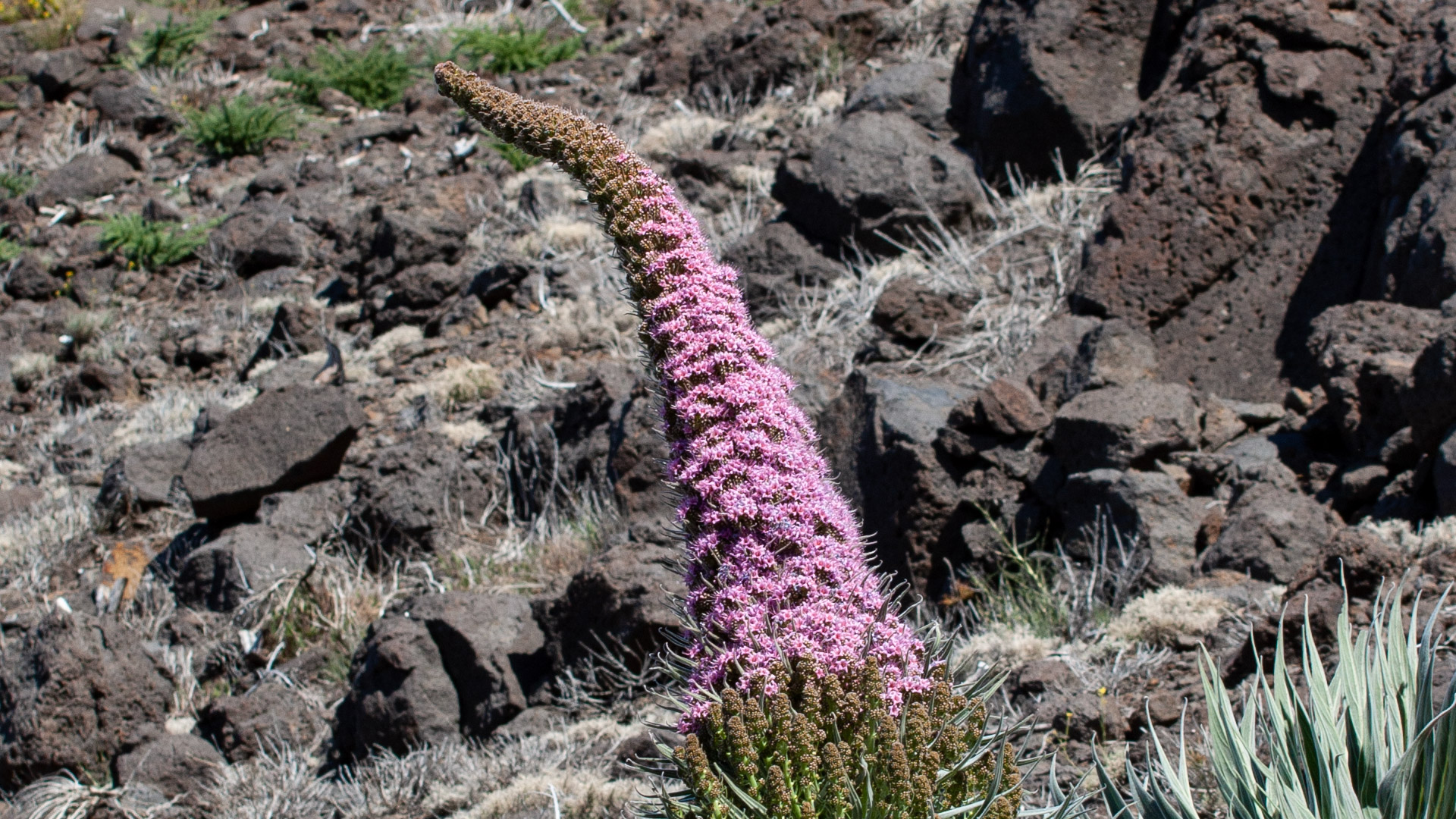
In spring (April-June) the Tajinaste (Echium wildpretii) blooms with bright red spires along the summit ridge around the Roque and along the Espigón path. This plant, endemic to La Palma, can only be found in the high mountain zone above 1,500 m. The combination of Tajinaste flowers, observatory domes and caldera escarpment makes the summit area unique in April/May.
Best time to visit
| Season | Character | Note |
|---|---|---|
| April–June | Tajinaste in full bloom | Absolutely best time |
| Summer (July–Aug) | Often over the clouds; intense light | Intensive sun protection |
| Autumn (Sept–Nov) | Best visibility of neighbouring islands | Most popular season |
| Winter (Dec–Feb) | Snow and frost possible | Only in safe conditions |
Connecting routes
| Tour | Data | Character |
|---|---|---|
| Caldera high-altitude hiking trail: Pico de la Nieve → Roque | 20.5 km, difficult | Arrival at Roque after a long ridge path |
| Pico de la Cruz → Roque → Espigón | 10.1 km, moderate | Longer ridge route to the same destination |
| GR-131 Stage 2: Roque → El Pilar | 26.1 km, difficult | Continuing on the long-distance trail |
GPS track and 3D route planner
To the route page on Sunhikes: Hike Roque de los Muchachos – Espigón del Roque
3D route planner from Sunhikes
What can you see from Espigón del Roque?
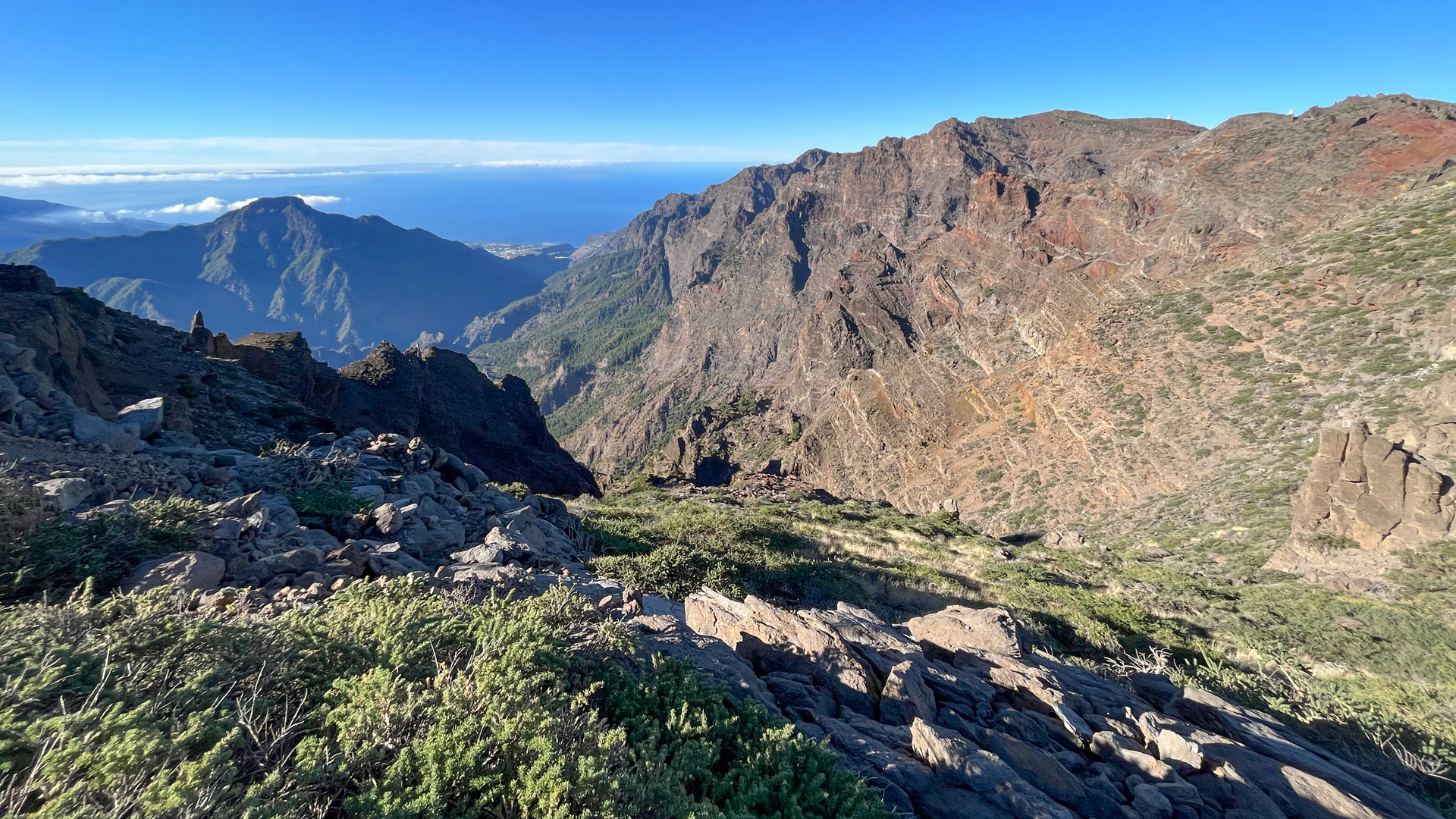
From Espigón del Roque at 2,380 m altitude you can see: the Barranco de los Cantos and the Barranco de Hoyo Verde directly below you. The steep walls of the caldera in various shades of red – oxidation of the iron-rich basalt. The Los Agujeritos mountain peaks deep in the caldera. On a clear day: Tenerife (Teide), La Gomera and El Hierro at the same time. This is a clear 180° view over the entire south and west sides of the national park.
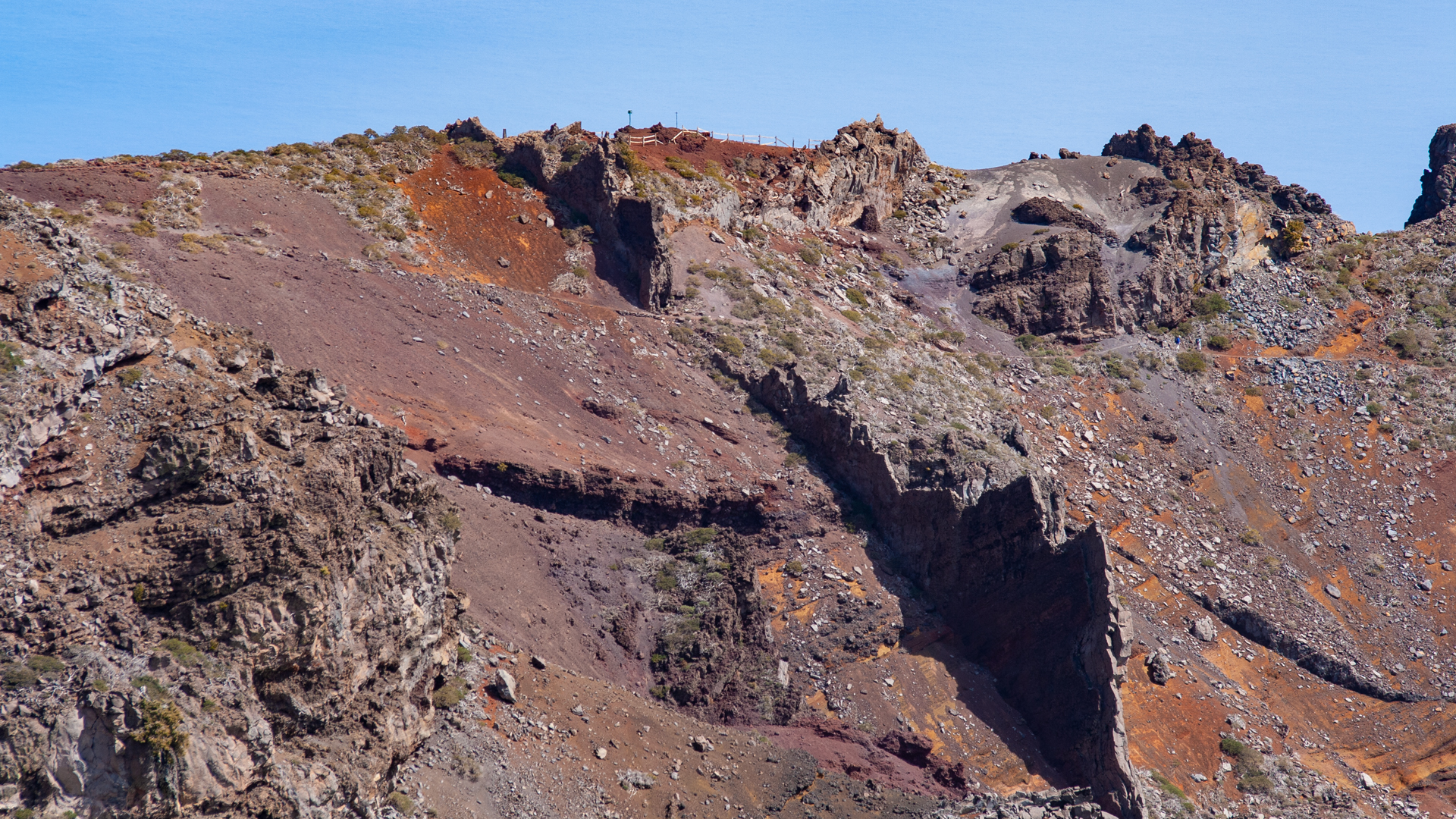
The fenced-in plots along the path are an important protective measure: rare and endangered endemic plant species of La Palma are bred in them for reintroduction. The Roque de los Muchachos Observatory (Observatory Operations) and the National Park jointly finance this breeding. Anyone who walks past it sees the active nature conservation work in the national park – not as a museum object, but as an ongoing project.
Safety warning: exposure to wind at 2,400 m
The path to Espigón del Roque is short but exposed. At 2,400 m altitude the wind can be strong even in summer. A light windproof jacket is essential. The viewing platform at Espigón is secured with a wall – but the rule is: no behavior that goes beyond the railing. The caldera falls vertically on the inside.
The ideal day plan: Arrive at the summit area early in the morning (sunrise at Roque de los Muchachos is legendary – the caldera is still in the shadow while the summit is already glowing). Then the short Espigón tour, breakfast on the viewing platform, then a ride on the LP-4 or a further hike. The Roque is best visited in the early morning, away from the lunchtime tourist crowds.
The Espigón del Roque is also the starting point for deeper insights into the caldera geology: the different colour layers of the steep walls – red from iron oxidation, white from zeolite deposits, black from fresh basalt – are visible from the Espigón as if in a natural cross section. No geology textbook shows volcanic stratigraphy as clearly as these walls.
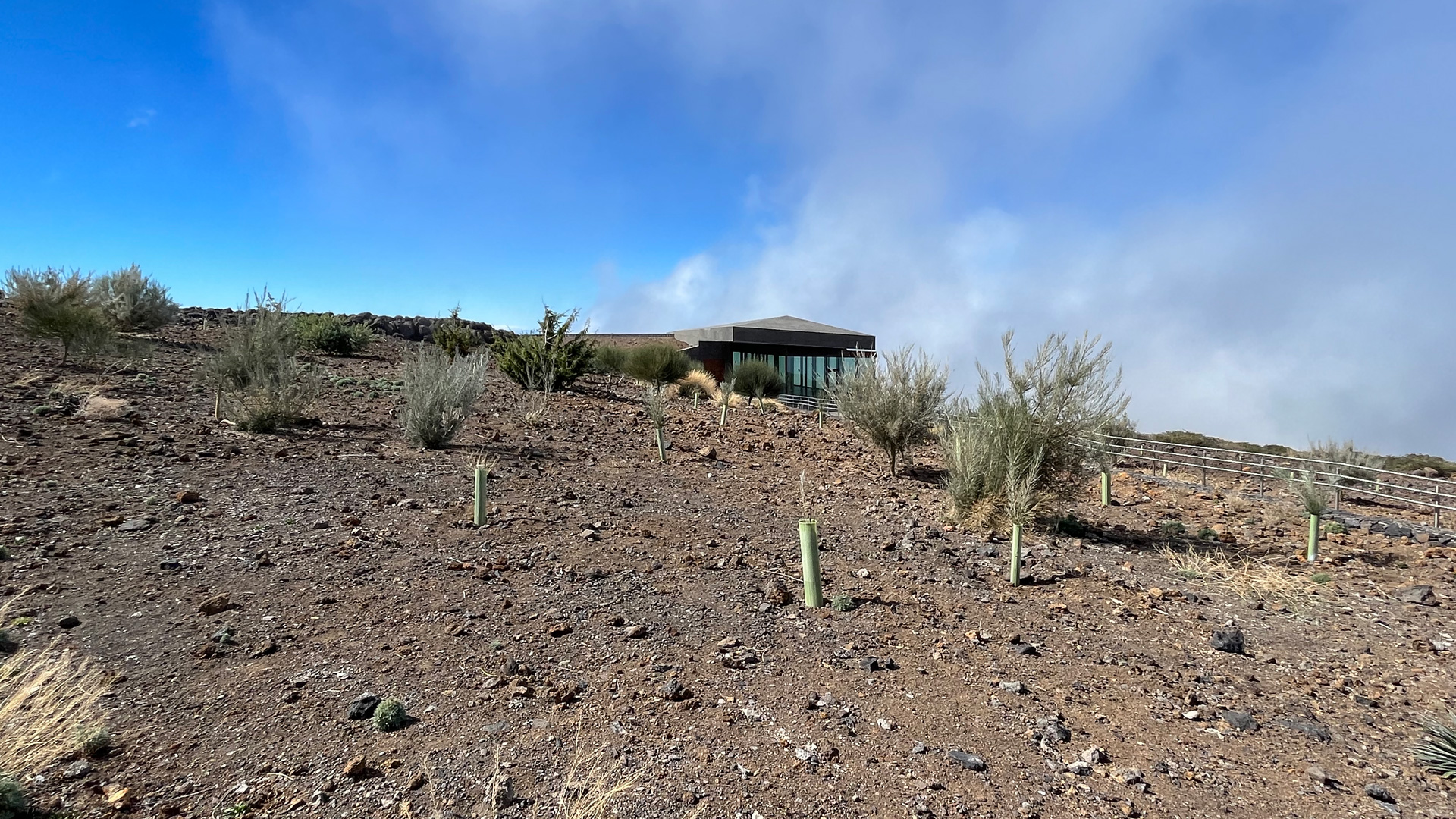
Combine your walk with a visit to the Roque de los Muchachos Visitor Centre
Just before the telescopes is the visitor centre (Centro de Visitantes) – a modern exhibition building that opens its doors every morning and afternoon. You can discover an exhibition about the universe or browse the souvenir shop without registering. (Entrance fee 15 euros.)
At night, the Observatorio del Roque de los Muchachos belongs to science, not to visitors. However, the IAC offers guided tours during the day – the Gran Telescopio Canarias with its 10.4 meter mirror is clearly visible from the outside, but advance booking is required for the domes themselves. On selected summer days (dates on iac.es) an open day also opens the interior to everyone – due to the high demand, it is worth registering early.
The summit car park at Roque de los Muchachos is the highest public car park in La Palma. When the weather is calm and clear, you can see the neighboring islands with the naked eye from the car park – without having to do any hiking. This makes the Roque accessible to non-hikers: drive to LP-403, 10 minutes on foot to the summit, panorama. The Espigón detour adds a hiking dimension to the visit.
GPS or not? Navigation on the Espigón route
The 1.2 km to Espigón del Roque is easy to follow – a paved start, then a clearly visible path on a reddish mountain ridge. The route can be navigated without GPS in clear weather. If there are clouds – which is common at 2,400 m – GPS is helpful, as the path quickly loses its contours in fog. The Sunhikes track is recommended.
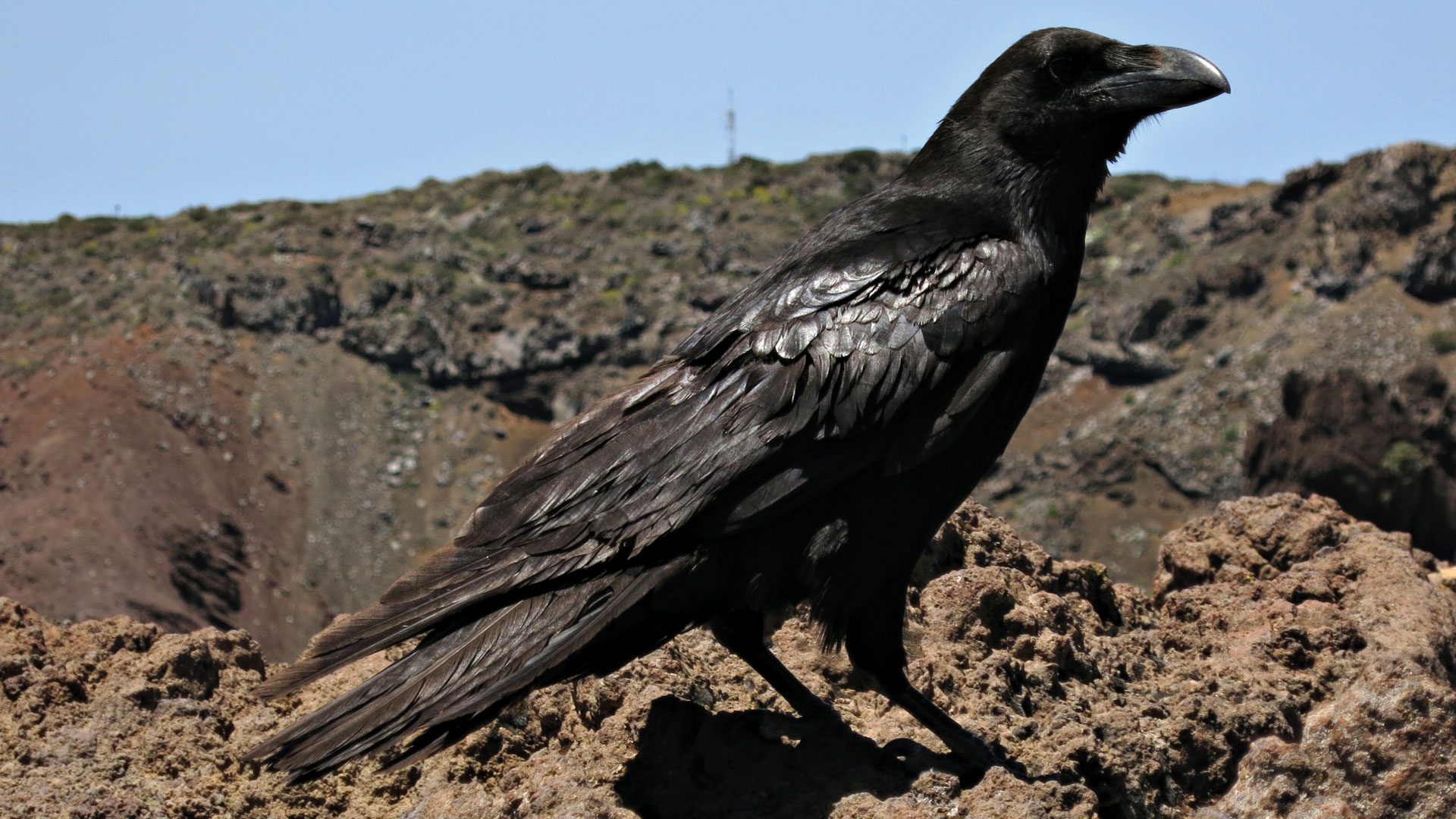
A special experience on this short route: the silence. At the Roque de los Muchachos summit area, especially when tourist buses are not running (weekdays outside of high season), it is quiet at 2,426 m – just the wind, the occasional raven, the sound of your own footsteps on the rock. This silence at the highest point of La Palma is hard to forget. The Espigón route leads from the parking area into this silence.
The combination of Roque de los Muchachos summit visit + Espigón tour is the most efficient high mountain program in La Palma for half a day: Directions LP-4, summit car park, panorama at Roque, Espigón walk (45 mins), and back. In three hours, you will have seen the highest point and the best caldera ledge on the island. For hikers with a tight time window, this is the maximum density on the minimum distance.
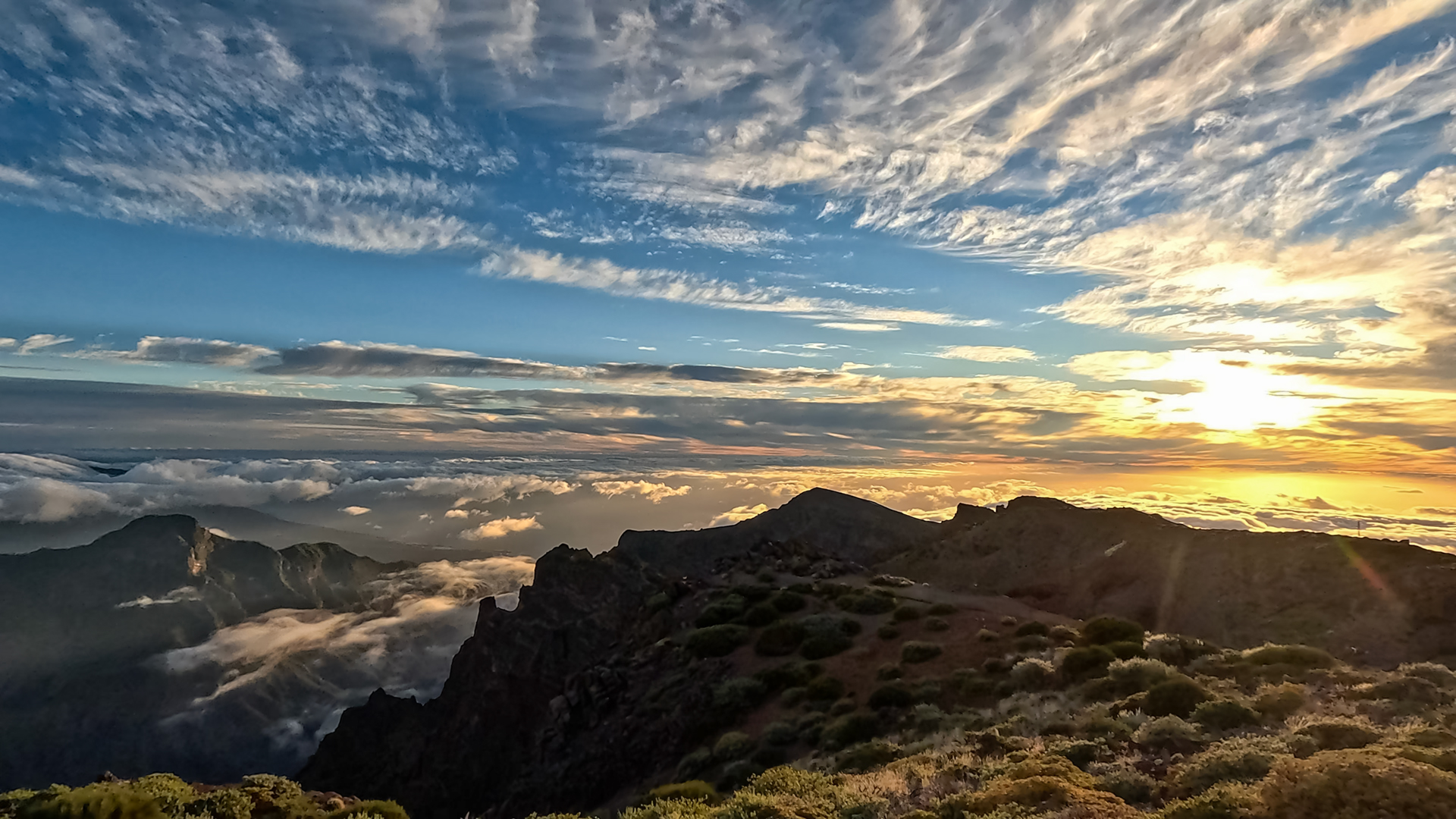
The Roque de los Muchachos is also particularly beautiful in the evening: the sun sets on the west side of the island, and from the summit you can see the light bathing the caldera walls in warm red. If you do the Espigón tour in the early evening, you will have the strongest light of the day – the golden hour at 2,400 m.
This article is based on the on-the-ground knowledge of the Gequo editorial team – publishers of the Reisezeit hiking guides and operators of Sunhikes.com. Last updated: May 2026