Cubo de la Galga circular hike: laurel forest and gorge in the Las Nieves Natural Park
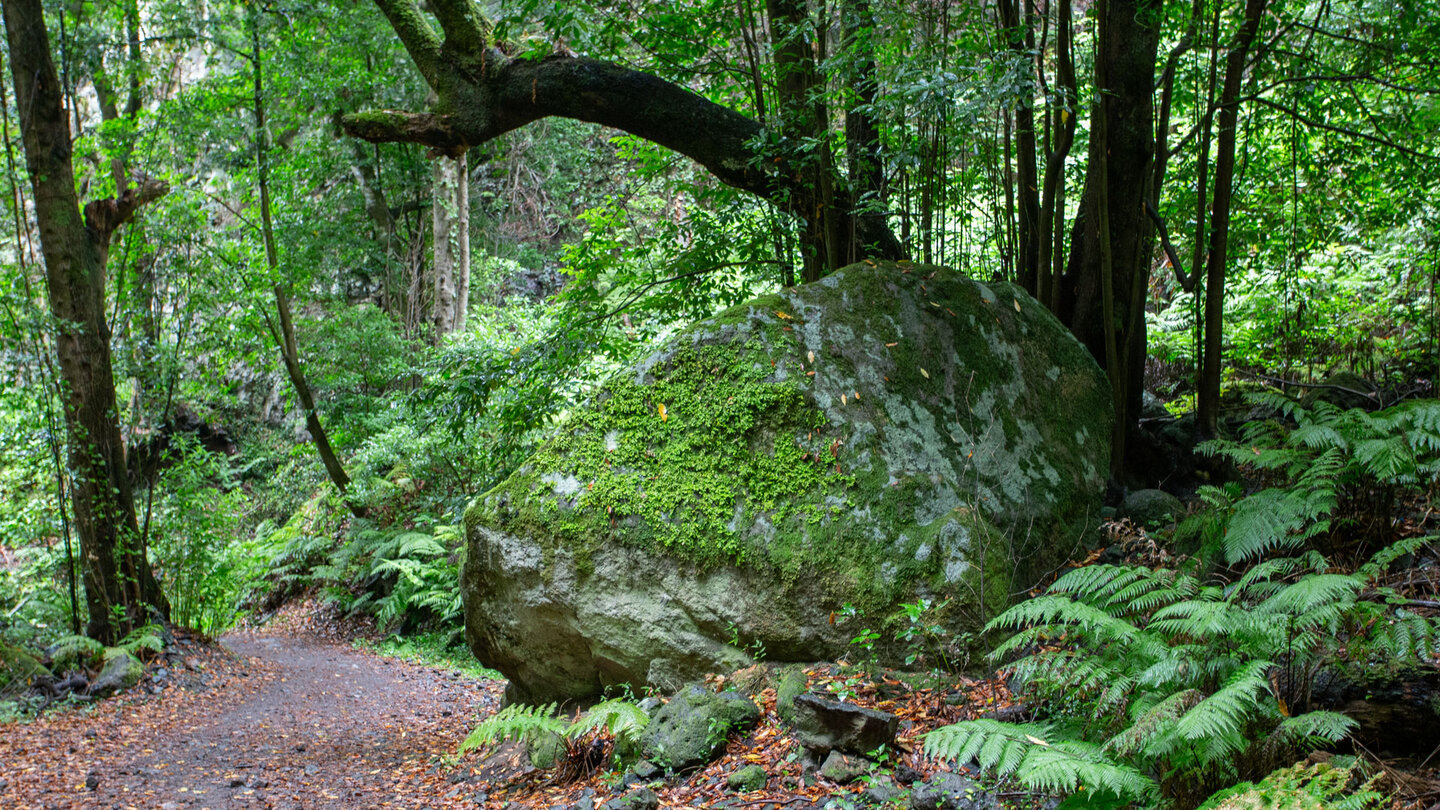
The Cubo de la Galga circular hike on the PR-LP 5.1 is one of the most beautiful entry routes into the laurel forest landscape of La Palma. 8.4 kilometers, 513 m, moderate. The path begins on the country road LP-1 at the information point between two tunnels just after km 16 and leads through the Barranco de la Galga gorge up into the Cubo de la Galga basin – a quiet, damp forest area with laurel trees, lianas, ferns and moss-covered rock formations.
A highlight halfway: a beautifully built aqueduct in the middle of the cloud forest. The highest point of the hike is the Mirador de la Somada Alta viewpoint on a ridgeline – with a view of the green forests, the village of La Galga and the towns of San Andrés and Los Sauces. The return route leads above the gorge back to the starting point.
If you arrive by bus: Line 120 connects Santa Cruz de La Palma with Barlovento, stop La Galga. From there, start the hike directly via the PR-LP 5.1.
Route facts at a glance
| Route type | Circular route |
|---|---|
| Distance | 8.4 km |
| Elevation | 513 m ascent / 512 m descent |
| Highest point | 779 m (Mirador de la Somada Alta) |
| Lowest point | 362 m (LP-1) |
| Duration | 3:30–4:00 hours |
| Difficulty | Moderate (sure-footed) |
| Starting point | Information hut at LP-1, between two tunnels just after km 16 |
| Waymarking | PR-LP 5.1 (yellow and white waymarks) |
| Protected area | Las Nieves Natural Park |
| Equipment | Water, provisions, sturdy footwear, rain protection |
Directions and starting point
The information hut is located on the island-circling LP-1 between two tunnels just after km 16 — coming from Santa Cruz, turn left into the car park after the second tunnel. To the left of the hut, an asphalted road leads uphill into the Barranco de la Galga. Along the way: information boards about the surrounding area.
The route in detail
Section 1: LP-1 – Cubo de la Galga basin
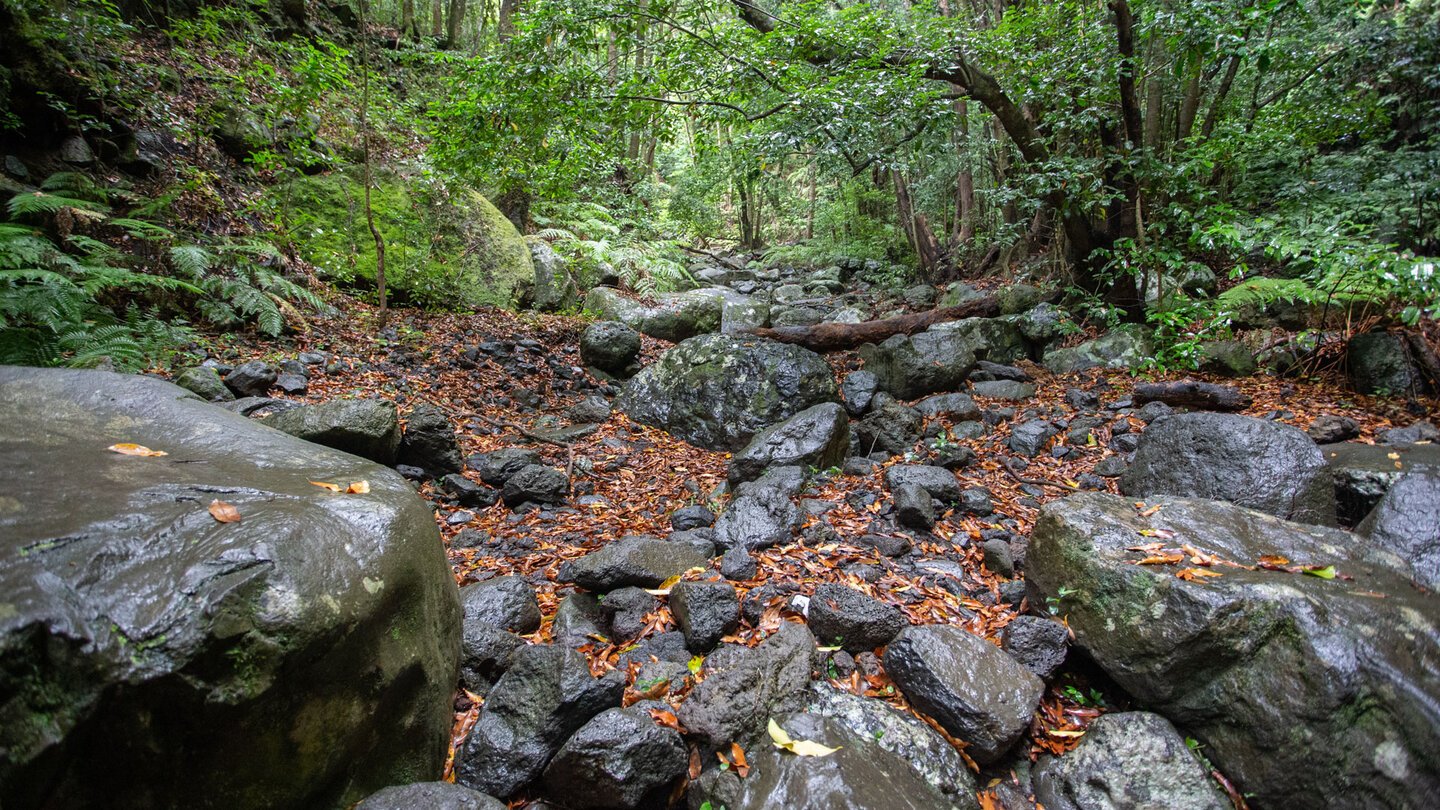
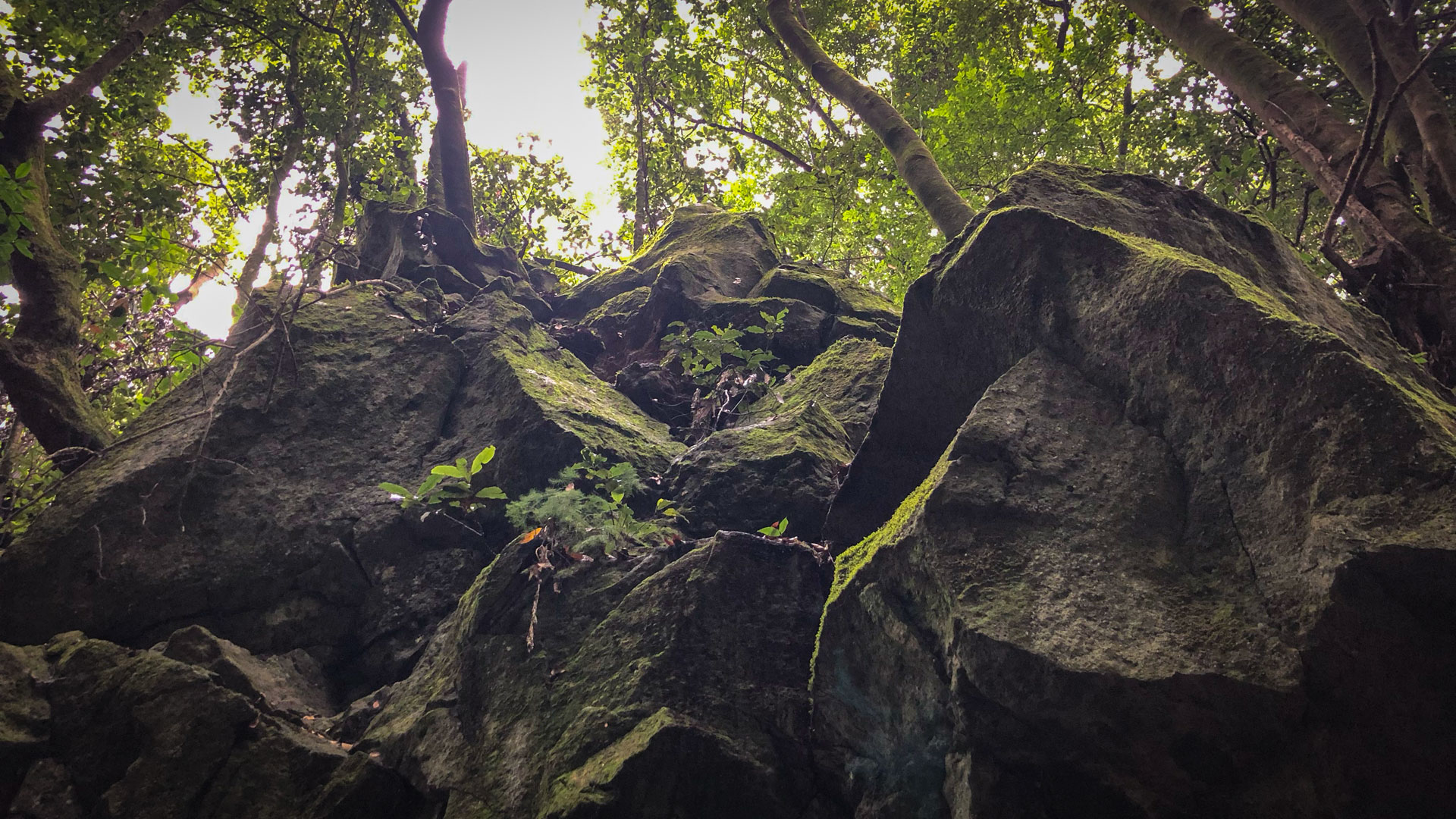
The asphalted road turns into a forest path after about a kilometer. Further along the slope you reach the Cubo de la Galga basin. You pass a water canal through a gate. The valley narrows. You hike past laurel trees, lianas, ferns and rock formations covered in moss. At a fork in the road, keep right and follow the PR-LP 5.1 (yellow-white) through the cloud forest. A little later: the beautifully brick aqueduct.
Section 2: Climb to the Mirador de la Somada Alta
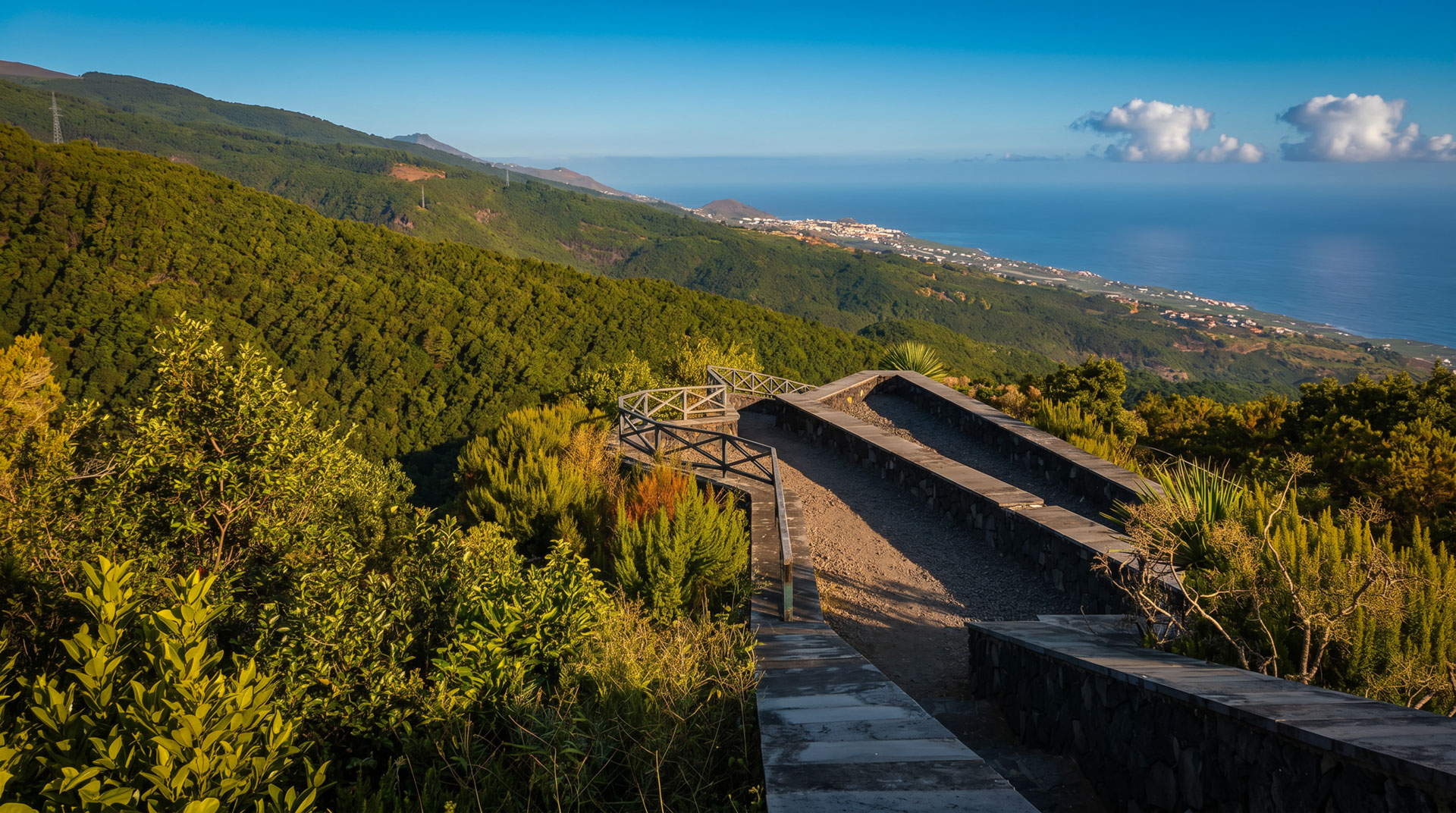
The path leads uphill over steps and wooden railings. You change the side of the valley. The path widens and meets a forest track – follow the signs to Mirador de la Somada Alta. On the ridge line: View of the green forests of the Cubo de la Galga, the village of La Galga and, in good conditions, as far as San Andrés and Los Sauces.
The way back above the gorge
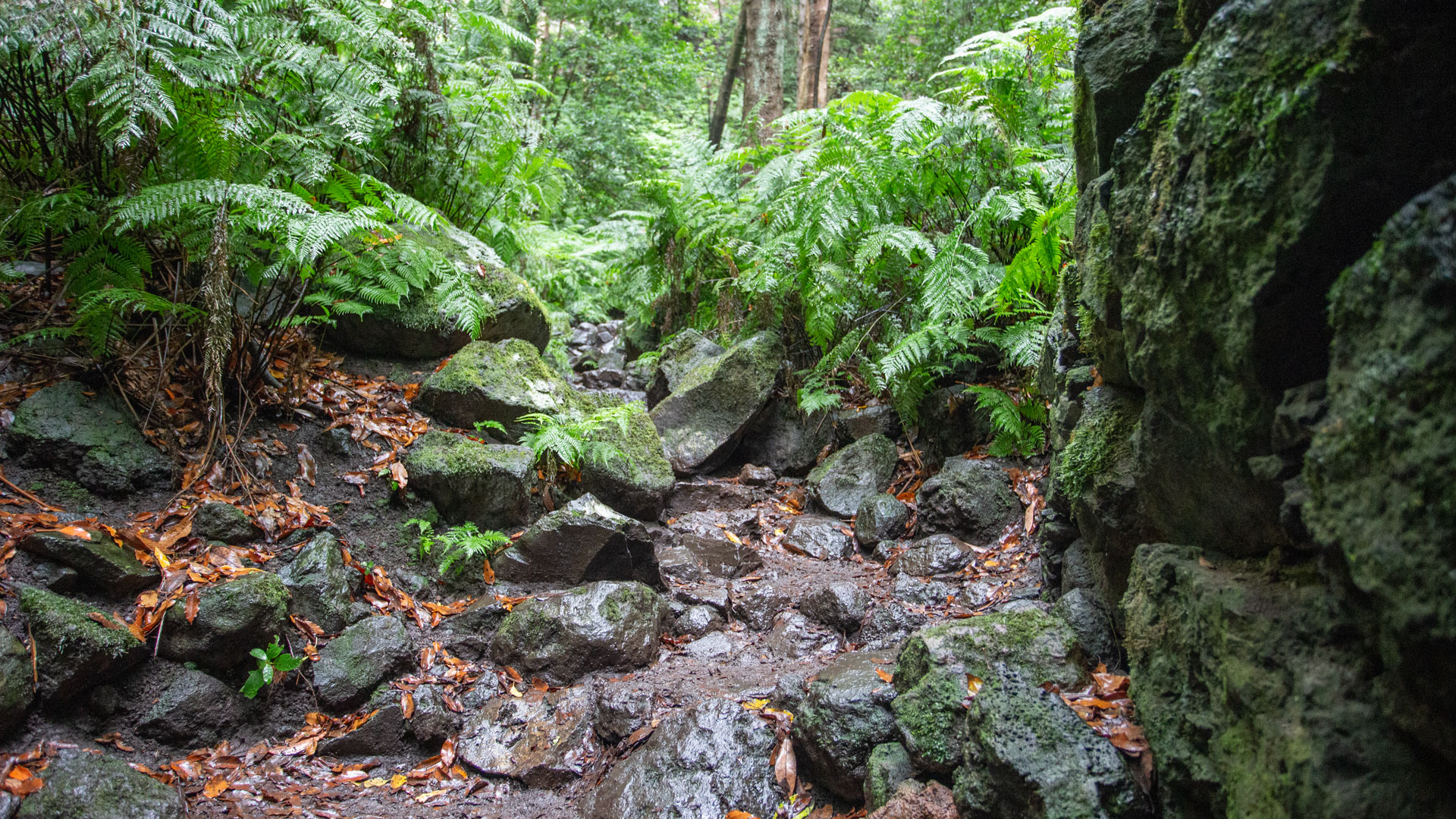
Follow the marked path downwards towards La Galga. After about 600 m you reach a concrete road just behind a house. Turn left (PR-LP 5.1). At the next crossroads turn left again. The path now runs above the gorge and finally meets the well-known slope back to the information house.
Flora: Fayal-Brezal and laurel forest
The hike initially leads through shrub landscapes and ends in the typical Fayal-Brezal vegetation of the middle altitudes: Tree heather and Faya dominate the upper section. In the valley itself grow Foetid laurel (Til), Canary laurel and Barbusano. Mosses and ferns cover rock formations and stream stones. The laurel forest of the Cubo de la Galga is a living testimony to the tertiary flora that once covered large parts of southern Europe.
Best travel time
| Season | Character | Note |
|---|---|---|
| Spring (March–May) | The lushest vegetation, full water flow | Optimum conditions |
| Summer (June–Aug) | Cool in the valley basin, pleasant even in the heat | Good contrast to the coastal heat |
| Autumn (Sept–Nov) | Cloud forest atmosphere, typical | Rain protection always with you |
| Winter (Dec–Feb) | Highest Water flow | Slippery paths in heavy rain |
Combinable tours
| Tour | Data | Character |
|---|---|---|
| PR-LP 5.1 Cubo de la Galga (longer version) | from La Galga via GR 130 | Start from the town instead of from LP-1 |
| Tunnel hike Marcos y Cordero | 11.1 km, difficult | The following day; also laurel forest region |
GPS track and 3D route planner
To the route page on Sunhikes: Circular hike Cubo de la Galga
3D route planner from Sunhikes
Practical Tips
Emergency call: 112. No mobile phone network in the deep valley basin. The car park at the information centre is small – come early or take the bus (line 120, La Galga stop).
Note: Las Nieves Natural Park
The route is located in the Las Nieves Natural Park. Road rules, garbage collection, no fire.
Frequently asked questions
Are there any places to stop for refreshments?
Is the route suitable for children?
What is the Fayal-Brezal vegetation?
The laurel forest as a living fossil
The Cubo de la Galga is no ordinary forest. What you walk through here is a remnant of the Laurisilva – the Tertiary laurel forest belt that once covered large parts of southern Europe and North Africa before the ice ages almost completely destroyed it. In the Canary Islands, the laurisilva survived thanks to the stable, mild climate. It is a living fossil – a biotope from the time of the dinosaurs.
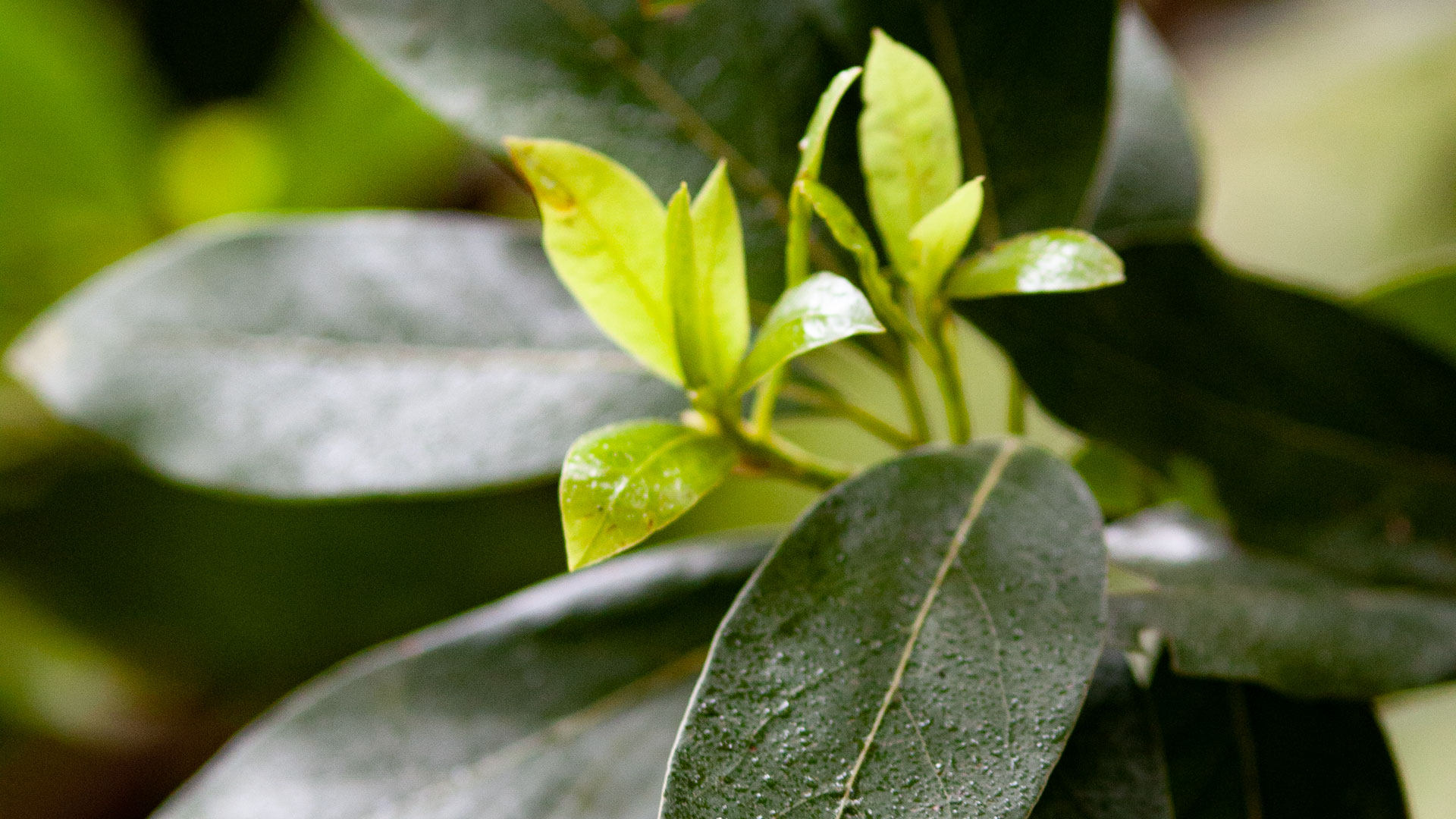
The four major laurel forest species of the Canary Islands grow in the basin of the Cubo de la Galga: Foetid laurel (Til), Canarian laurel, Barbusano and Indian Persea. Also: Canarian holly, strawberry tree and tree heather. Mosses and lichens cover almost every stone and every tree trunk. The moisture in this valley comes not only from rain, but also from trade fog, which remains on the northern slopes and soaks the vegetation as horizontal precipitation.
The Fayal-Brezal Zone in the upper part of the hike is the transition zone between the laurel forest and higher pine areas: Tree heather (Erica arborea) and Faya (Myrica faya) give the landscape its name. The tree heather can grow up to 10 meters high. In spring it blooms white and fills the forest with a delicate honey scent.
The Aqueduct — Early 20th Century Engineering
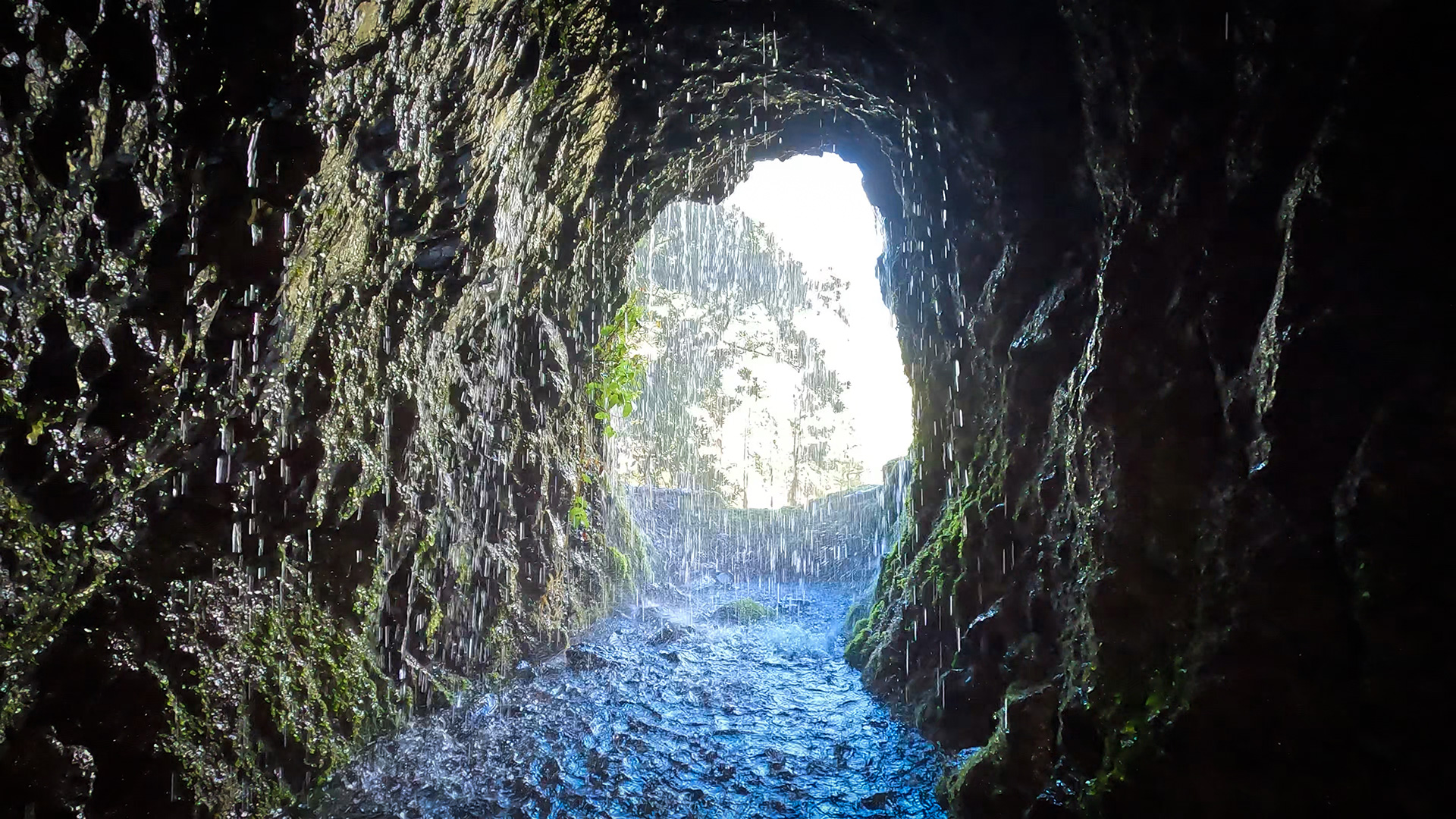
The brick aqueduct halfway along the hike is a preserved example of La Palma’s water supply from the early 20th century. The system used the natural springs in the laurel forest to direct the water to the agricultural areas of the coastal zone. The canal construction is still intact today and partially still works.
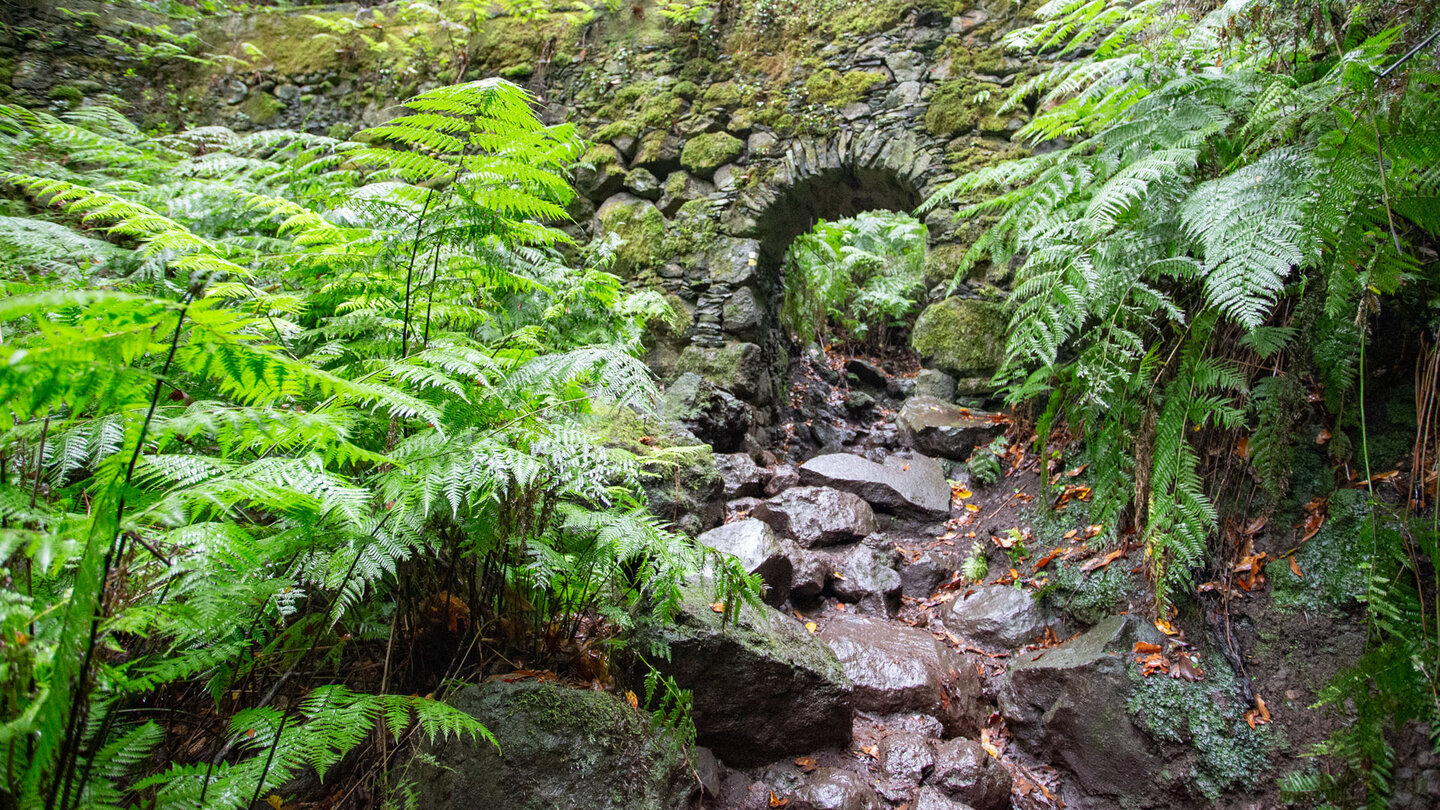
If you stop and listen on the way through the Cubo de la Galga, you will hear the gentle trickling of water in the canal. The humid air, the smell of moss, the muted colours of the laurel forest floor and the aqueduct as a structure – this is the atmosphere of the Cubo de la Galga that is not easily forgotten.
Fauna: Bay pigeon and Canary Island chaffinch
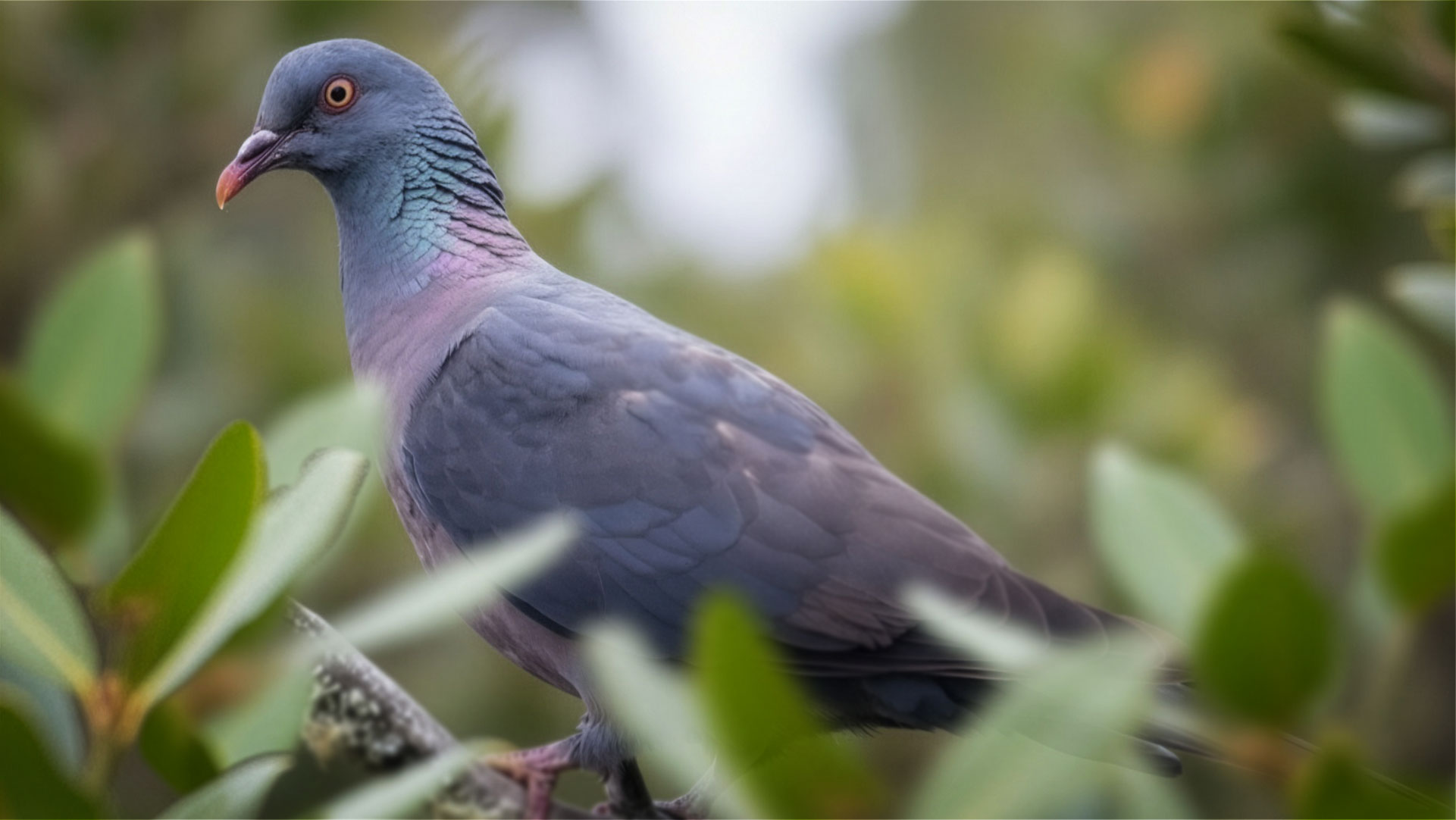
In the laurel forest of the Cubo de la Galga live the rare laurel pigeon (Columba junoniae) and the Bolle’s pigeon (Columba bollii) – both of which are among the rarest pigeon species in Europe. The Canary Chaffinch, a separate subspecies from La Palma, can be recognised by its slightly darker colouring. Blackbirds, robins and chiffchaffs call throughout the forest. Occasionally you come across Canary Island lizards on sunny stones along the side of the road.
Hiking in the region: Las Nieves Natural Park
The Las Nieves Nature Park extends across the entire north-eastern half of La Palma and includes the island’s most important laurel forest and cloud forest areas. It is part of the UNESCO La Palma Biosphere Reserve and protects some of the most species-rich biotopes in Macaronesia. The Cubo de la Galga is located in the core area of the natural park, surrounded by other laurel forest areas that extend over the entire northern flank.
The hiking trails in Las Nieves Natural Park — including the GR-130 on the coast, the tunnel hike to the Marcos y Cordero Springs and the PR-LP 5.1 in Cubo de la Galga — are all well marked and regularly maintained. The difficulty levels range from easy (Cubo de la Galga) to difficult (tunnel hike). For a multi-day stay in the region, it is worth combining several tours.
An insider tip: The hike after the rain. In Cubo de la Galga, the mood changes dramatically after rainfall. The mosses glow, the aqueduct carries water, the air smells of earth and laurel resin, and the sounds of the forest are more intense. Whoever has the choice: Cubo de la Galga the day after the rain.
More frequently asked questions
How long is the asphalted starting section?
Can you also start the route from the town of La Galga?
What is the difference between PR-LP 5 and PR-LP 5.1?
Getting to La Palma and the route
La Palma can be reached by direct flight from Germany, Austria and Switzerland – seasonally from several airports. The SPC Santa Cruz de La Palma airport is located in the northeast of the island. It takes about 20 minutes from the airport to reach Cubo de la Galga on the LP-1 (km 16) by rental car.
A rental car is recommended for La Palma – the public bus connections (TILP) reach La Galga and thus the Cubo de la Galga (line 120), but the individual schedule can be better coordinated with a rental car. The LP-1, which leads past the hike, is well developed.
If you are planning several laurel forest hikes: The tunnel hike to the Marcos y Cordero springs to Los Tiles and the Cubo de la Galga are both located in the Las Nieves Natural Park and are ideal for two consecutive days. Accommodation in Los Sauces, San Andrés or Barlovento is recommended.
If you get to know the area from the information house on the LP-1: There are information boards on the side of the road on the first asphalted kilometer about the geology, flora and fauna of the Las Nieves Nature Park. They are well designed and a worthwhile introduction before the path plunges into the laurel forest. The first kilometer is the driest and least impressive of the tour – after that the actual Cubo de la Galga begins.
Practical for bus users: If you travel with line 120 (Santa Cruz – Barlovento) and get off in La Galga, you can take the PR-LP 5.1 hiking trail directly from the town. The return route is possible via the PR-LP 5 to the Casa Asterio stop. This makes the route completely carless – unusual for La Palma, but quite possible here.
The gorge is accessible all year round. Even on hot summer days, the valley cools down to a pleasant 18-22 degrees. This makes the Cubo de la Galga circular hike one of the few routes on La Palma that offers a fresh, pleasant hiking climate even in August. The laurel forest is natural air conditioning.
The Cubo de la Galga is a good choice for families with children: the paths are wide, the gradients are moderate and the gorge is entertaining. Children aged 6 and over can do the tour without any problems. The aqueduct is a popular stop – the chatter of the water and the moss on the brick make it a highlight even for younger hikers.
On hot summer days, an early start is recommended. The laurel forest in Cubo de la Galga is at its most beautiful between 7 and 9 a.m.: the ground is still damp from the night, the birds are active and the light penetrates the canopy in soft rays. You’re usually back at the information booth by 10 a.m. – just in time before the heat of the day fills up the car park.
Accommodation nearby
For hikes in the Las Nieves Natural Park, accommodation in the northeast of La Palma is ideal: Los Sauces, San Andrés or Barlovento are well-located places. Holiday homes in the region combine the tranquility of the north-east side with short access to the laurel forest routes.
A good selection of tested holiday homes on La Palma can be found on clariso.eu. Clariso offers directly bookable houses for communities such as Garafía, Puntagorda or Tijarafe in the north and west.
This article is based on the on-the-ground knowledge of the Gequo editorial team – publishers of the Reisezeit hiking guides and operators of Sunhikes.com. Last updated: May 2026