La Zarza y La Zarcita – The Message of the First Palmeros
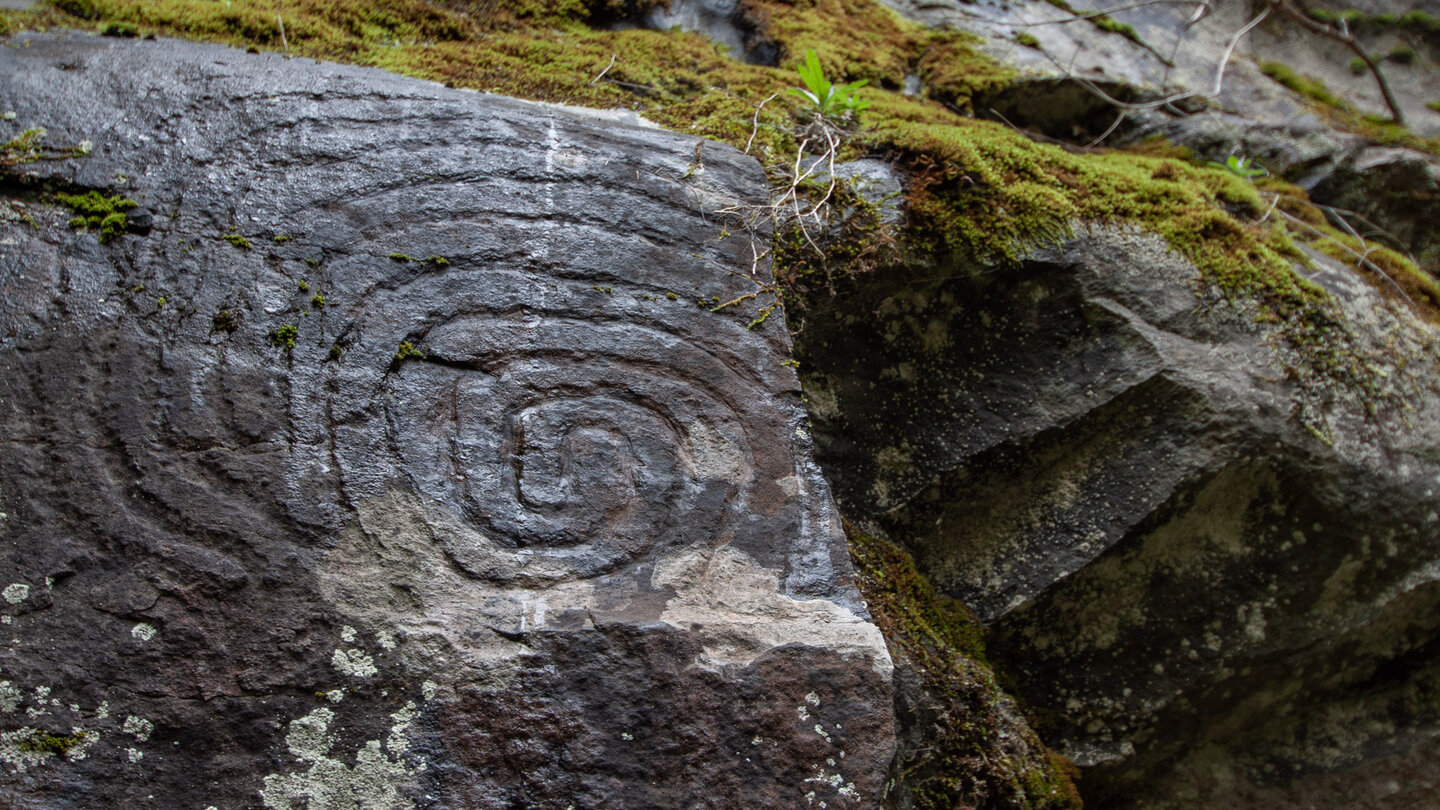
Deep in the laurel forest belt of the north, at around 1,000 metres in altitude, the most impressive traces of La Palma’s indigenous people lie hidden in a forest often shrouded in mist. La Zarza y La Zarcita are the most significant archaeological sites in the entire Canary Islands – places where the history of the Benahoaritas, the island’s original inhabitants, is quite literally carved in stone.
The Benahoaritas – La Palma’s Indigenous People
Long before Spanish conquerors landed on La Palma in the 15th century, the island was home to the Benahoaritas—descendants of North African Berber tribes who settled the Canaries over 2,000 years ago. Though they lived without written language, the wheel, or metal, they left behind stone markings that remain deeply captivating today.
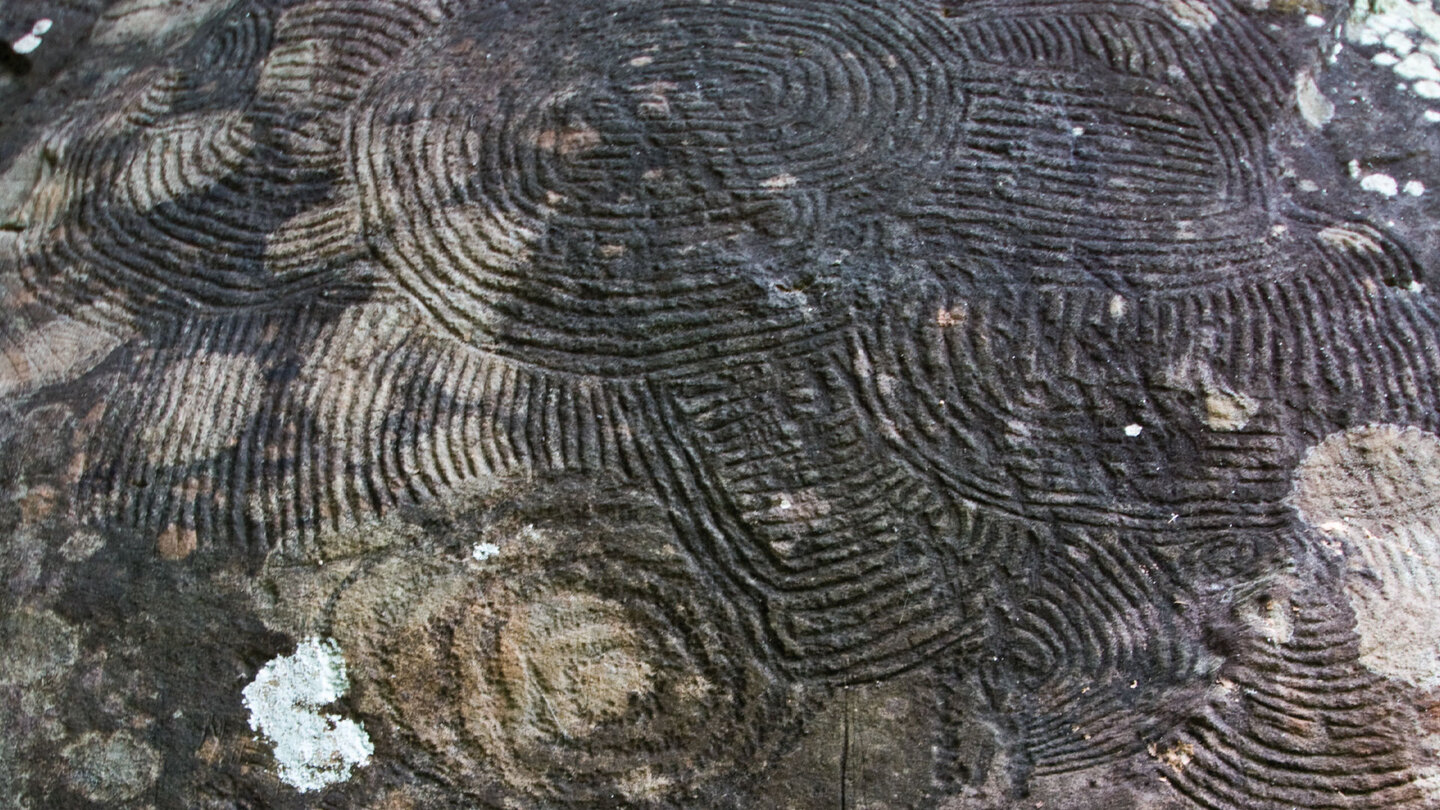
Researchers believe the petroglyphs served as a means of communication, calendars or religious symbols. What is certain is that the caves and rock overhangs were used over many generations – the layers of engravings overlap. In addition to the carvings, shepherd settlements and dwelling caves have also been discovered at these sites.
The Cultural Park and Circular Trail
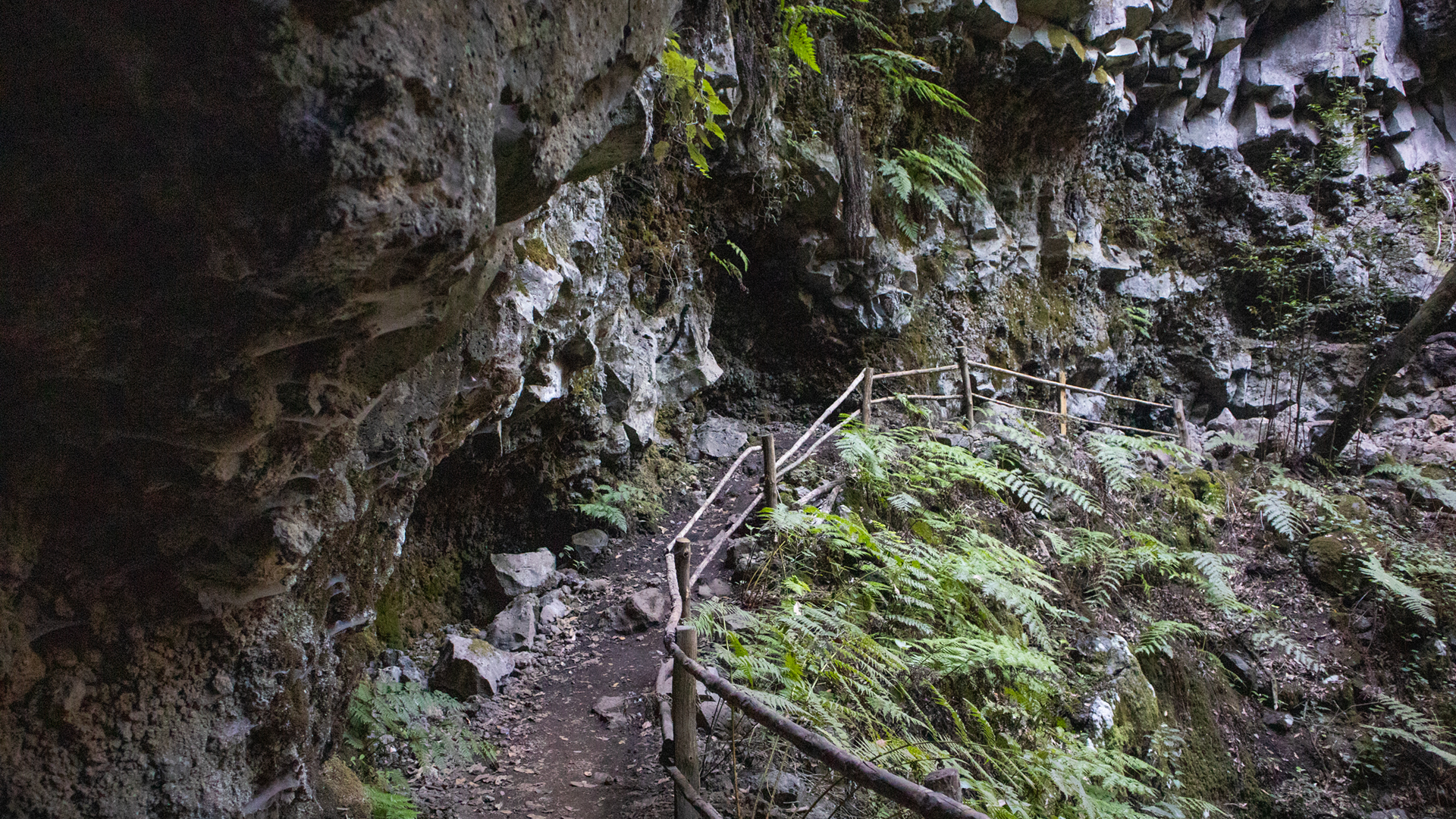
From the visitor centre at the car park, a gentle circular trail of around 30 to 40 minutes leads to the sites. It first heads to the Fuente de La Zarza (Thornbush Spring) and then continues to the La Zarcita site. Information boards along the way explain flora, fauna and archaeological connections. The visitor centre has an exhibition on the Benahoaritas and their world.
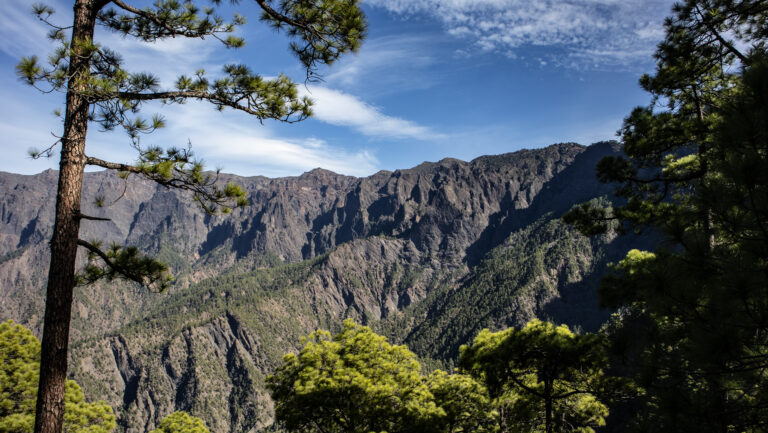
The park lies in the middle of the damp laurel and pine forest of Garafía – one of the most species-rich woodland areas on La Palma. The mystical atmosphere of mist, ancient trees and silent rock engravings makes this one of the most memorable excursion destinations on the entire island. Anyone visiting the north of La Palma should set aside at least half a day for La Zarza.
Photography Tip: Capturing the Northern Mist
The special atmosphere of La Zarza arises from the interplay of ancient rock carvings, lush greenery and the damp climate of the north. Visits are particularly atmospheric in the early morning or after light fog, when the vegetation glistens and the ravine landscape casts its mystical spell.
Hiking Trails in the Surrounding Area
La Zarza is not only a cultural park but also the starting point for several hiking routes into the surrounding gorge and forest landscape. The moderately challenging circular walk La Zarza – Don Pedro (approx. 15 km) starts directly from the cultural park, leading through deeply cut ravines to the coastal village of Don Pedro. The trail PR LP 9 from Santo Domingo de Garafía to the Mirador de Los Andenes also begins nearby.
For up-to-date route details and downloadable GPS tracks for all hikes around La Zarza, visit Sunhikes: Garafía Hiking Routes on Sunhikes
Important Note About Visiting
The official access to the cultural park and the visitor centre may be temporarily closed – before visiting, it is advisable to enquire with the Garafía municipality or check their current announcements. Hiking trails in the immediate area are usually still accessible in such cases. Check current status at: garafia.es
Visitor Information
Parque Cultural La Zarza: Municipality of Garafía, La Palma
Location: on the LP-1 between Barlovento and San Antonio del Monte
Altitude: approx. 1,000 m a.s.l.
Circular walk: approx. 40 minutes, easy
Admission: Approx. €1.80–€2.00 (when open)
Opening hours: Daily 11:00–17:00 (winter) / 19:00 (summer) – confirm in advance
Drive from Santa Cruz: Take the LP-1 toward Barlovento, then continue toward Garafía – approx. 1 hr 15 min
Frequently Asked Questions (FAQs)
What are petroglyphs?
How do you get to La Zarza?
What is the difference between La Zarza y La Zarcita?
What are the rock engravings of La Zarza y La Zarcita?
Can you visit La Zarza without booking in advance?
What should I wear for La Zarza?
How long should I plan for a visit?
Where can I learn more about the indigenous people of La Palma?
Accommodation in Garafía
El Tablado and Santo Domingo de Garafía are located just a few kilometres away. For visitors wishing to spend a few days exploring the area, Clariso offers hand-picked holiday homes across the municipality: Holiday homes in Garafía on Clariso
Practical Tips for Your Visit to the Cultural Park La Zarza y La Zarcita
Current Notes on Access and Visitor Centre
The La Zarza y La Zarcita cultural park has in the past been subject to temporary restrictions, including renovation work and measures to secure certain areas. As opening times and access may change, it is advisable to check the current situation before your visit.
Even if the visitor centre is not always open, the impressive petroglyphs and natural surroundings can be explored via the signposted trails. The circular trail through the green ravine landscape in particular gives an authentic impression of this special place.
The Right Clothing for the North of La Palma
Garafía is one of the damper and cooler regions of the island. Around La Zarza, the trade wind clouds ensure lush vegetation, but also damp and at times slippery paths. Sturdy footwear with good grip is therefore highly recommended.
A light rain or windproof jacket should also be packed – even when the sun is shining on the coast of other parts of the island, it can be noticeably cooler in the laurel forest and ravines of the north.
Explore History Further: Combining with the MAB
Anyone wishing to better understand the culture of the indigenous people of La Palma, the Benahoaritas, should combine their visit with the Museo Arqueológico Benahoarita (MAB) in Los Llanos de Aridane. There, numerous artefacts, reconstructions and background information on the way of life of the island’s first inhabitants are on display.
Excursions Nearby
| Destination | Distance | Highlights |
|---|---|---|
| Barranco Fagundo / El Tablado | Approx. 10 km | wildest gorge of the north |
| Puerto de Garafía | Approx. 12 km | old harbour, Atlantic coast |
| Santo Domingo de Garafía | Approx. 8 km | village market, Ethnographic Museum |
| Roque de los Muchachos | Approx. 25 km | highest point of La Palma |
The Petroglyphs in a Canarian Context
La Palma is not the only Canary Island with petroglyphs – but La Zarza y La Zarcita are regarded by archaeologists as the most significant and best-preserved sites in the entire archipelago. The patterns that the Benahoaritas carved into the rocks differ from island to island: on Tenerife simpler linear forms predominate, while on La Palma the spirals and meanders display a complexity that points to a more elaborate symbolic tradition.
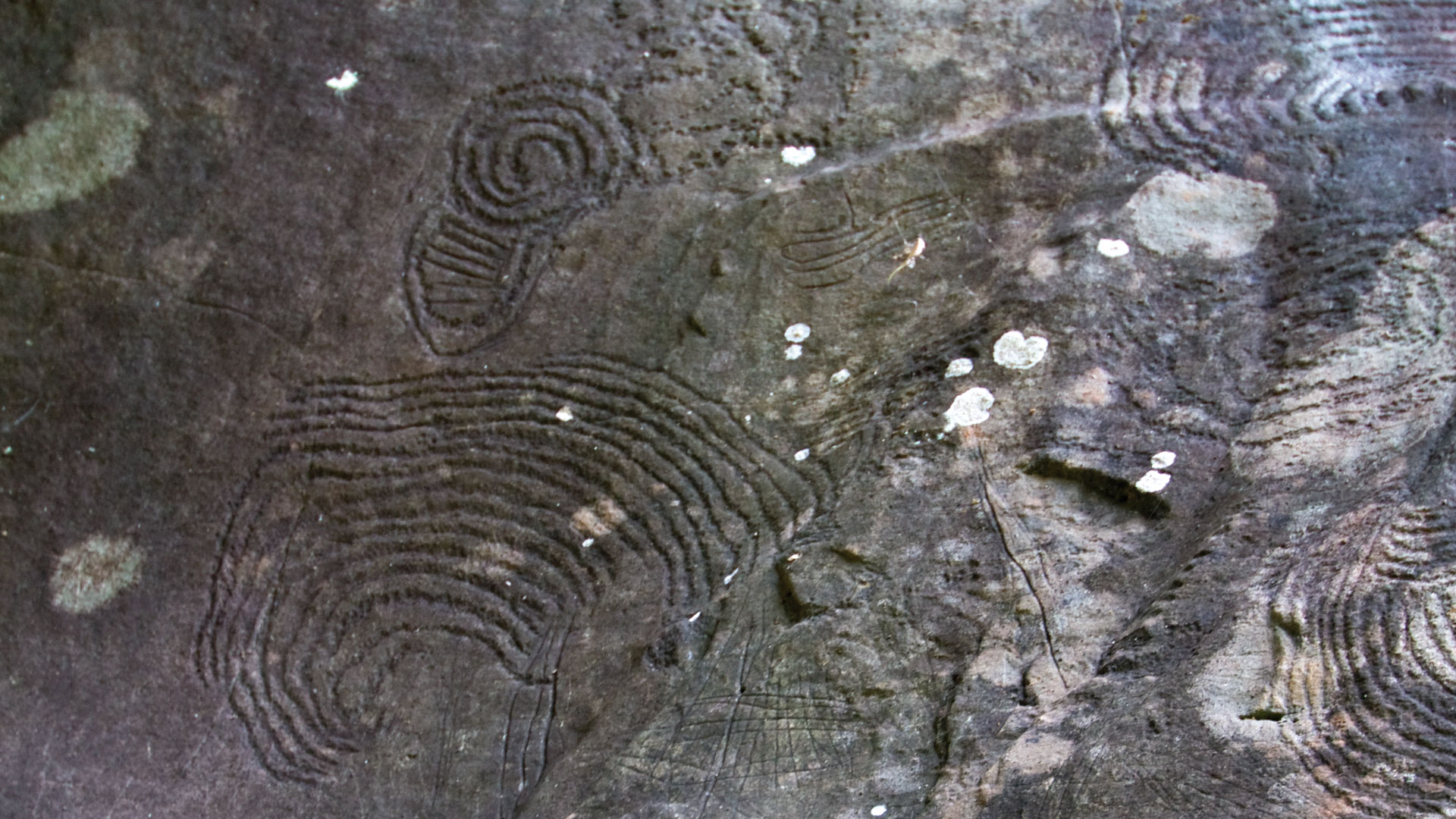
A comparison with petroglyphs in North Africa – the ancestral homeland of the Canarian indigenous people – reveals striking similarities. Whether the symbols had religious, territorial or astronomical meanings is still the subject of ongoing research. What is certain: the Benahoaritas on La Palma lived in an organised society with their own language (Benahorí), their own legal system and a culture that persisted on the island for more than 1,500 years.
Atmosphere of the Laurel Forest
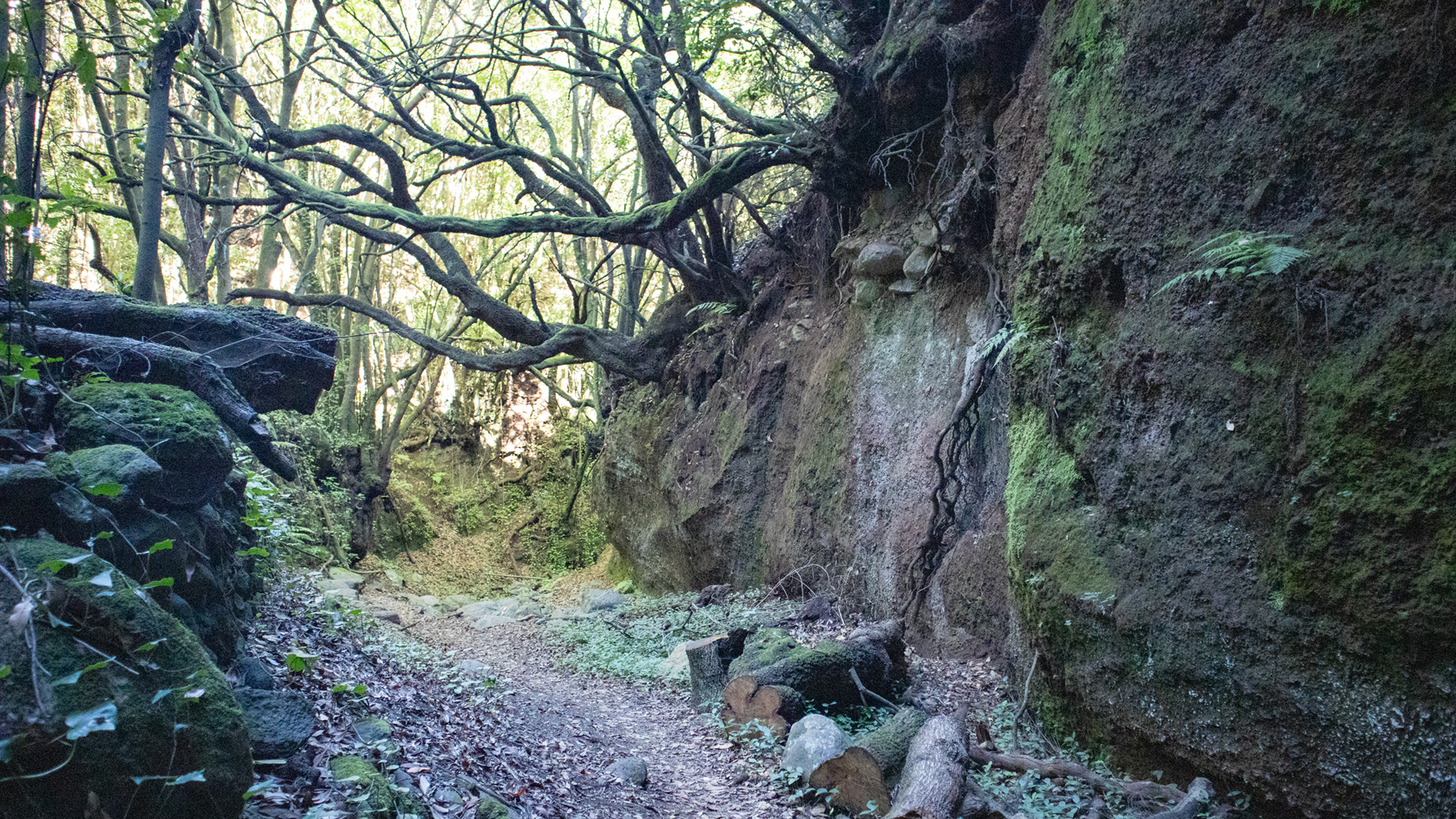
What sets La Zarza apart from other archaeological sites is not only the content but the context: the sites lie in the middle of an ancient laurel and pine forest at 1,000 metres altitude, frequently veiled in mist. This interplay of ancient signs, damp woodland and drifting clouds creates an atmosphere that goes beyond the purely archaeological.
Early in the morning, when the mist still hangs low and the first rays of sun break through the canopy, La Zarza is a place of rare stillness. Anyone who has the chance to arrive early – before the tour buses from the south – should take it.
The GR-130 Trail and La Zarza
The historic coastal path GR-130 Camino Real de la Costa runs through the municipality of Garafía and also touches the region around La Zarza. Those walking the route in several stages can plan La Zarza as a day-stage stop. The combination of hiking the old royal road and visiting the petroglyphs offers one of the most profound encounters with La Palma’s history that is possible.
Best Time of Year to Visit
La Zarza is accessible year-round, but shows its most mystical side in the winter months (December to March): mist envelops the laurel forest, the rock engravings glisten with moisture, and the silence is absolute. In summer and autumn the visibility is clearer but less dramatic. Spring (March to May) brings the most species-rich forest vegetation.
Those travelling from the coastal towns should pack warm clothing – at 1,000 metres altitude it can be cool and damp even in midsummer. Sturdy footwear is recommended on the circular trail, especially after rain.
This article is based on the on-the-ground knowledge of the Gequo editorial team – publishers of the Reisezeit hiking guides and operators of Sunhikes.com. As of: May 2026