Weather & Climate on La Palma – The Honest Climate Guide
“Eternal spring” – this cliché follows La Palma everywhere. It is true, but it is incomplete. La Palma is divided into two distinct climate zones by its high mountains, and the differences between north and south, east and west are significant enough to shape a holiday decisively. Understanding this helps you plan your trip far better.
The Two-Sided Climate
The north-east trade wind is the main driver in La Palma’s weather. It brings moist Atlantic air from the Azores and collides with the island’s mountains. What happens: the air rises, cools, and releases its moisture as rain. The result on the north-east and east side: more cloud, more rain, lush vegetation, cooler temperatures. On the west and south side, the same air descends again, warms up, and stays dry. The result: sunshine, aridity, 300 sunny days a year.
The north-east trade wind not only creates the island’s climatic divide but also influences humidity and visibility. Whilst the east coast is more frequently under trade wind cloud, the west coast is often sunny and dry.
Even though temperatures feel pleasant, UV radiation on La Palma is significantly stronger than in central Europe. This applies especially at altitudes above the cloud layer.
| Region | Character | Best Time |
|---|---|---|
| West Coast (Tazacorte, Puerto Naos) | 300 sunny days, dry, warm – year-round | Year-round; winter particularly attractive |
| Southern Tip (Fuencaliente) | Sunniest spot on the island, in the rain shadow | Year-round; reliable even in January |
| East Coast (Santa Cruz, Los Cancajos) | More clouds than the west coast, but mild | Summer and autumn are best |
| North-East (San Andrés, Barlovento) | Green, damp, laurel forests | Spring and autumn |
| North (Garafía) | Wild, changeable, spectacular | Spring on fine days |
Temperatures Throughout the Year, Altitude & UV Radiation
Coastal temperatures remain pleasant year-round: in winter they typically range from 20 to 22 °C, in summer from 25 to 28 °C. Water temperature ranges from around 18 °C in March to 24 °C in September.
Temperature drops significantly with altitude — by roughly 0.6 to 1 °C per 100 metres gained. Those driving from the beach up to the Roque de los Muchachos (2,426 m) often experience a temperature difference of more than 15 degrees. Even in the height of summer only 10 to 15 °C is typical up there; in winter, snow occasionally falls.
UV radiation should not be underestimated. Due to the Canary Islands’ southerly latitude, solar intensity is very high year-round — even on days with pleasant temperatures or light cloud. High-factor sun cream is therefore an essential item for every excursion and walk.
Calima: The Saharan Wind
La Palma is occasionally hit by the Calima — a hot easterly wind from the Sahara. It carries fine desert dust and can send temperatures soaring above 35 to 40 degrees within hours. Visibility turns hazy and gritty, and the air feels dry and harsh. The Calima typically lasts one to three days before the trade wind returns. Hiking trails are closed when wildfire risk is high. Visitors in summer should be prepared for it — it is not an extreme event but a perfectly normal phenomenon.
The Temperature Inversion: Above the Clouds, the Sun Shines
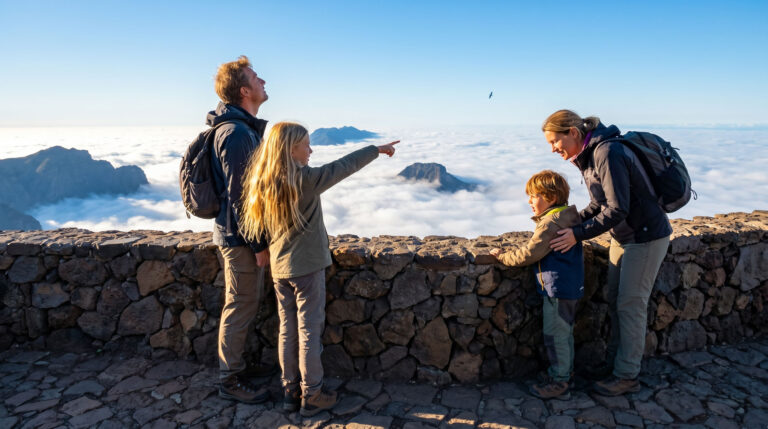
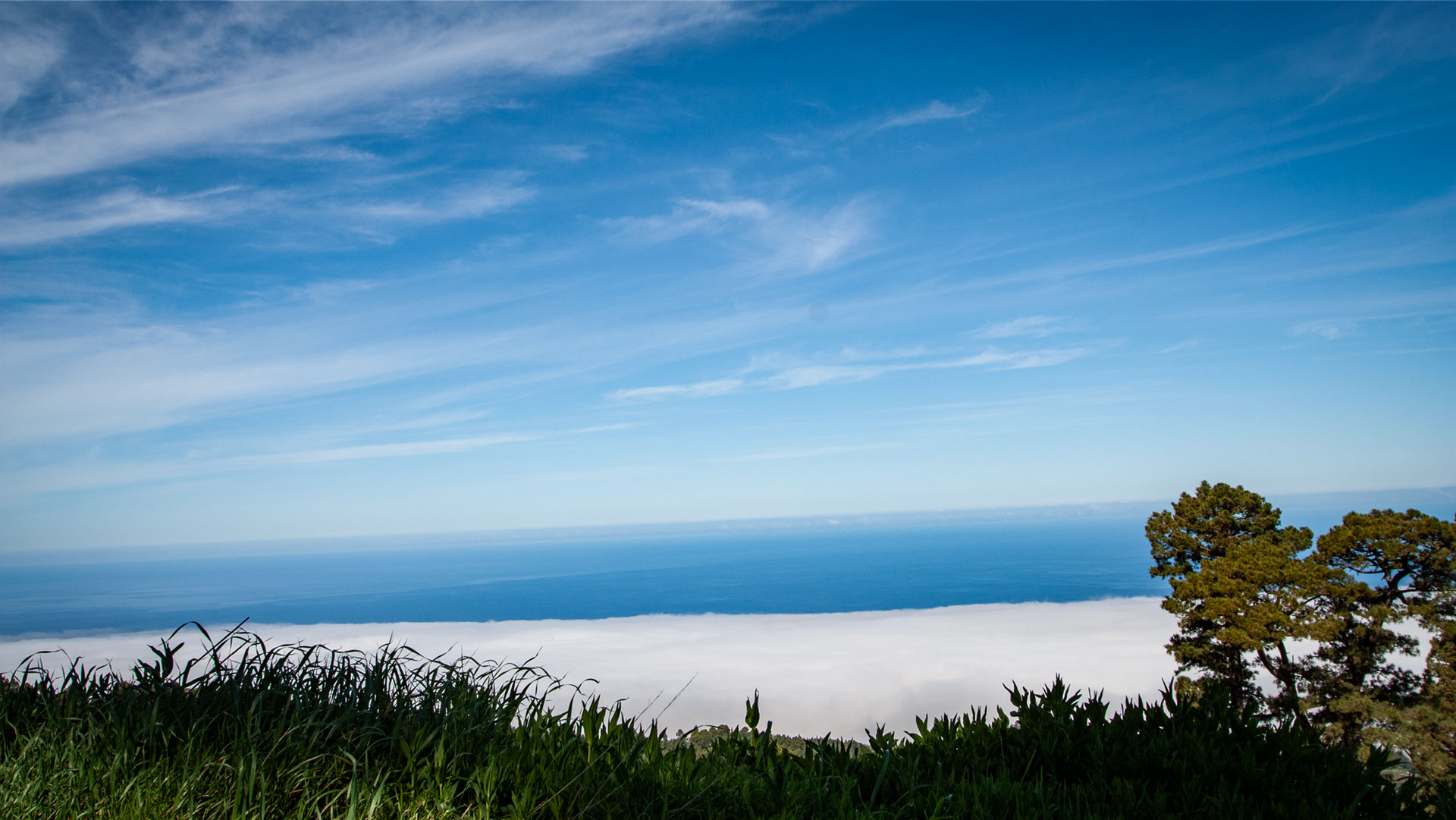
One of the most impressive weather phenomena on La Palma is the so-called temperature inversion. A solid cloud layer frequently forms at around 1,000 to 1,500 metres altitude. Whilst the coast can look grey and overcast, brilliant sunshine and a spectacular sea of cloud await above. Particularly rewarding viewpoints are La Cumbrecita and the Roque de los Muchachos, where some of the finest views in the Canaries often unfold.
Important:
Above the cloud layer, solar intensity is considerably higher. Sun cream, sunglasses, and a hat are therefore essential even on cooler days.
Monthly Rainy Days: East vs. West
| Month | East Coast (rainy days) | West Coast (rainy days) |
|---|---|---|
| January | 6 | 3 |
| February | 5 | 2 |
| March | 4 | 2 |
| April | 3 | 1 |
| May | 1 | 0 |
| June – August | 0 | 0 |
| September | 1 | 0 |
| October | 4 | 2 |
| November | 6 | 3 |
| December | 6 | 3 |
Weather Apps for La Palma
For reliable forecasts, it is worth consulting several sources:
| Weather Service | Key Features |
|---|---|
| AEMET | Official Spanish weather service with official weather warnings. The app is free, though mainly in Spanish. |
| Windy (ECMWF) | Particularly recommended for hikers. Shows wind, cloud, precipitation, and temperatures at various altitudes. |
| eltiempo.es | Very clear layout and easier for many visitors to use than the AEMET app. A good complement for daily forecasts. |
| Webcams at the Roque de los Muchachos | Show in real time whether the sun is shining above the trade wind clouds. Ideal for day planning. |
Hiking and Weather: What You Can Combine
Weather dictates what is possible on La Palma. In Calima conditions many hiking trails are closed. When trade wind cloud covers the east side, head to the west — or see whether you can get above the clouds. When it is raining in the north, walk in the south. La Palma is a small island — a change in weather means a drive, not a ruined holiday. A daily check of the AEMET app keeps you well informed.
Altitude: How the Mountains Cool Things Down
The Roque de los Muchachos (2,426 m) is almost always colder than expected. In summer: 10 to 15 degrees. In winter: 0 to 8 degrees, sometimes snow. Anyone driving up to the Roque should bring a jacket — even if it is 27 degrees on the beach below. La Cumbrecita (1,350 m) is milder, but a light jacket in the afternoon is still sensible there too. La Cumbrecita has one further quirk: entry to the national park requires a reservation from 10 am. The reservation is free, but for the Caldera de Taburiente National Park it should be booked online via the official island authority website several weeks before your trip.
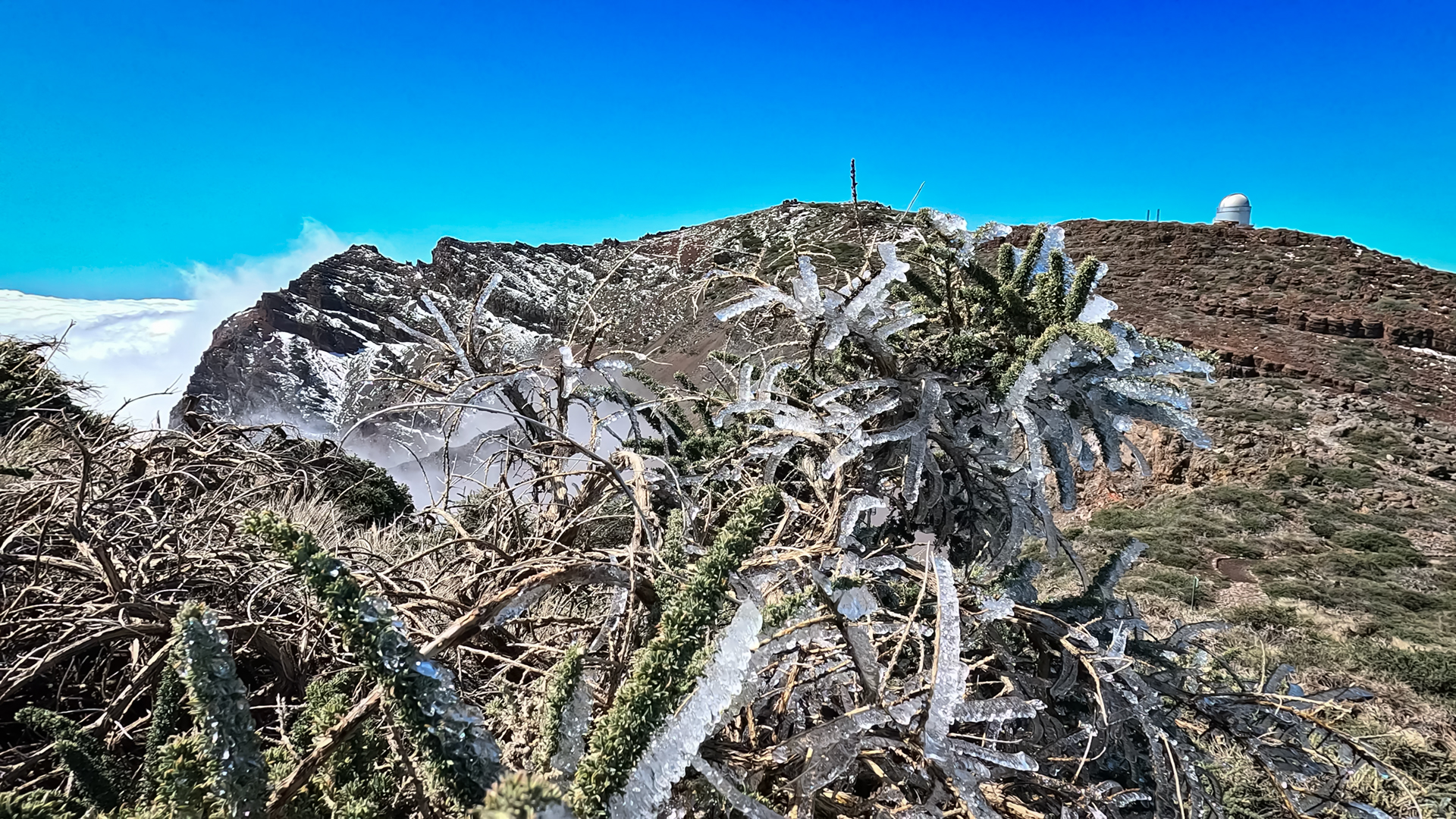
Snow on the Roque de los Muchachos
In the winter months, snow falls regularly on La Palma’s highest peaks. The Roque de los Muchachos and the higher reaches of the Caldera de Taburiente occasionally transform into a striking winter landscape.
In the event of snow or icy conditions, the access roads are often closed for safety reasons by the Cabildo de La Palma or the Guardia Civil. Before driving up to the high-altitude areas, always check the current weather conditions and any road closures rather than chancing it.
Thunderstorms and Strong Winds
Thunderstorms are rare on La Palma, but when they come, they are intense. The Cumbre region is occasionally affected by thunderstorm cells in autumn. Anyone hiking above 2,000 metres who sees rapidly building cumulus clouds should turn back immediately. The ridge is no place to be in a thunderstorm. The Spanish weather service AEMET sends warnings via its app – at Orange or Red alert level, do not set out on exposed routes.
La Palma’s climate is easy to grasp once you know the ground rules: west side for sun, east side for green, inversion for the view from above. Internalise these three things and you have La Palma’s weather under control — making the most of every day, whatever the clouds have in mind.
Conclusion:
Guaranteed sunshine: Book accommodation on the west side or in the south.
Nature lovers: The green north and east offer spectacular hiking but are more weather-dependent.
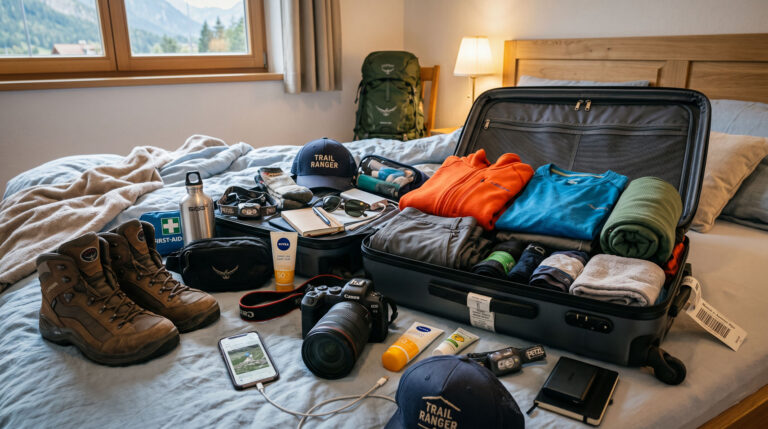
Layering is essential: However sunny it is on the beach, always pack a windproof jacket and sun cream for the mountains.
Frequently Asked Questions
Does it rain much on La Palma?
What is the Calima?
Can you sunbathe on La Palma in winter?
How reliable are weather forecasts on La Palma?
What clothes should you pack for La Palma?
This article is based on the on-the-ground knowledge of the Gequo editorial team – publishers of the Reisezeit hiking guides and operators of Sunhikes.com. Last updated: May 2026