Internet, WiFi & Roaming on La Palma 2026
Travelling to La Palma in 2026 means no worries about internet access. Fibre-optic WiFi is standard in almost all accommodation, EU roaming works without extra charges for European visitors, and 5G covers most towns. The one exception: hiking into the Caldera — no signal there — full stop.
EU Roaming: No Extra Charges for EU and EEA Visitors
Under EU roaming regulations, anyone with a mobile contract from an EU or EEA country can call, text, and use their data allowance on La Palma without extra roaming charges. La Palma is part of Spain, so the regulation applies across the whole island.
Some contracts include Fair Use limits or other restrictions. It’s worth double-checking before you travel.
Swiss and UK visitors: EU roaming rules do not apply automatically to contracts from Switzerland or the United Kingdom. Depending on your provider, additional charges may apply. For longer stays, a Spanish SIM card or an eSIM can be a cost-effective alternative.
Network Coverage Across the Island
| Region | Network quality |
|---|---|
| Santa Cruz de La Palma, Los Llanos | 5G / 4G – excellent |
| Los Cancajos, Puerto Naos | 4G to 5G – very good |
| Barlovento, Garafía | 4G – in valleys sometimes only 2G (EDGE) |
| Caldera de Taburiente | No mobile reception |
| Deep ravines and laurel forests | Frequent dead zones – use offline maps |
| Roque de los Muchachos | Surprisingly good coverage |
Important for hikers: Offline maps
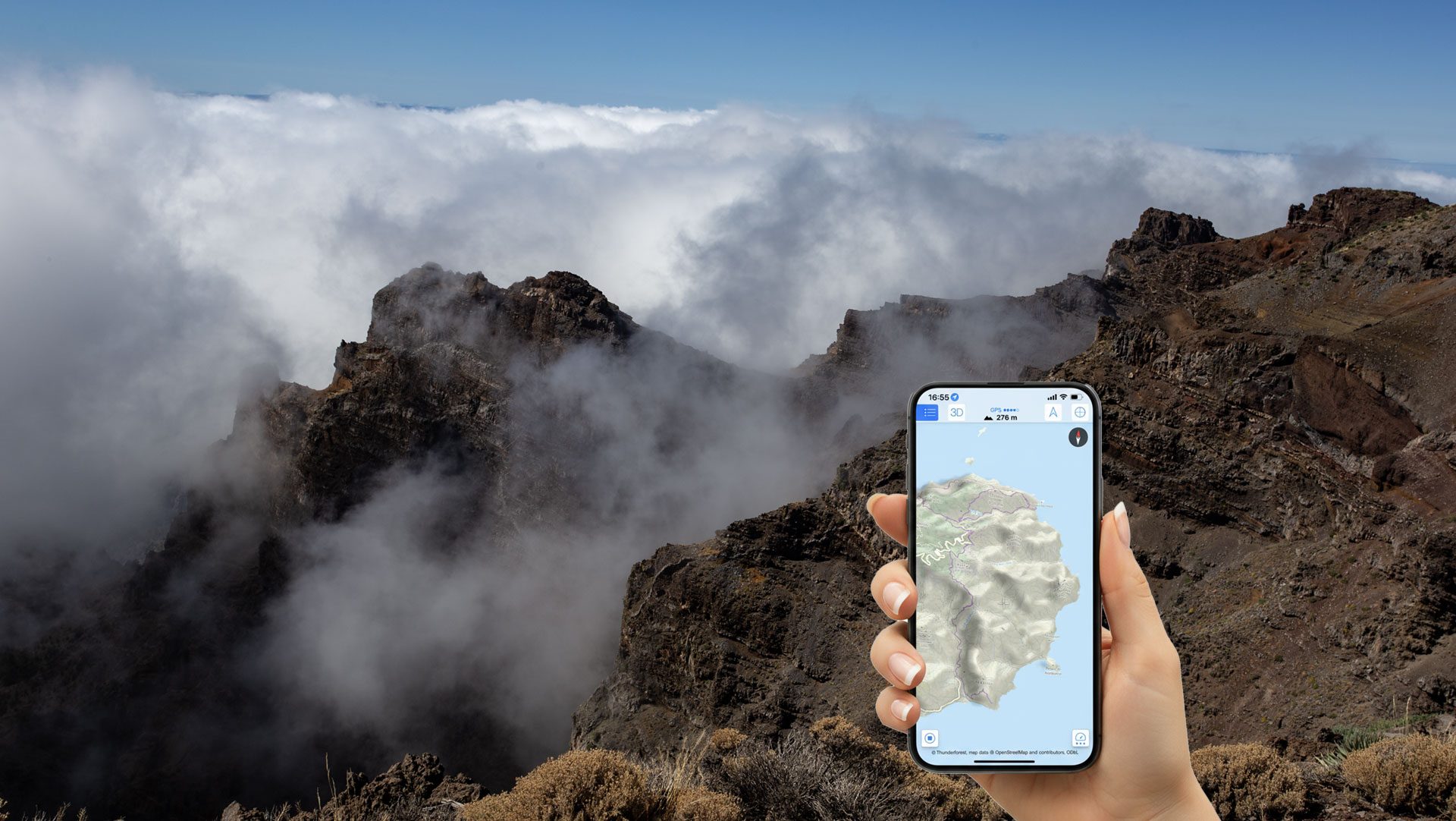
In the Caldera and deep gorges there is no mobile network. Always download hiking maps offline before setting out — Google Maps, OruxMaps, or similar apps. GPS works without an internet connection, so offline map + GPS = navigation even with zero reception.
WiFi in Accommodation
Almost all accommodation on La Palma offers free WiFi in 2026, and many properties now have fibre-optic speeds (Fibra óptica). If you’re planning a workcation and need reliably fast internet, ask specifically about Fibra óptica when booking. In very remote fincas, slower radio or satellite WiFi may still be in use — fine for everyday browsing, but not ideal for video calls.
Local SIM Card and eSIM
For Swiss, UK, or non-EU visitors who face high roaming charges: Spanish SIM cards from Movistar, Vodafone, or Orange are available at the airport and in phone shops in Santa Cruz and Los Llanos. A 10 GB card costs around €10–15 for 30 days. eSIMs are also available — handy because you don’t need to swap your existing SIM.
Coworking and Workcation on La Palma
La Palma has become a popular workcation destination. Los Llanos de Aridane and Santa Cruz both have modern coworking spaces with fibre connections, meeting rooms, and reliable infrastructure. The island sits just one hour behind Central European Time, making it easy to combine work and island life.
WiFi in Nature: Webcams and Real-Time Data
Several observatories on the Roque de los Muchachos operate their own networks. Webcams at the summit transmit live images of what can be seen above the clouds — when the coast is overcast, this is the best way to check whether the ascent is worthwhile. The webcams are accessible via the IAC portal (Instituto de Astrofísica de Canarias). For hikers with a connection: the La Palma trail monitor senderosdelapalma.es shows closed routes in real time.
Emergency Without Signal
In the Caldera de Taburiente and deep ravines, mobile reception may be completely unavailable. Always save hiking maps offline before you set off — GPS works even without an internet connection.
Note:
The European emergency number 112 can often still connect even without your own network. Your phone will automatically use any available network for the emergency call, and may show “Emergency calls only”. Newer smartphones also support satellite-based emergency calls — a useful backup in remote areas with a clear view of the sky.
If you cannot reach emergency services, move to a location with better reception and inform someone of your planned route before any remote hike.
Conclusion:
EU and EEA visitors: roaming works without extra charges, WiFi is available almost everywhere, and 5G covers most populated areas.
When hiking: download offline maps, rely on GPS, and do not count on mobile reception in the Caldera or deep ravines.
Frequently Asked Questions
Does EU roaming apply on La Palma?
Is there WiFi in the Caldera de Taburiente?
What is Fibra óptica?
Do I need a Spanish SIM card on La Palma?
Does 112 work without mobile reception?
This article is based on the on-the-ground knowledge of the Gequo editorial team – publishers of the Reisezeit hiking guides and operators of Sunhikes.com. Last updated: May 2026