Banana Plantations on La Palma – Understanding the Plátano Canario
Driving through the Aridane Valley means driving through a forest of banana plants. Plantations stretching up the slopes from sea level to 400 metres – no other crop shapes this landscape quite like the banana.
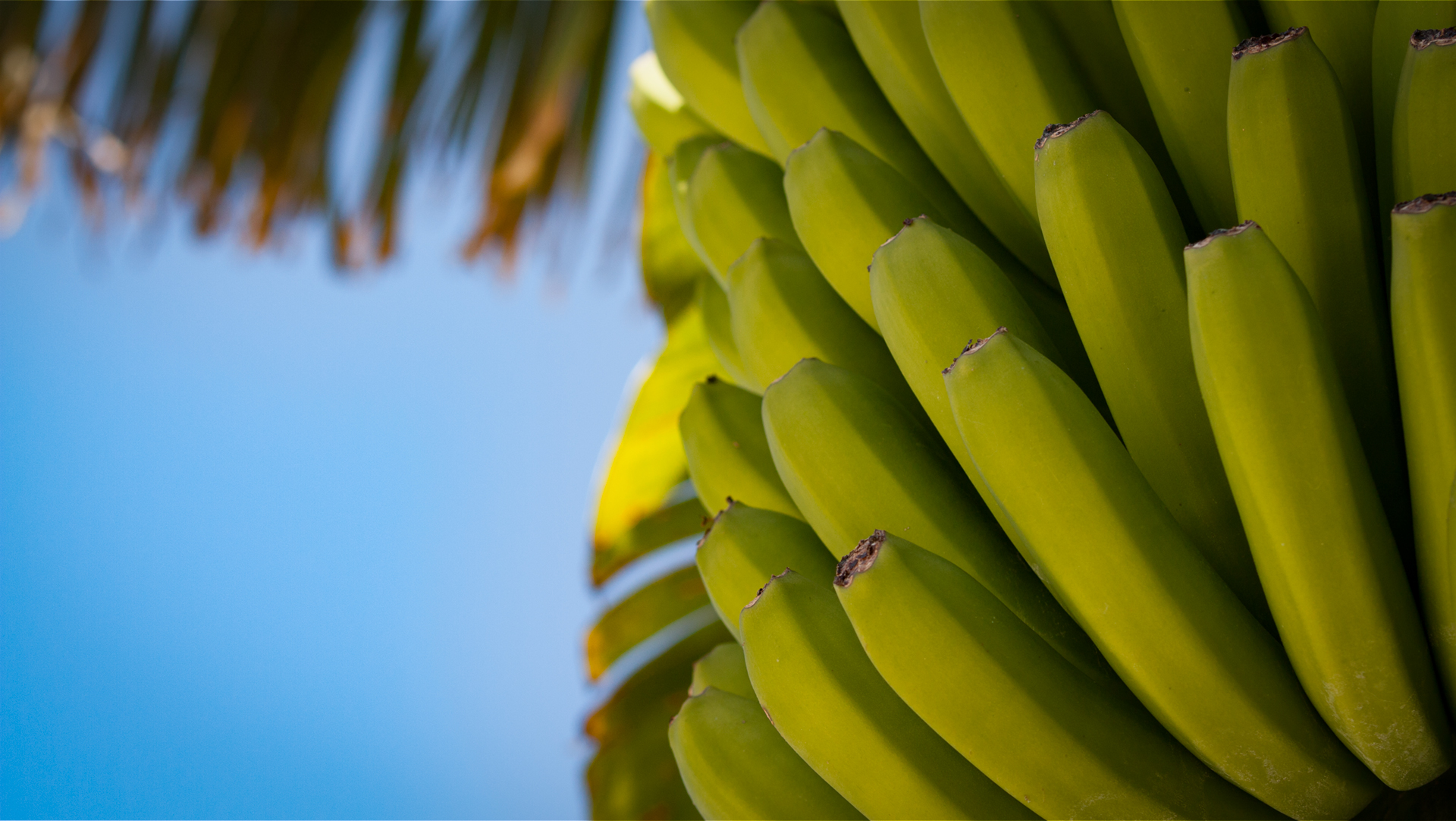
What makes this cultivation special is not the quantity – Tenerife and Gran Canaria produce more – but the quality and the methods. La Palma bananas are grown, harvested, and packed entirely by hand.
The Plátano Canario – What Sets It Apart
The Plátano Canario is smaller than the large Cavendish bananas from Ecuador that fill European supermarket shelves. But it is sweeter, more aromatic and ripens naturally on the plant rather than post-harvest using gas.
The EU protects the Plátano Canario as a Protected Geographical Indication (PGI) – anyone selling it must be able to prove it came from the Canary Islands.
The Banana Plant – A Botanical Wonder
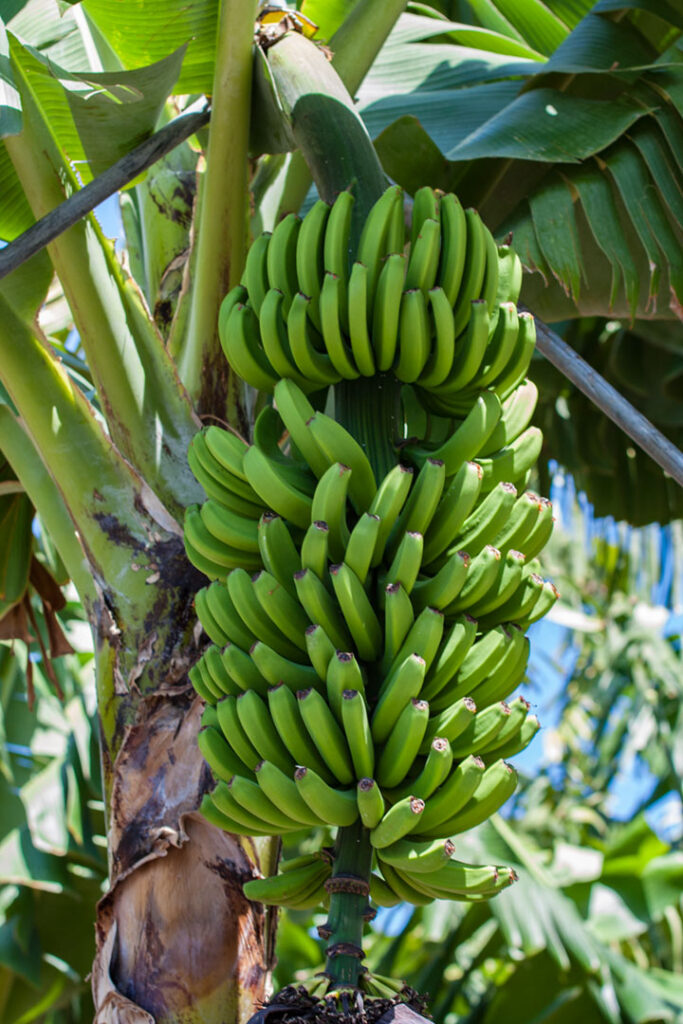
The banana plant is not a tree – it is a herbaceous plant. The apparent trunk consists of tightly overlapping leaf sheaths rather than true wood. Each plant produces just one bunch of bananas in its lifetime.
The blue plastic bag seen on almost every banana plant protects the ripening bunch from insects, birds, and temperature fluctuations.
Visits and Direct Purchase
Some plantations in the Aridane Valley offer guided tours. The Museo del Plátano in Tazacorte provides the most comprehensive overview of the whole production cycle.
Practical Tip: Respect Banana Plantations
Many hiking trails and small roads run right alongside La Palma’s banana plantations. The plants are private property – entering without permission is not allowed.
The Tajogaite and the Plantations
The 2021 Tajogaite eruption buried around 370 hectares of banana plantations in the Aridane Valley under lava. Several farming families lost their entire livelihoods. Restoration is ongoing but will take years.
| Museo del Plátano | Tazacorte, approx. 2 € – history & botany |
|---|---|
| Farmers' Markets | Los Llanos, Mazo, Puntagorda – direct purchase |
| Best time to visit | year-round; harvest time varies by planting location |
| Guided Plantation Tours | bookable via GetYourGuide |
| Getting there | LP-3 through the Aridane Valley – plantations visible everywhere |
Frequently Asked Questions (FAQ)
Can you simply enter a plantation?
Why do you see blue bags on banana plants?
Why does a smaller plant grow next to every banana plant?
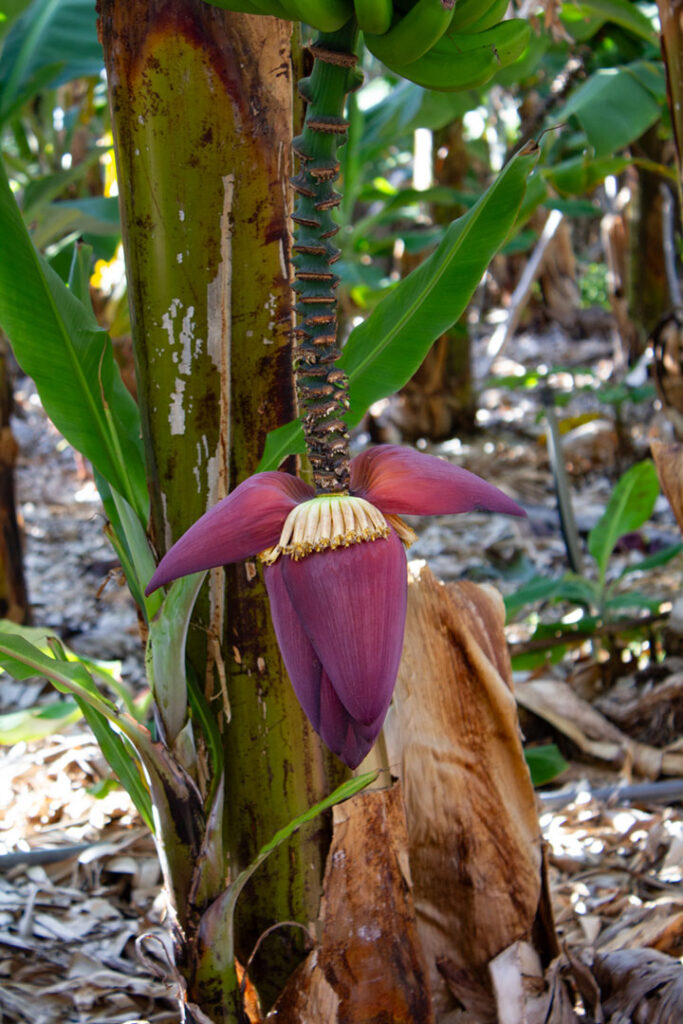
What is the large red flower on the banana plant?
Banana Culture and Society
On La Palma, the banana is more than agriculture – it is identity. Whole generations of families have built their livelihoods around it. Many residents can trace exactly which valley slope their family has farmed for decades.
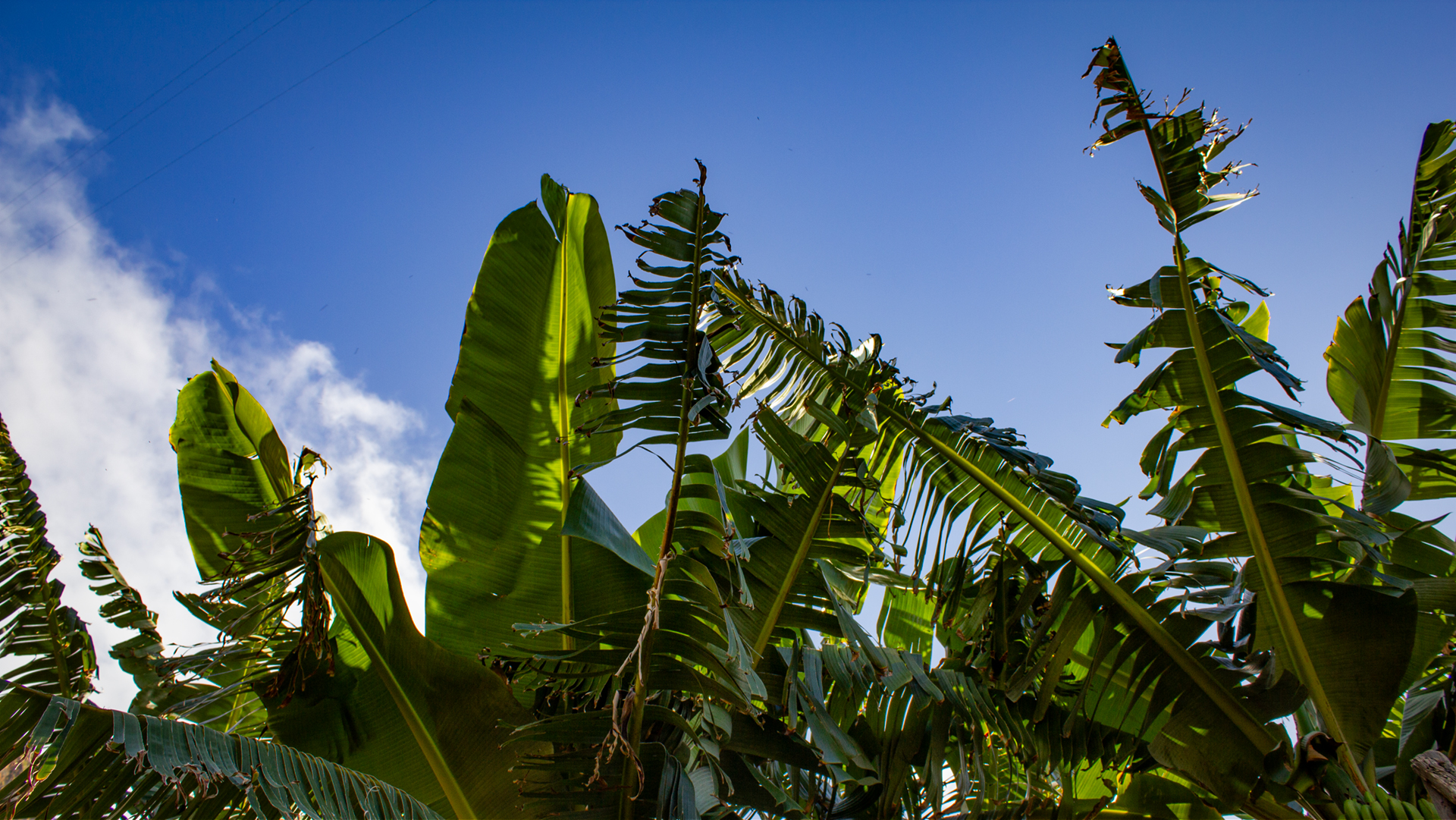
Anyone viewing the plantation landscape of the Aridane Valley through a car window sees a cultural landscape shaped over 500 years of farming history – not just a monoculture, but a living tradition.
Dieser Artikel basiert auf dem Vor-Ort-Wissen des Gequo-Redaktionsteams – Herausgeber der Reisezeit hiking guide und Betreiber von Sunhikes.com. Stand: Mai 2026